Free leaf SVG files
Free leaf SVG files drawn by code: single leaves with their veins cut out, oak, maple, monstera, ginkgo and fern, and sprigs of laurel, olive and eucalyptus. Each one is a clean welded shape with its stalk attached.
26 designs. Free for personal and commercial use, no sign-up. What you can do with them.
-
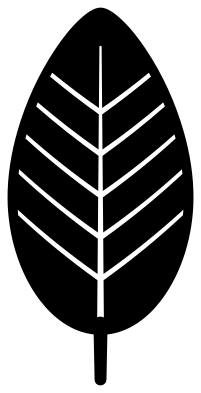 Simple leaf with veins Solid · one piece
 -
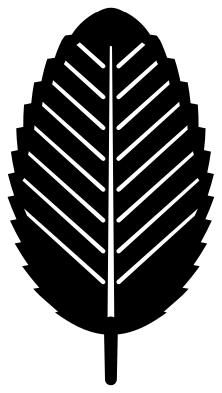 Serrated leaf with straight veins Solid · one piece
 -
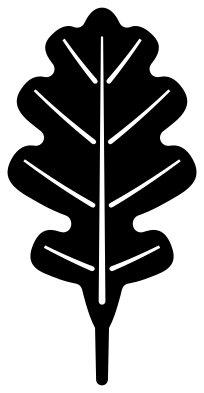 Oak leaf with round lobes Solid · one piece
 -
 Maple leaf with five veins Solid · one piece
 -
 Monstera leaf with splits and holes Solid · one piece
 -
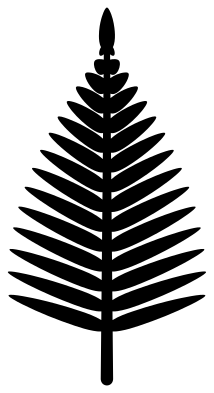 Fern frond with fifteen pairs of leaflets Solid · one piece
 -
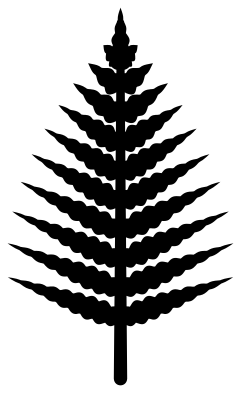 Fern leaf with scalloped leaflets Solid · one piece
 -
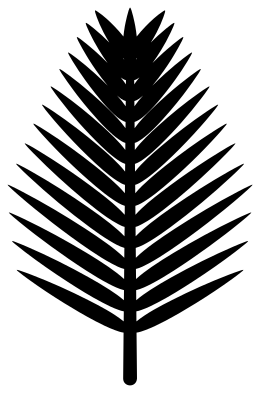 Palm leaf with long leaflets Solid · one piece
 -
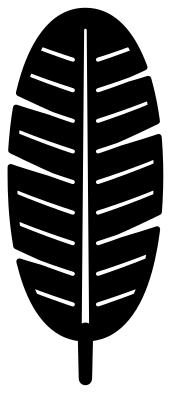 Banana leaf with tears Solid · one piece
 -
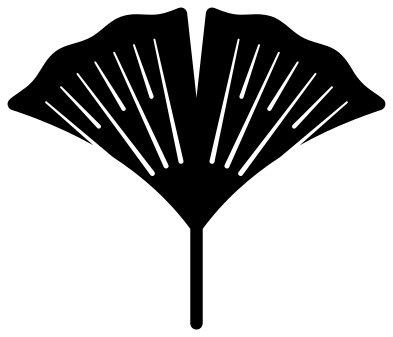 Ginkgo leaf Solid · one piece
 -
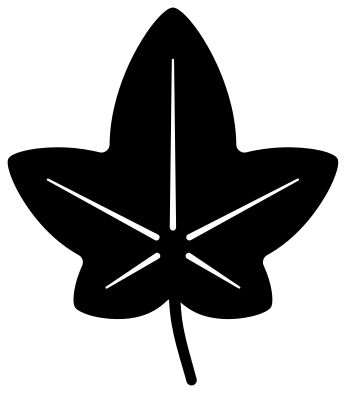 Ivy leaf with five lobes Solid · one piece
 -
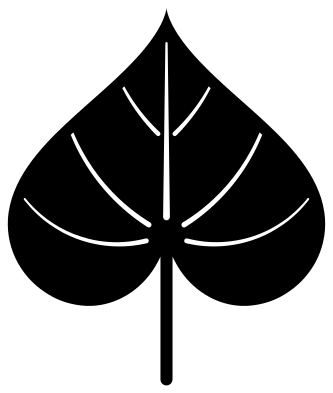 Heart-shaped leaf Solid · one piece
 -
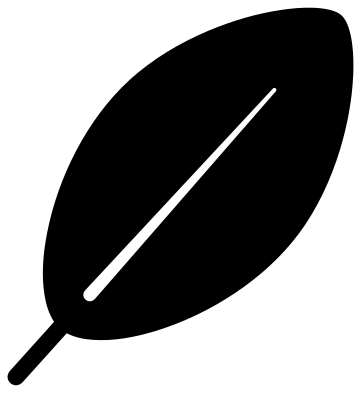 Leaf icon with stalk Solid · one piece
 -
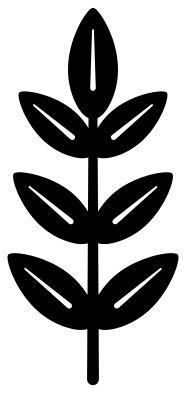 Leaf branch with seven leaves Solid · one piece
 -
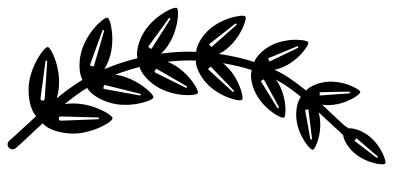 Curved leaf branch Solid · one piece
 -
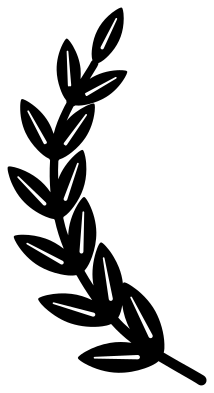 Laurel branch Solid · one piece
 -
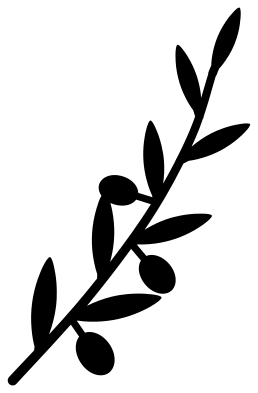 Olive branch with fruit Solid · one piece
 -
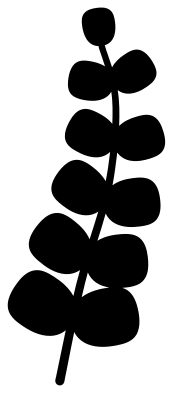 Eucalyptus sprig with round leaves Solid · one piece
 -
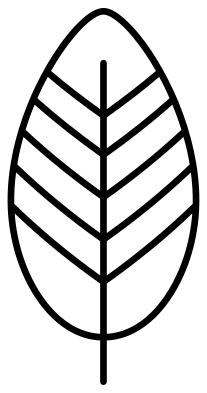 Leaf outline with veins Outline · one piece
 -
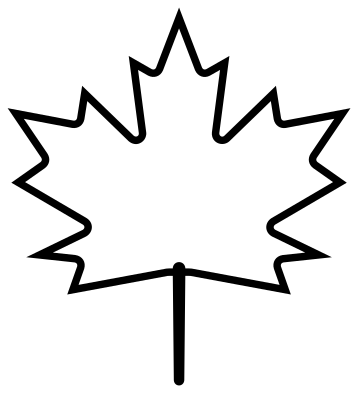 Maple leaf outline Outline · one piece
 -
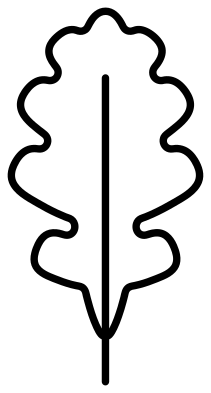 Oak leaf outline Outline · one piece
 -
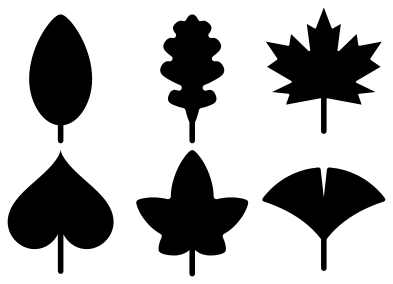 Six leaves on one sheet Solid · 6 pieces
 -
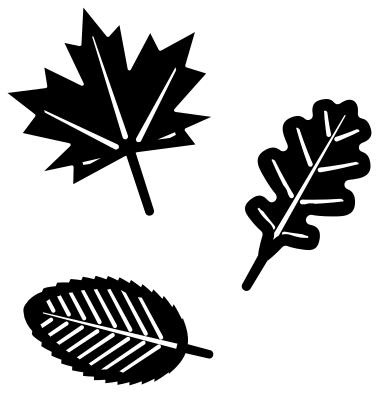 Three falling autumn leaves Solid · 3 pieces
 -
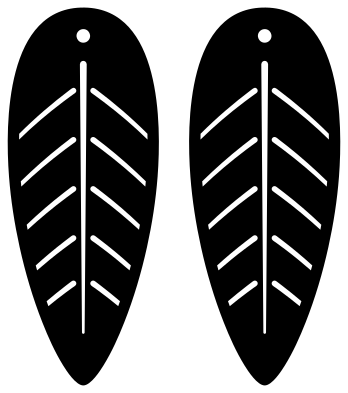 Leaf earrings, a mirrored pair Solid · 2 pieces
 -
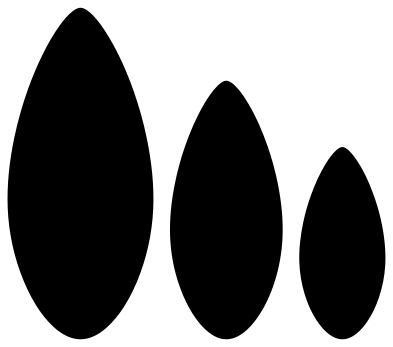 Leaf template in three sizes Solid · 3 pieces
 -
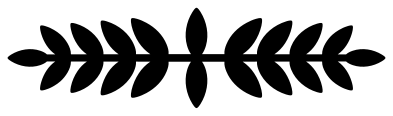 Leaf border Solid · one piece
Veins, slits and how small you can go
On most of these leaves the veins are slits cut through the leaf. They stop 2 to 3 mm short of the edge at 100 mm, and that uncut margin is what holds the leaf together. Halve the size and the margin halves too, so in card or wood keep veined leaves at 60 mm or more; in vinyl they can go smaller because the backing holds them.
The fronds and sprigs are the other way round: thin stalks carry the leaves. The stalks are about 2 to 3.5 mm wide at 100 mm and thinner towards the tips. For a laser in 3 mm plywood, cut the fern, palm and branches at full size or larger.
Which way the grain runs
If you cut leaves from wood veneer or plywood, turn the file so the midrib runs along the grain. The stalk and the tip are then as strong as the sheet allows, and the leaf is less likely to snap across its narrowest point.
How to open the files
- Cricut Design Space: choose Upload, pick the SVG, and add it to the canvas. Set the width you want; the shape is already welded.
- Silhouette Studio: Designer Edition and above open the SVG. The free Basic Edition does not, so open the DXF instead.
- LightBurn, xTool Creative Space and Glowforge: import the SVG, then set the layer to cut, score or engrave.
- Inkscape, Illustrator and Affinity: open the SVG. It is a plain filled path, so you can recolour it, add a stroke or combine it with your own work.
- Printing or sublimation: use the PNG, which has a transparent background.
Each design page lists the file’s narrowest part at seven sizes, so you can tell whether it will survive at the size you plan to cut.
Questions
How do I make a wreath from the laurel branch?
Place the laurel branch, then add a mirrored copy beside it so the two stems meet at the bottom and the tips nearly touch at the top. Weld the two where they overlap if you want a single piece.
Which leaves work as earrings or small charms?
The leaf earrings are made for it and have a hanging hole. For other shapes at charm size, use the plain leaves from the six-leaf sheet: they have no slits, so nothing is thinner than the stalk. Add a 2 mm hole near the stalk.
Why do the vein slits stop before the edge?
A slit that reached the edge would cut the leaf into loose strips. Stopping short leaves a rim all the way round, so the leaf lifts off the mat in one piece.
 Flower SVG
  Sunflower SVG
  Butterfly SVG
  Rose SVG
  Daisy SVG
  Lotus SVG