Free 3D flower pot SVG files
Free 3D flower pot SVG files that fold into real paper pots: a terracotta pot with a rim band, a pot on a saucer, a tall pot with a scalloped rim, a low bowl with hearts, two minis, a pot planted with three tulips, a square planter and a six-sided vase. Each is a working pattern with its teeth and fold lines cut in.
10 designs. Free for personal and commercial use, no sign-up. What you can do with them.
Or choose one below for its PNG, DXF and cutting sizes.
-
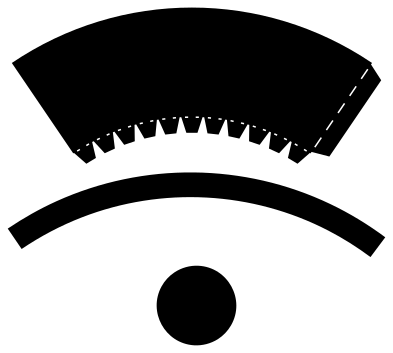 3D flower pot with a rim band Solid · 3 pieces
 -
 3D flower pot on a saucer Solid · 5 pieces
 -
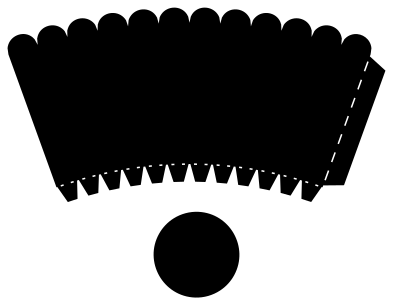 Tall 3D flower pot with a scalloped rim Solid · 2 pieces
 -
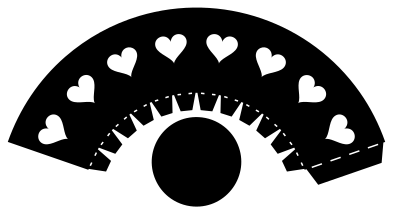 Low 3D flower pot with heart cut-outs Solid · 2 pieces
 -
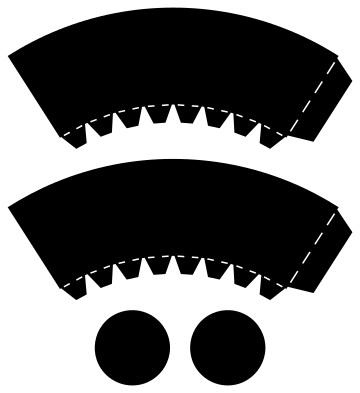 Two mini 3D flower pots for favours Solid · 4 pieces
 -
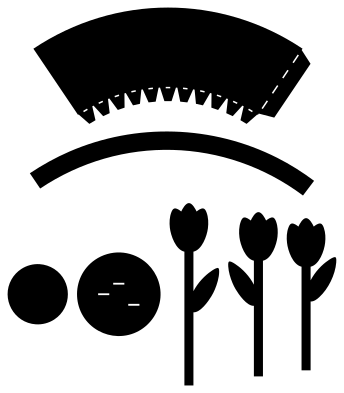 3D flower pot with three tulips Solid · 7 pieces
 -
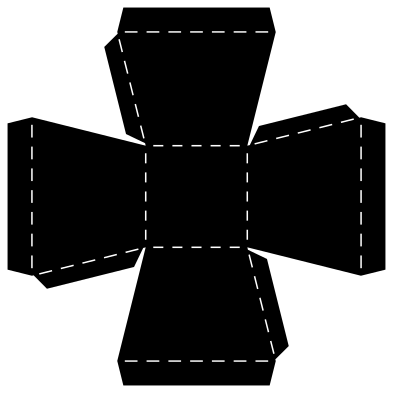 Square 3D flower pot planter Solid · one piece
 -
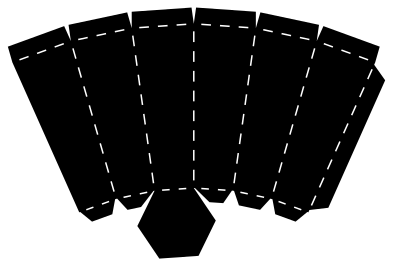 Six-sided 3D flower pot vase Solid · one piece
 -
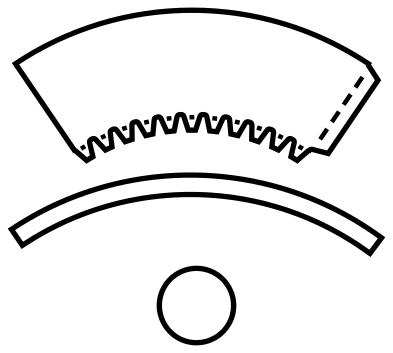 3D flower pot to print and cut by hand Outline · 18 pieces
 -
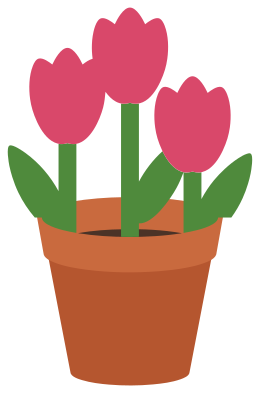 3D flower pot of tulips made up, in five colours Layered · 8 pieces
How a flat sheet becomes a pot
A pot that is wider at the rim than at the base is part of a cone, and a cone laid flat is a slice of a ring. The short arc of the slice is as long as the base is round and the long arc as long as the rim is round, so the wall rolls up with nothing to trim. Glue the end tab inside, fold the teeth along the foot inwards, and lower the base disc on to them from above. The rim band is a second slice of the same cone, drawn half a millimetre further out so that it lies over the card of the wall: glue it round the top with its ends lapped at the seam.
The square planter and the six-sided vase are made of flat panels. Every panel is the same, so the edges that meet are the same length. Each panel has a strip along its rim that folds outwards and down; the strip narrows as the panel does, so that it lies flat and the strips meet at the corners.
Sizes, card and flowers
The files are 100 mm on their longer side, so scale them up before cutting. The classic pot, cut 220 mm wide, is 71 mm across the rim, 46 mm across the base and 63 mm tall, and its sheet is 220 by 197 mm, which fits A4 or Letter card. To change the size, scale the whole file: the wall, the band and the base grow together and still fit.
Use card of 200 to 250 gsm. Draw the wall over the edge of a table before gluing so that it curls without creasing. Terracotta, kraft and white all look right; the band can be cut in a second colour. The pots are for paper, felt or dried flowers and for sweets: they are not watertight. Every size here is worked out from the drawing, not from a test cut, so try one in plain paper first.
How to open the files
- Cricut Design Space: choose Upload, pick the SVG, and add it to the canvas. Set the width you want; the shape is already welded.
- Silhouette Studio: Designer Edition and above open the SVG. The free Basic Edition does not, so open the DXF instead.
- LightBurn, xTool Creative Space and Glowforge: import the SVG, then set the layer to cut, score or engrave.
- Inkscape, Illustrator and Affinity: open the SVG. It is a plain filled path, so you can recolour it, add a stroke or combine it with your own work.
- Printing or sublimation: use the PNG, which has a transparent background.
Each design page lists the file’s narrowest part at seven sizes, so you can tell whether it will survive at the size you plan to cut.
Questions
How do paper flowers stay upright in the pot?
In the tulip pot, a soil disc 56 mm across drops in from the top and wedges where the pot is that wide, 10 mm below the rim. The stems pass through slots in it and rest on the base. For flowers on wire stems, push the wires through the disc, or fill any of the pots with a ball of tissue or a block of florist’s foam.
Why is the wall curved and not a straight strip?
A straight strip rolls into a tube with upright sides. A pot leans out, so its top edge is longer than its foot, and the flat shape that rolls into that is a slice of a ring: two curved edges of different lengths, the same distance apart all the way along. The more the pot leans, the tighter the curve: compare the tall pot with the low bowl.
Can I make a pot to fit a real plant pot inside?
Measure across the rim and the base of the plant pot and its height, then scale a file whose proportions are close. The classic pattern, at the size in its note, is 71 mm across the rim, 46 mm across the base and 63 mm tall, and scaling it changes all three together. Stand the plant in its own plastic pot and saucer inside: the paper will not survive watering.
 Flower SVG
  Sunflower SVG
  Butterfly SVG
  Rose SVG
  Daisy SVG
  Leaf SVG