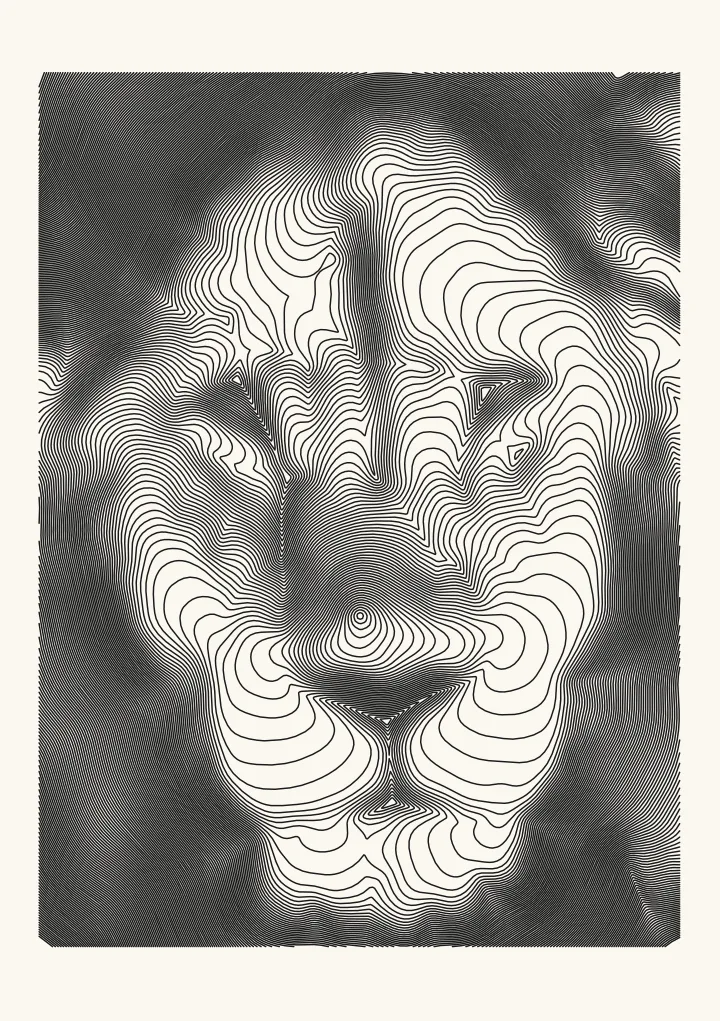
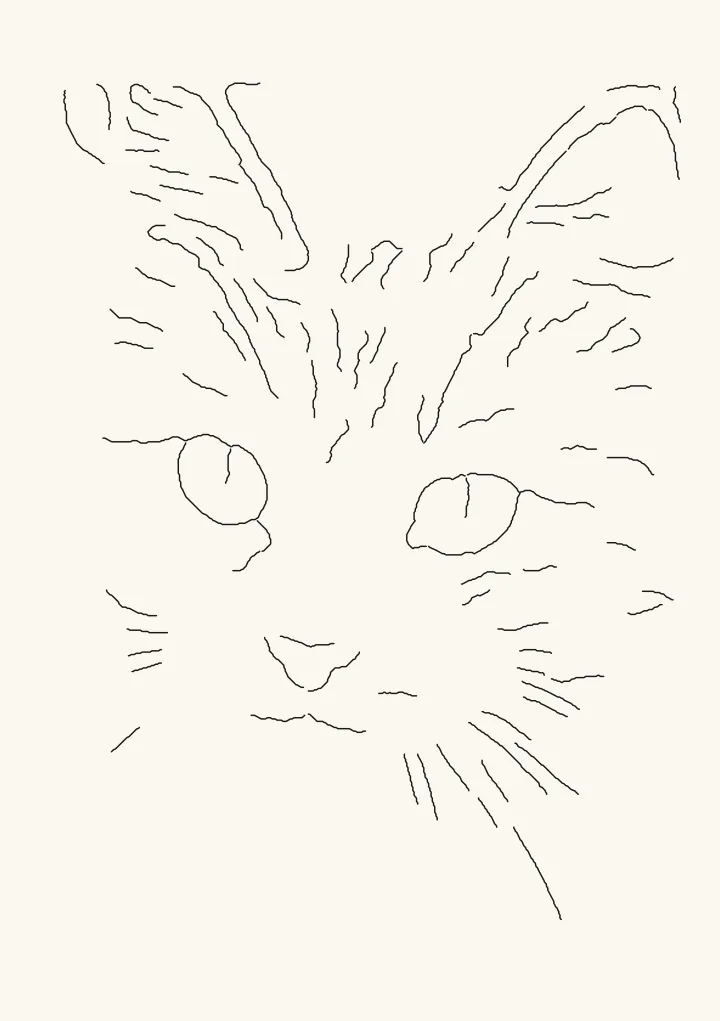
Dither: dither an image online, for lasers and plotters
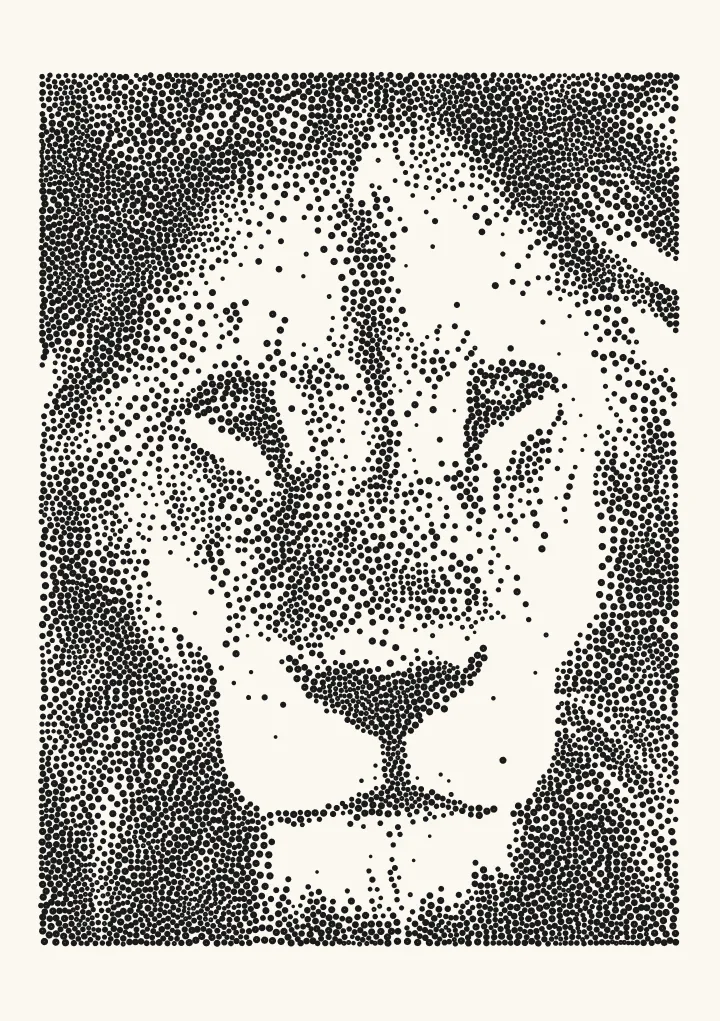
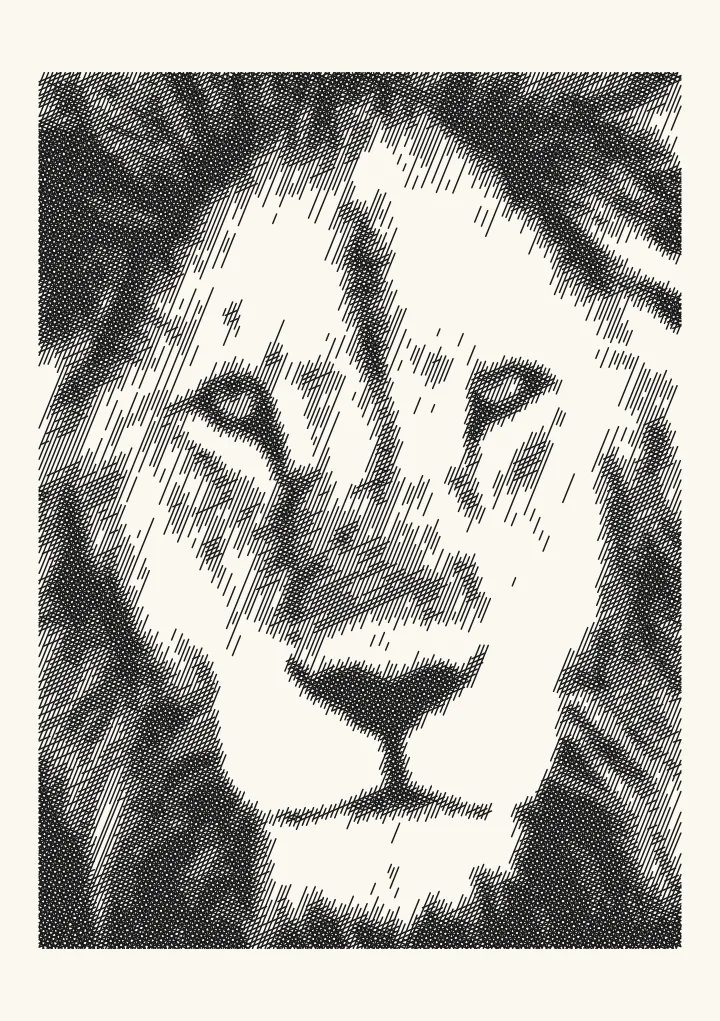
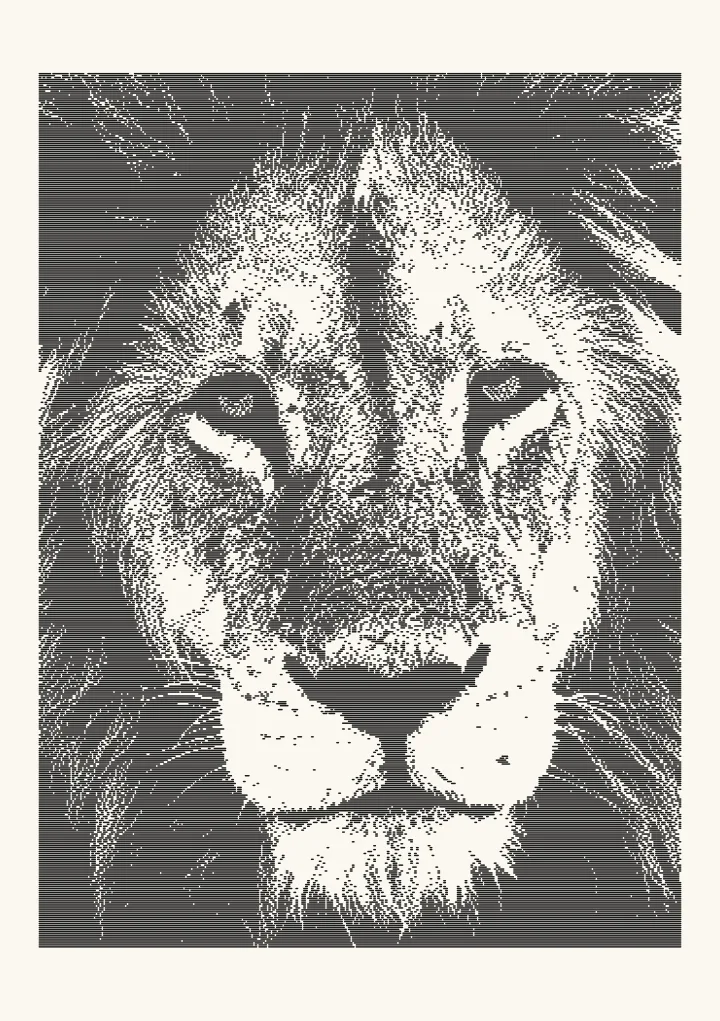
A grid of dots, ticks, squares or dashes whose density follows tone, like an old newspaper photo. Suits laser engraving and retro prints; the same pattern exports as a 1-bit PNG at up to 1,200 DPI. Uses classic 1-bit dithering such as Floyd–Steinberg and Bayer.
Good for laser engraving and retro looks.
Controls
- Algorithm · Which dot pattern. Floyd–Steinberg and Zhou–Fang look photographic, Bayer looks retro, blue noise is the most even.
- Cell pitch · Size of one dot cell. Match it to your pen tip, or go bigger for a coarser look.
- Mark · What the pen draws for each ink cell. Dots are safest; runs join neighbours on a row into dashes.
More controls
- Mark size · How much of its cell each mark fills.
- Threshold · Where mid-grey tips into ink. Higher means more dots.
- Alternate row direction · Scans every other row backwards, which removes the diagonal streaks error diffusion can leave.

A file to make something with
Most online dithering tools make a picture for the screen. Dither makes a file for a machine: a 1-bit PNG from 50 to 1,200 DPI with the DPI written into the file, which can be dithered again at your laser’s own resolution so one pixel is one burn, or an SVG in millimetres where every ink cell is a dot, tick, square or dash for a pen plotter. It all runs in your browser, and the photo is never uploaded.
For a laser, the photo to laser engraving converter walks through DPI, materials and importing the PNG. For black and white pixels for any other use, see convert an image to 1-bit.
Digital halftoning for lasers and pens
Dithering is digital halftoning: the marks sit on a fixed grid, and the pattern of marks, not the size of each one, carries the tone. That suits a laser, which fires at full power or not at all, and a pen, which is either down or up. For an SVG, Cell pitch sets the grid, so match it to your pen tip. For a PNG, the grid can be your laser’s DPI.
16 dithering algorithms
Pick the pattern under Algorithm. Each one has its own page with the kernel or matrix and a live demo:
- Threshold (no dithering)
- Bayer 2×2 dithering
- Bayer 4×4 dithering
- Bayer 8×8 dithering
- Bayer 16×16 dithering
- Blue noise dithering
- Floyd–Steinberg dithering
- Atkinson dithering
- Jarvis–Judice–Ninke dithering
- Stucki dithering
- Burkes dithering
- Sierra dithering
- Sierra two-row dithering
- Sierra lite dithering
- Ostromoukhov dithering
- Zhou–Fang dithering