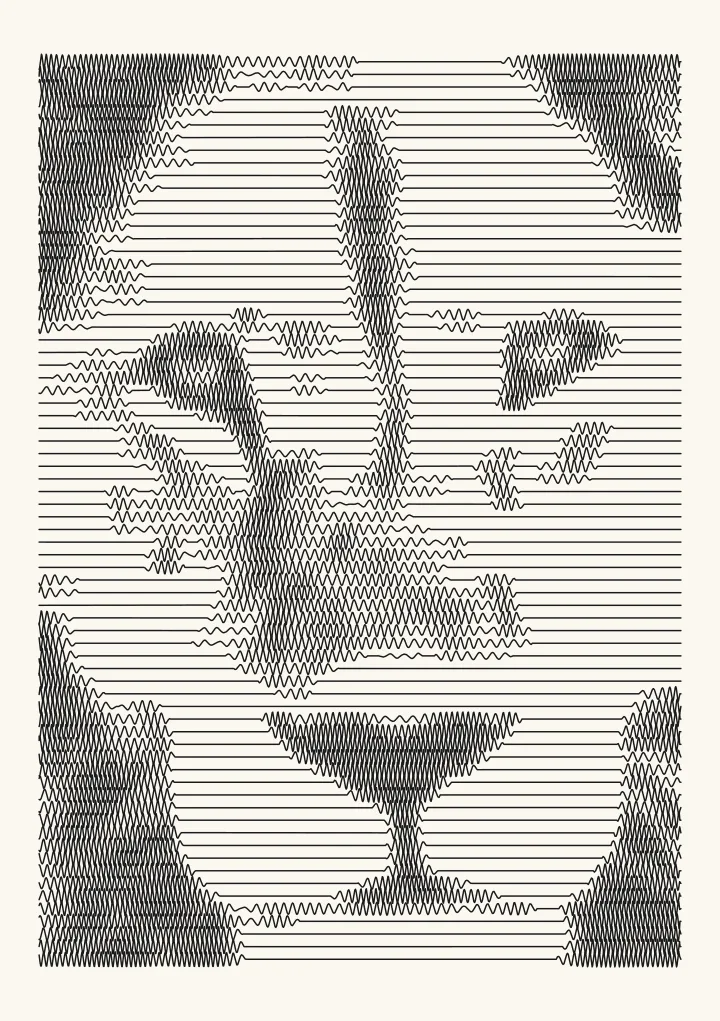
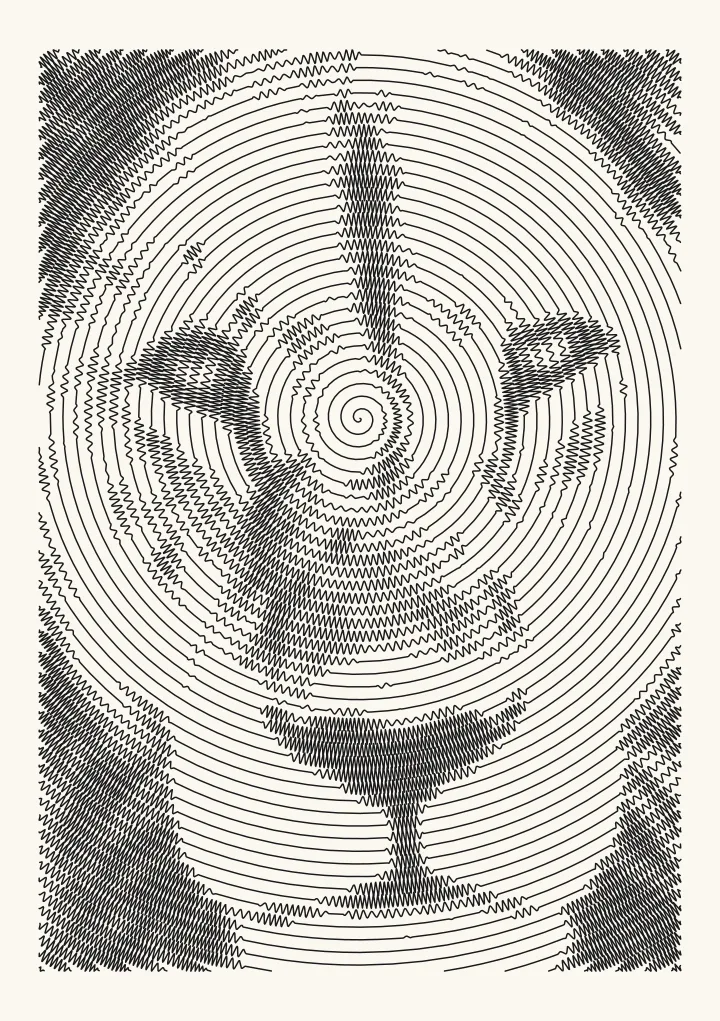
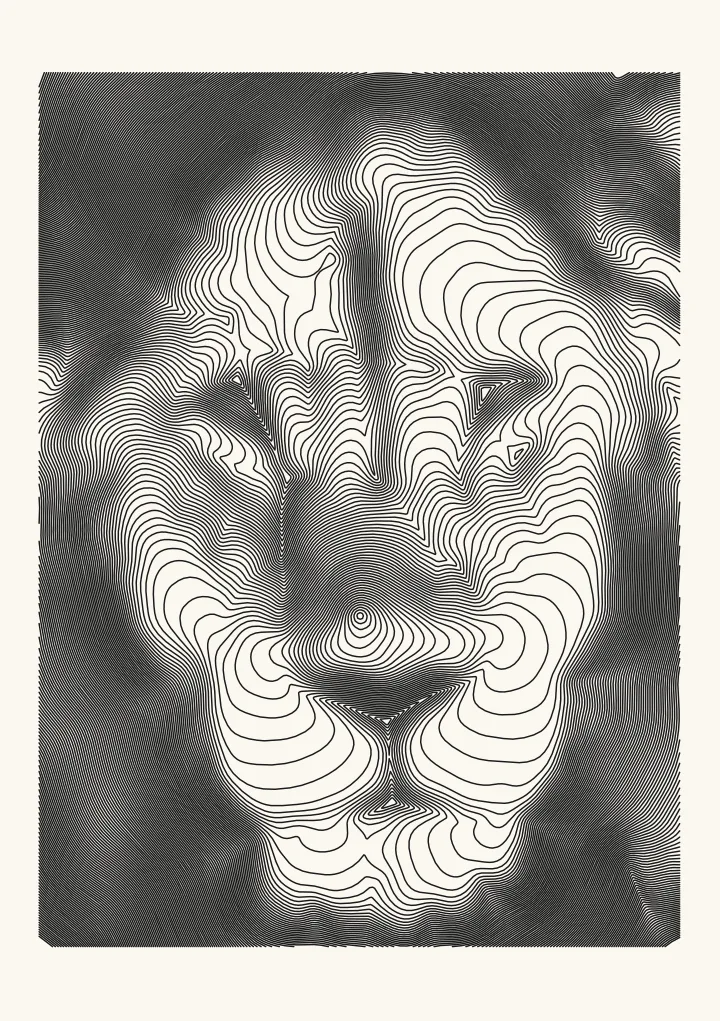
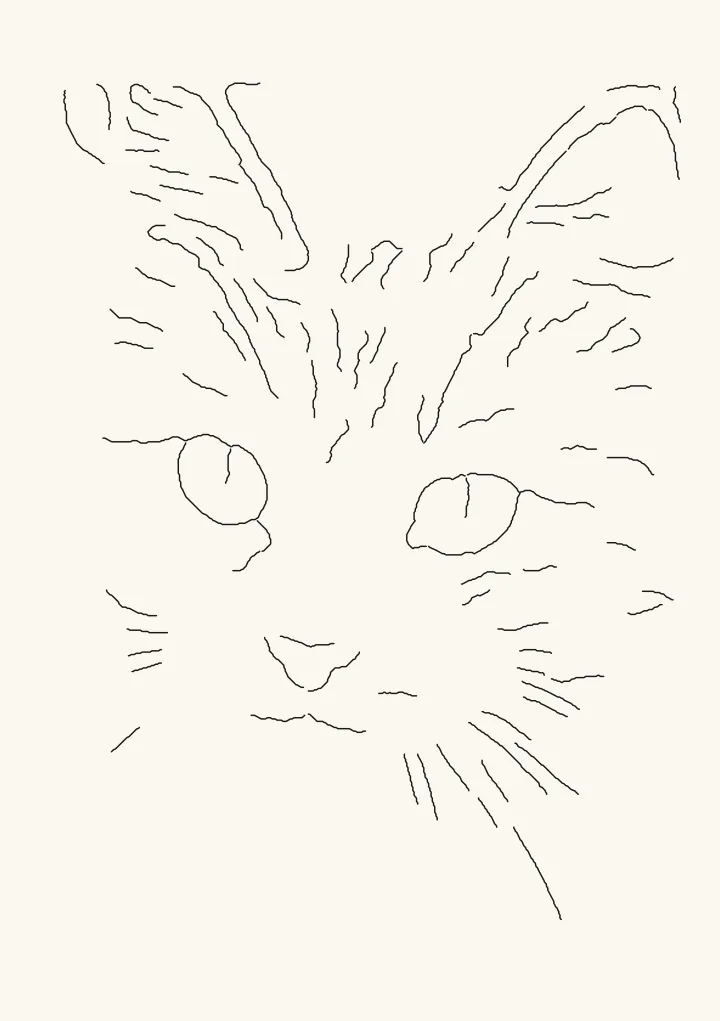
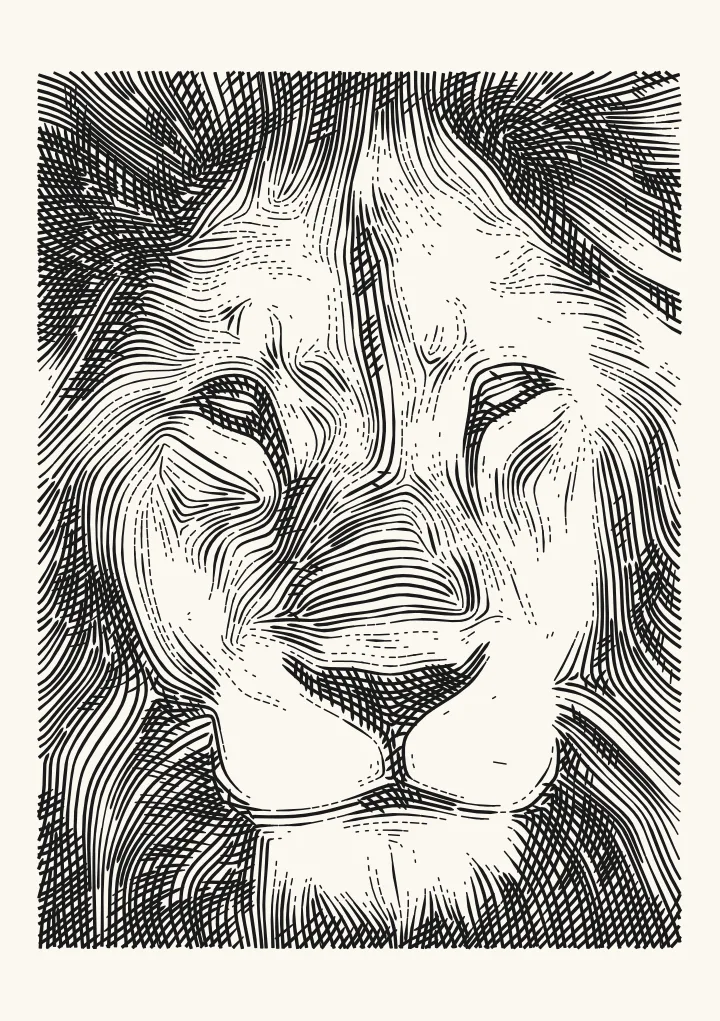
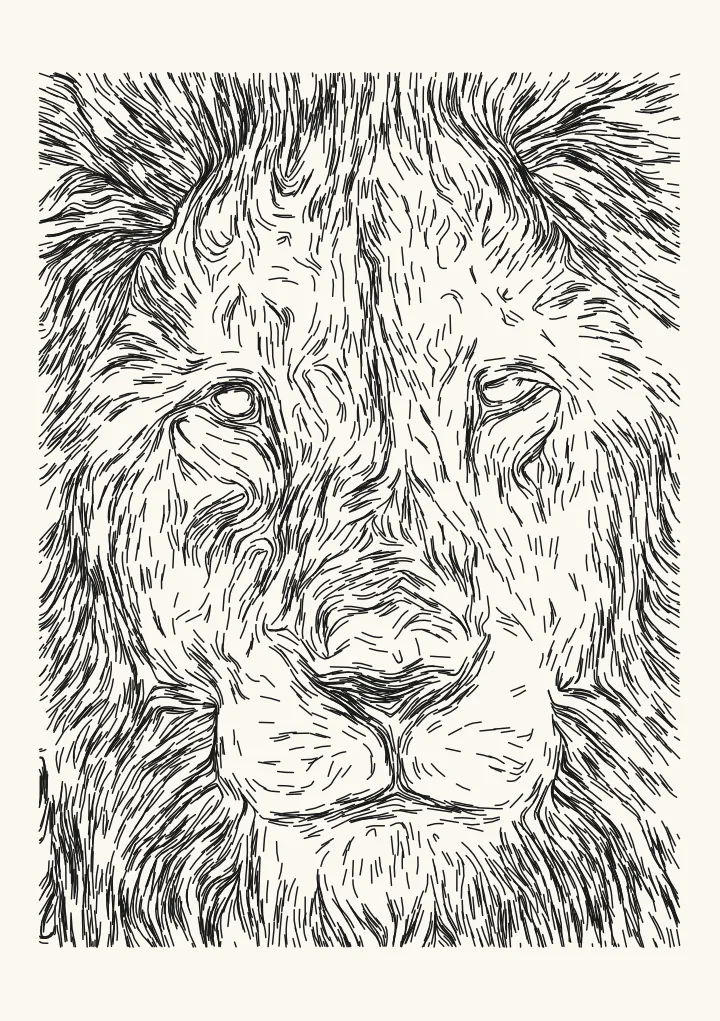
Hatch: crosshatching from any image, for pen plotters
Straight parallel lines that thicken into crosshatching as the picture darkens: lines join in one by one through the mid-tones, extra passes at new angles cross them in the shadows, and the highlights stay paper. Suits bold graphic prints.
Good for bold graphic prints.
Controls
- Line spacing · Distance between lines in the darkest areas. Closer is darker and slower to plot; lighter tones leave some lines out.
- Passes · How many hatching passes stack up in the shadows. More passes, richer darks.
- Keep highlights blank · Anything less dark than this stays blank paper. Raise it to keep highlights clean.
- Angle · Direction of the first pass.
More controls
- Angle per pass · How much each extra pass rotates. Spreading the passes evenly over 180 degrees (60 for three passes, 90 for two) gives the clearest crosshatching.
- Tone curve · Bends the tones before drawing. Above 1 lightens the mid-tones, which helps when a pen pools ink; below 1 darkens them.
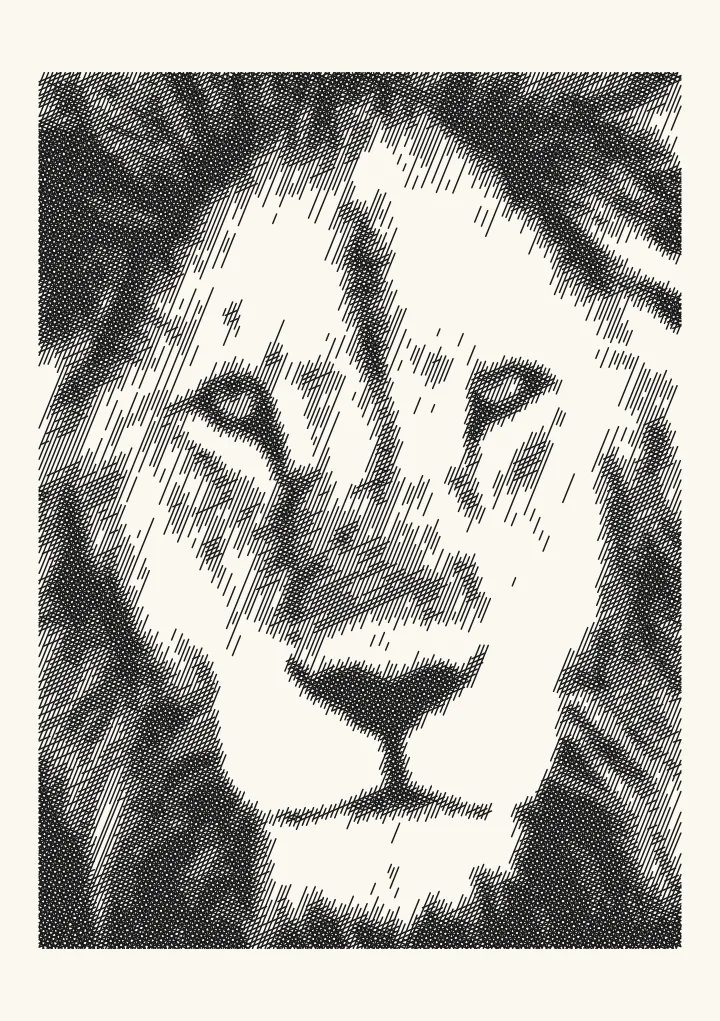

How the passes build tone
Hatch builds tone from straight parallel lines. Through the mid-tones the lines of the first pass join in one by one as the picture darkens, and in the shadows extra passes at new angles cross them, so the darks build up into crosshatching while the highlights stay paper. The lines that join in the lightest tones break into dashes, so lit areas end in a soft, dashed edge instead of a hard one.
Passes sets how many layers can stack up, Keep highlights blank where the lines stop, Angle the direction of the first pass, and Angle per pass how far each extra pass turns. Passes spread evenly over 180 degrees, 60 degrees apart for three passes or 90 for two, give the clearest crosshatching. Hatch starts with three passes, or two for a low-contrast photo with a narrow range of tones.
Spacing and pen width
Spacing and pen width together set how dark one pass looks. A 0.3 mm pen at 1.2 mm spacing covers about a quarter of the paper, so stacked passes build a rich dark without flooding it. Closer spacing is darker and slower to plot. Because every mark is a straight line, hatching also suits a Cricut pen or foil tool.