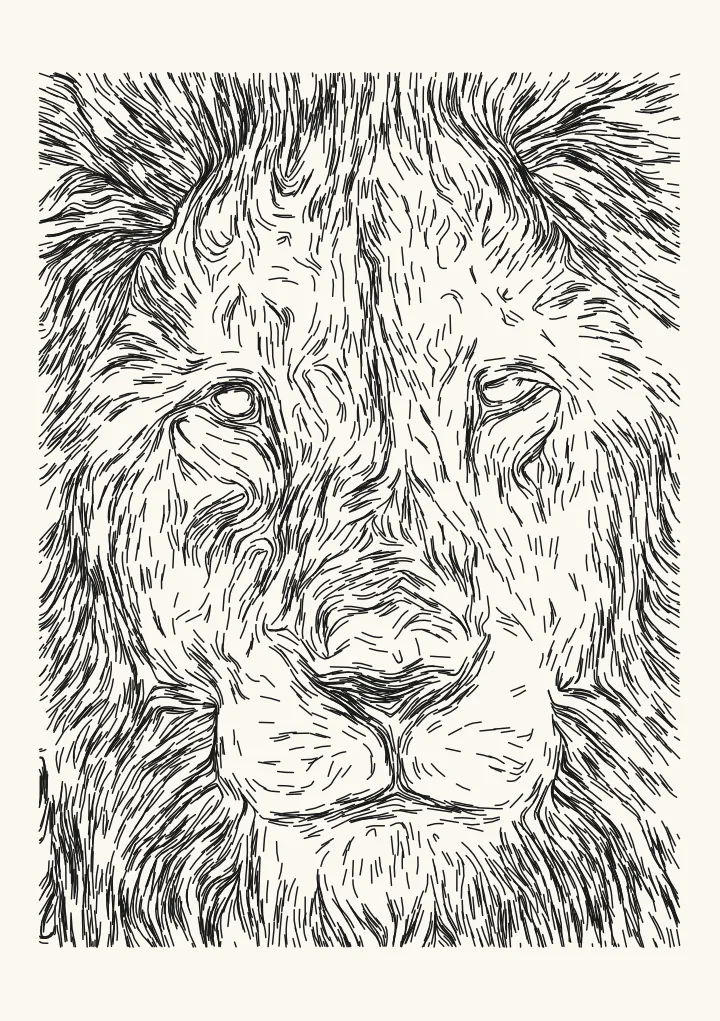
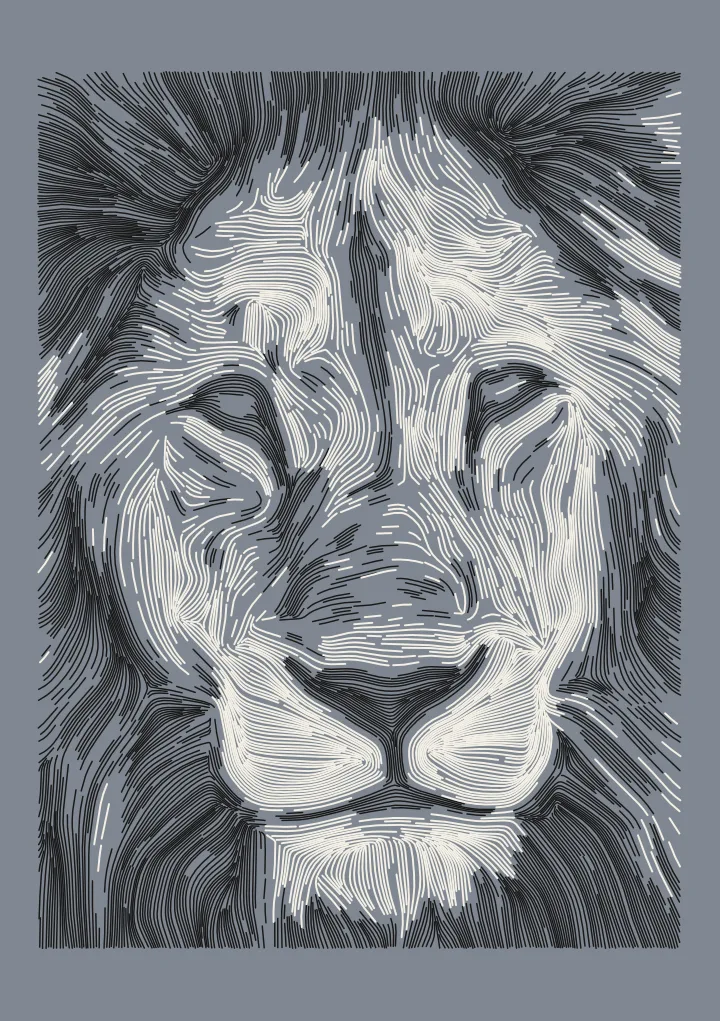
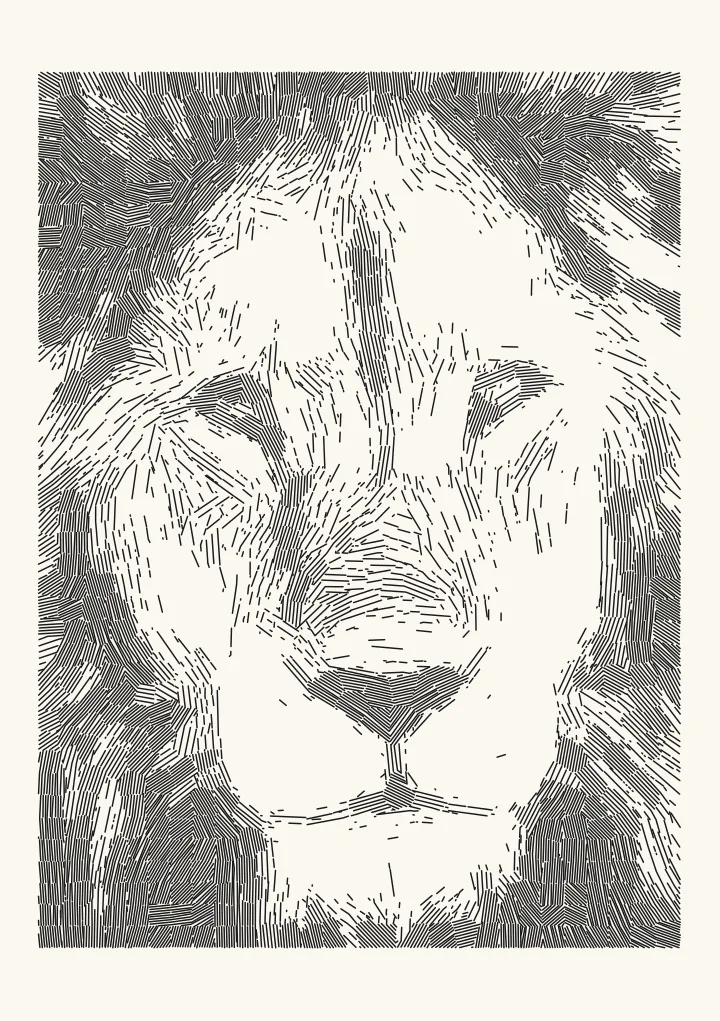
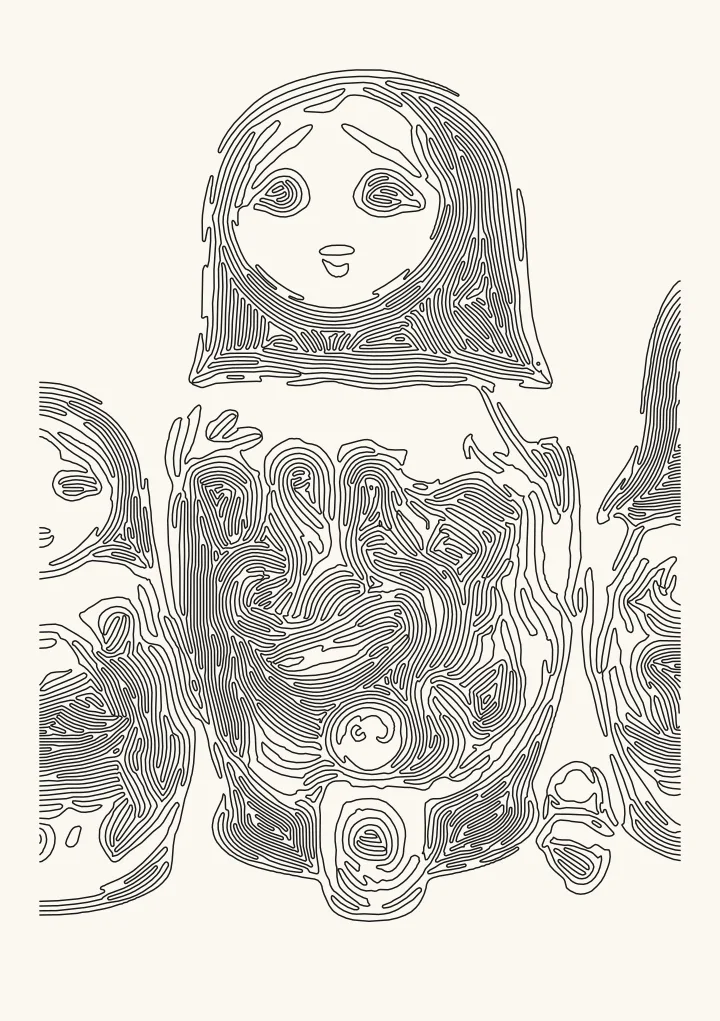
Engrave: copperplate engraving effect from a photo
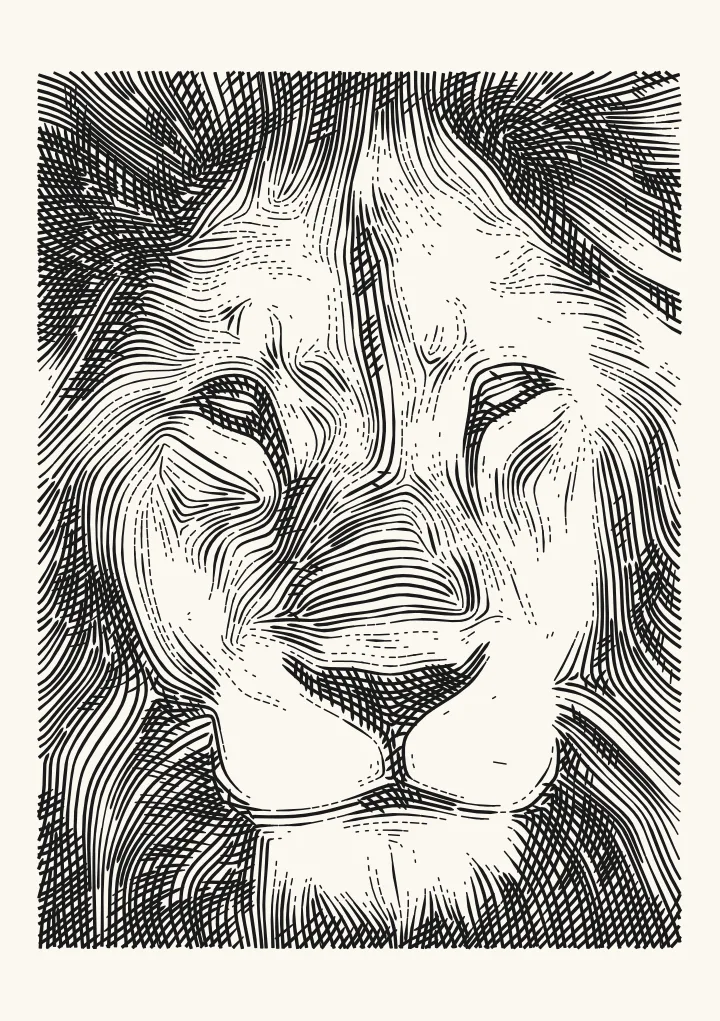
Copperplate engraving: lines follow the form at a steady pitch, swell in the shadows and end in sharp points, break into dashes toward the lights, and cross into lozenges in the darkest areas. Suits banknote-style portraits, busts and pets, with real variable line width from a single pen.
Good for banknote and copperplate looks.
Controls
- Line spacing · Distance between the engraved lines. Wider is lighter and faster to plot; the lines swell to fill the shadows either way.
- Cross the shadows · Where one swelling line cannot carry the darkness, a second set of lines crosses the first and makes lozenges, as engravers do.
- Keep highlights blank · Anything less dark than this stays blank paper. Raise it to keep highlights clean.
More controls
- Crossing angle · Angle between the two sets of lines. Around 55 degrees gives the long lozenges of banknote engraving; 90 gives square crosshatching.
- Flow smoothness · How smoothly the lines follow the picture. Higher gives calmer, longer strokes.
- Tone curve · Bends the tones before drawing. Above 1 lightens the mid-tones, which helps when a pen pools ink; below 1 darkens them.

Line width from a single pen
Copperplate and banknote engravers make tone by swelling each line rather than adding more lines. Engrave copies that. Lines follow the form at a steady pitch, swell in the shadows and taper to sharp points, break into dashes and short flicks toward the lights, and stop where the paper should stay blank. Where one swelling line can't carry the darkness, a second set of lines crosses it and makes lozenges, as engravers do. The result is variable line width from a single pen.
Settings
Line spacing sets the distance between the engraved lines: wider is lighter and quicker to plot, and the lines swell to fill the shadows either way. Cross the shadows adds the second set of lines in the darkest areas, and Crossing angle sets the lozenge shape; around 55 degrees gives the long lozenges of banknote engraving. Portraits, busts and pets with strong, directional light suit it best. It draws many short dashes toward the lights, so expect a longer plot than Flow.