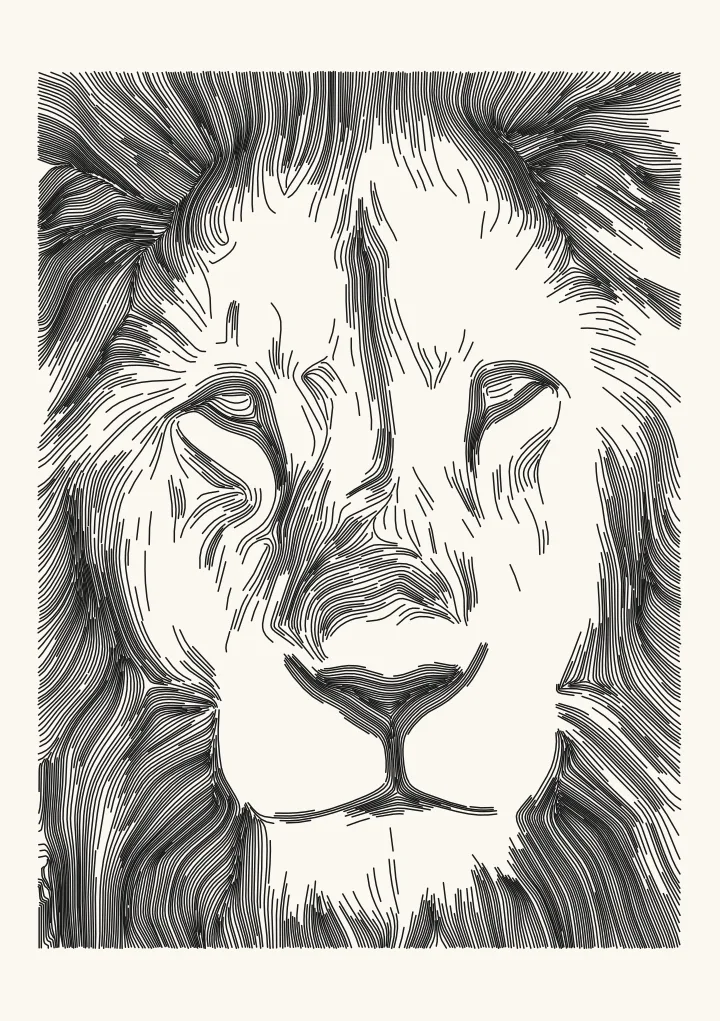
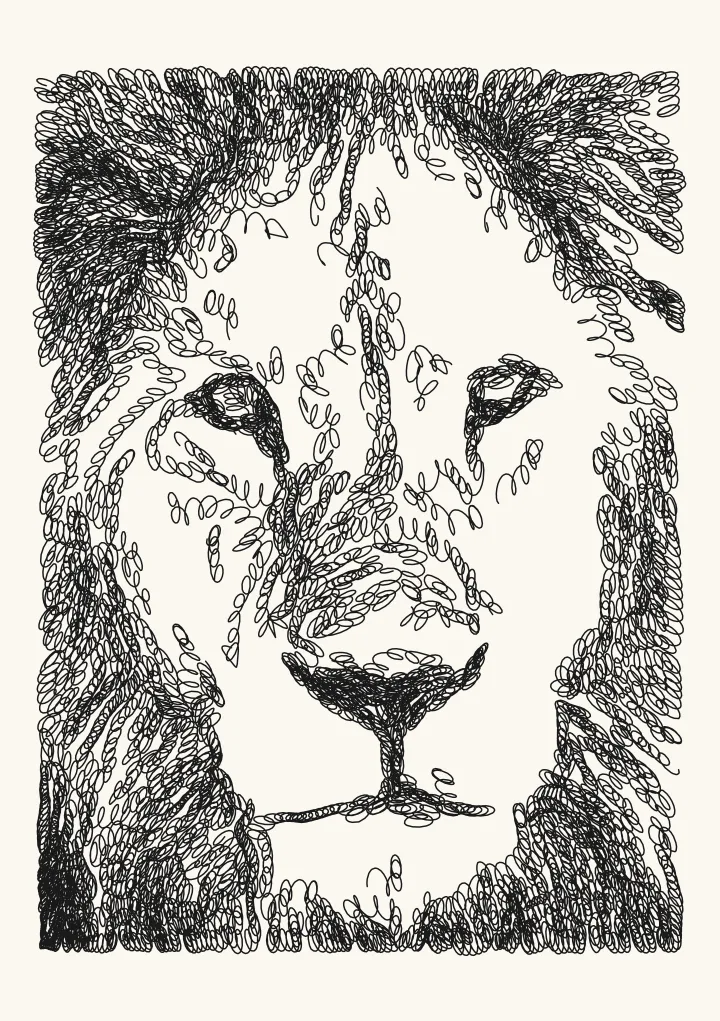
Fingerprint: ridge line art from a photo
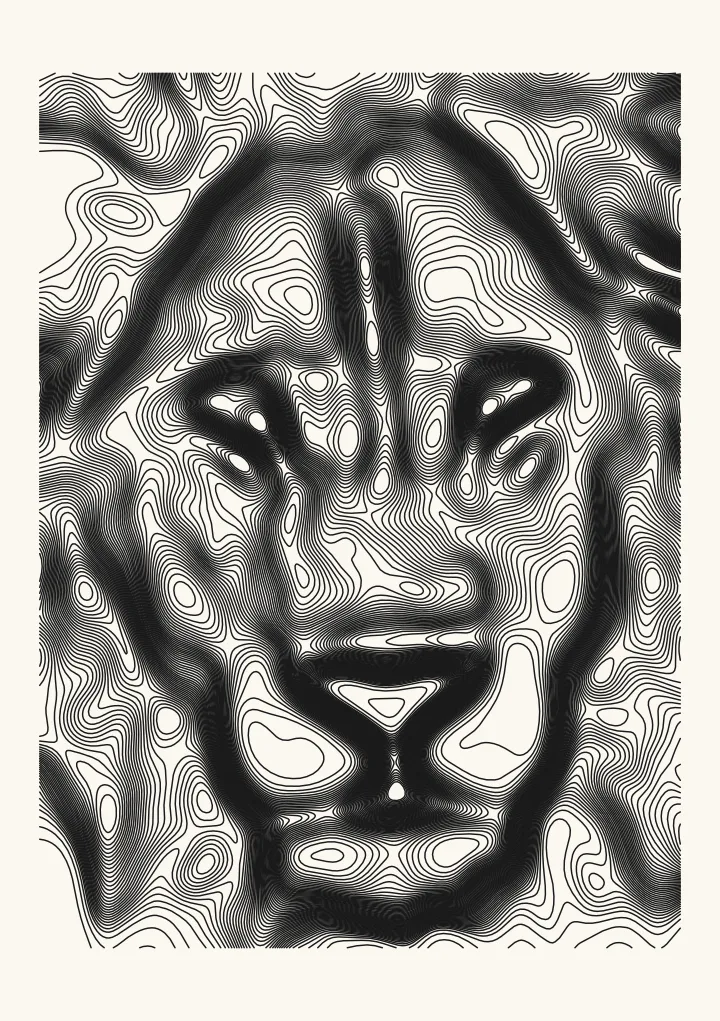
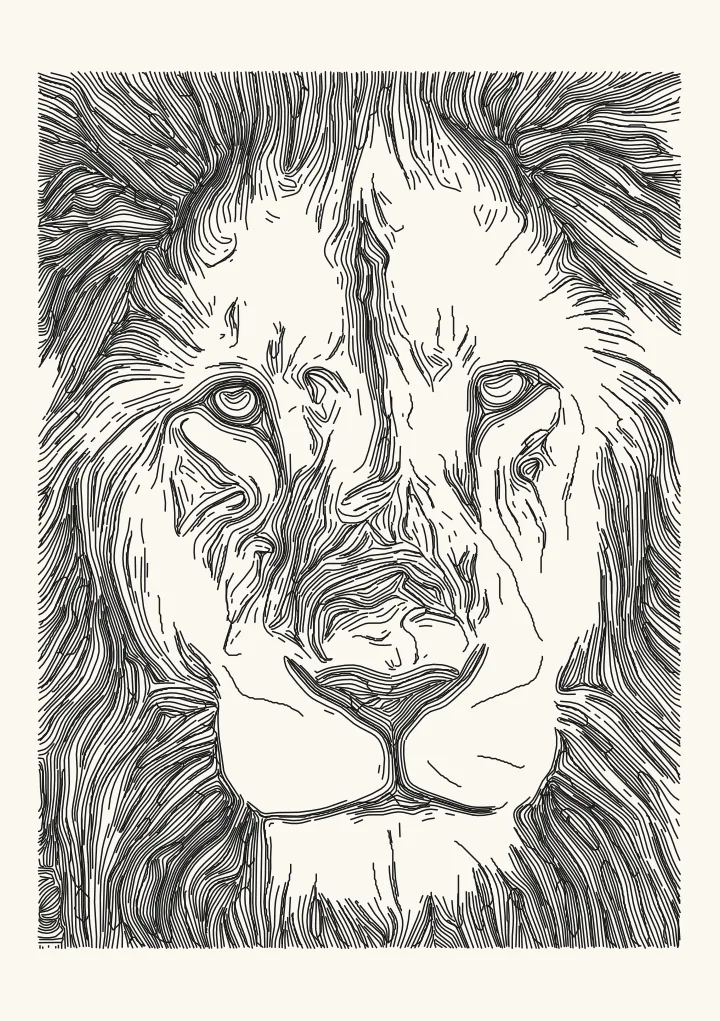
Ridges like a fingerprint: lines follow fur and form, pack tighter in the shadows, and add or drop a line by forking or turning back. Every line is closed or runs to the edge, and no two lines cross. Suits pets, feathers and dark, textured subjects. Grown by repeated oriented Gabor filtering.
Good for fur, feathers and fingerprint ridges.
Controls
- Spacing in shadows · Distance between ridge lines in the darkest areas. It never goes below twice the pen width, so neighbouring lines stay apart; pens wider than 0.5 mm give coarse ridges that show less detail.
- Spacing in lights · Distance between ridge lines in the lightest areas that still get ridges. With a wide pen it widens along with the spacing in shadows.
- Keep highlights blank · Tones lighter than this become blank paper, with ridges fading out just below it. Raise it to keep highlights clean.
More controls
- Form smoothness · How far around each point the ridges look for their direction. Higher gives calmer, straighter ridges; lower follows fine texture and makes more whorls.
- Growth passes · How long the ridge pattern grows. More passes give cleaner, more regular ridges, and take longer.
- Variation · Grows a different arrangement of forks and whorls from the same picture.
- Tone curve · Bends the tones before drawing. Above 1 lightens the mid-tones, which helps when a pen pools ink; below 1 darkens them.
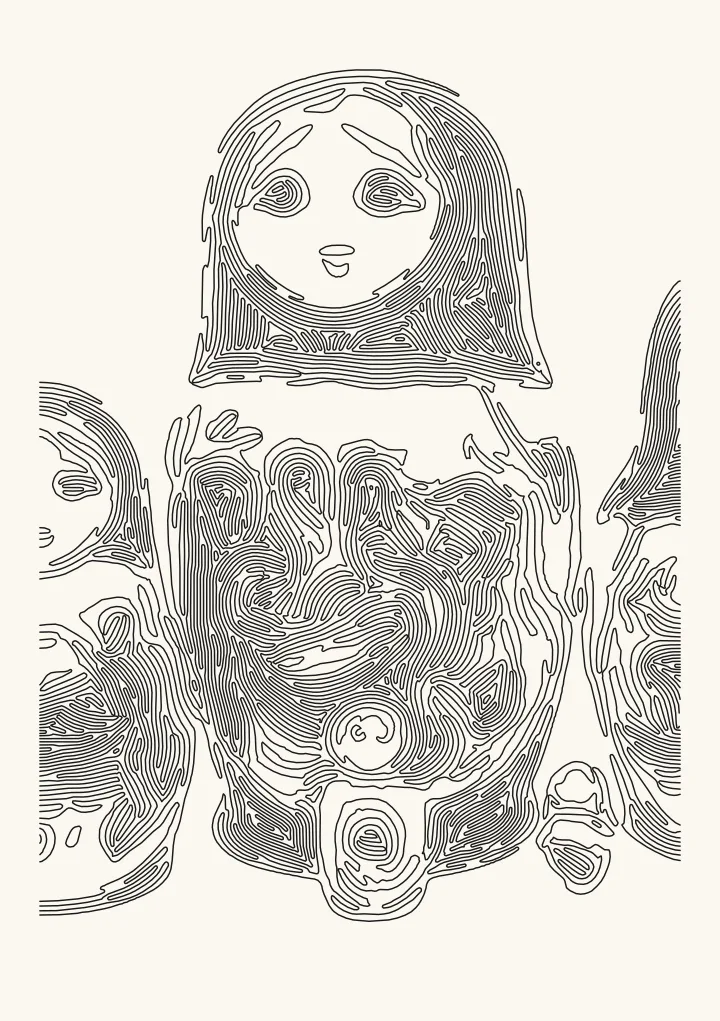
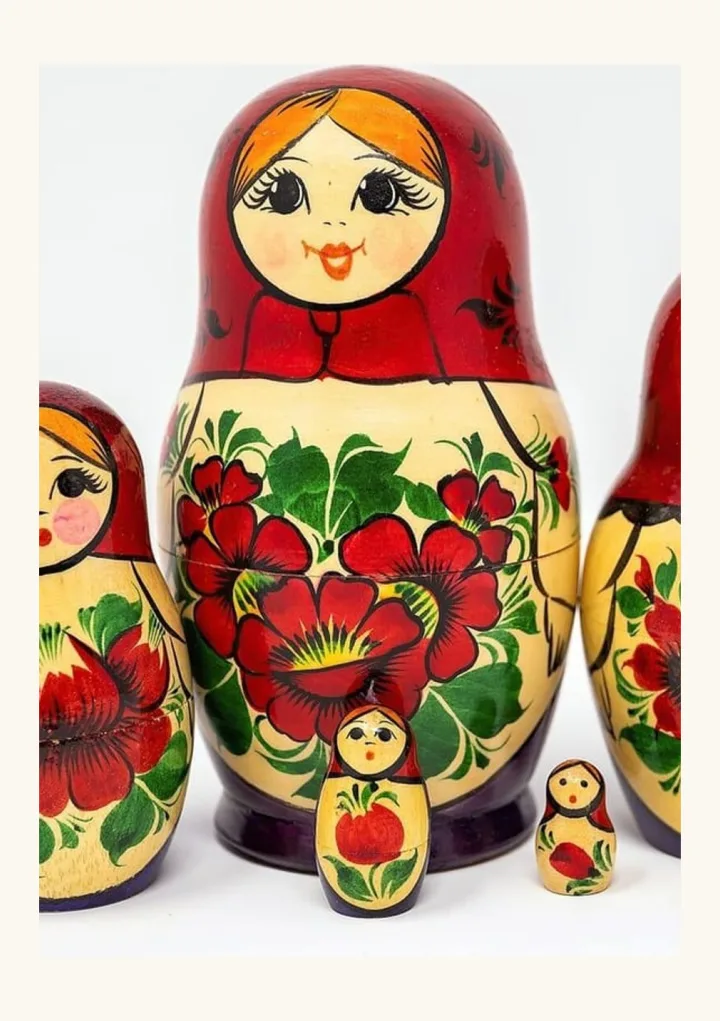
Ridges grown from the picture
Fingerprint covers the picture in ridge lines, like the ridges of a fingertip. The lines run along fur, feathers and folds, sit closer together where the photo is dark and further apart where it is light, and add or drop a line by forking or turning back. Every line is closed or runs to the edge of the picture, and no two lines cross. Tones lighter than Keep highlights blank stay paper, with the ridges fading out just below it.
The pattern is grown the way fingerprints are synthesised: a stripe pattern starts from noise and is filtered again and again with oriented Gabor filters, each one turned along the form of the picture and tuned to the spacing its tone asks for, until the stripes settle. The edges of the stripes are then traced into pen lines.
Settings and plot time
Spacing in shadows and Spacing in lights set how tight and how open the ridges get. Spacing never goes below twice the pen width, so neighbouring lines stay apart, and pens wider than 0.5 mm give coarse ridges that show less detail. Form smoothness decides how calm the ridges are: higher gives straighter ridges, lower follows fine texture and makes more whorls. Growth passes sets how long the pattern grows, and Variation grows a different arrangement of forks and whorls from the same picture.
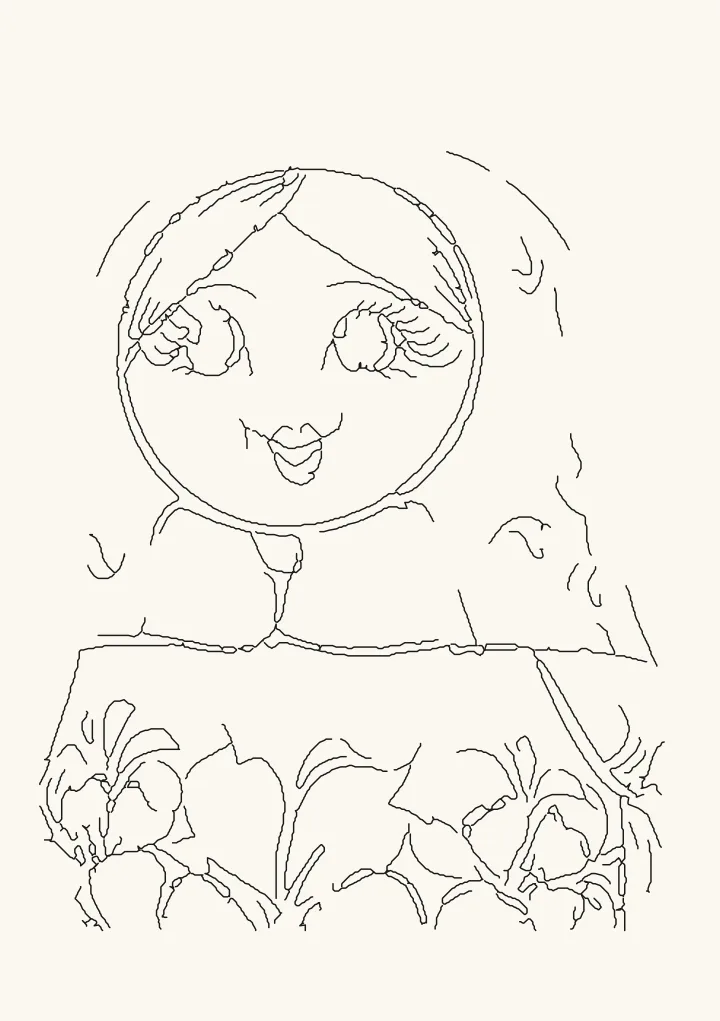
The ridges are long, so the pen lifts far less often than in hatching or stippling: the test render of a matryoshka doll draws 15 m of line in 197 paths, about 7 minutes to plot. Pets, feathers and boldly patterned subjects suit it best; pale, smooth areas such as the doll’s cheeks stay paper.