Free shield SVG files
Free shield SVG files: blank heater, French, Swiss, kite and round shields, shields with a cross, quarters, a chevron, a banner and crossed swords, a family crest and three blank badges. Both halves of every shape are mirrored by code.
15 designs. Free for personal and commercial use, no sign-up. What you can do with them.
-
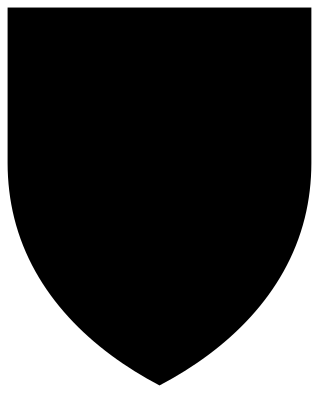 Heater shield Solid · one piece
 -
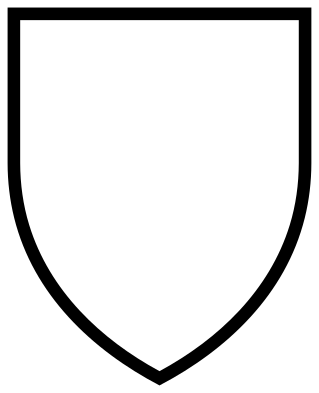 Shield outline Outline · one piece
 -
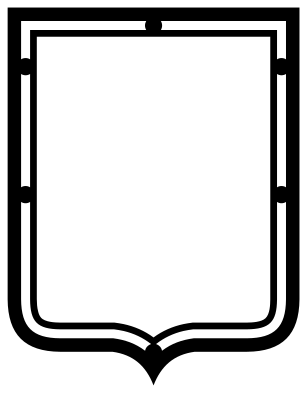 French shield with a double line Outline · one piece
 -
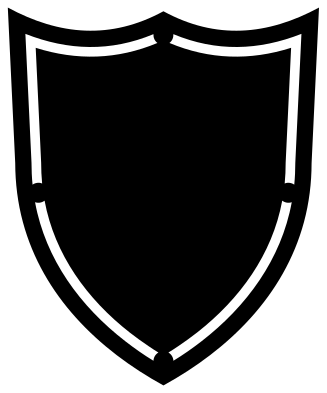 Swiss shield with a border Solid · one piece
 -
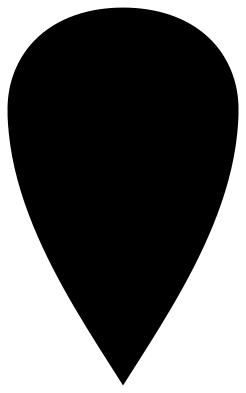 Kite shield Solid · one piece
 -
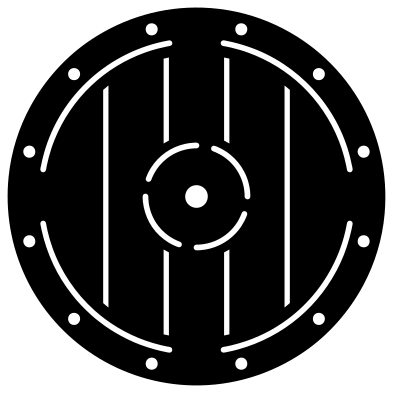 Round Viking shield Solid · one piece
 -
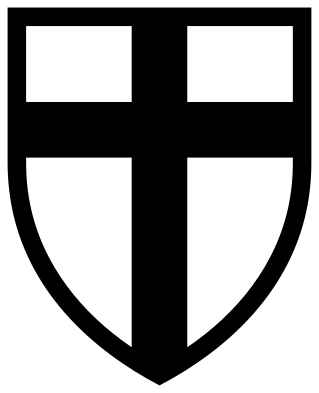 Shield with a cross Solid · one piece
 -
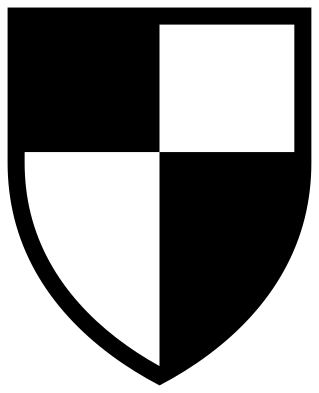 Quartered shield Solid · one piece
 -
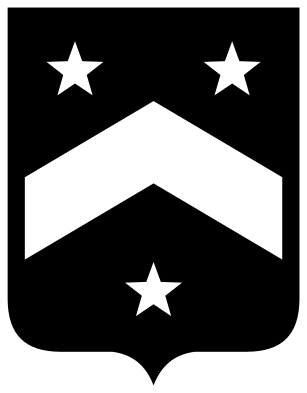 Shield with a chevron and three stars Solid · one piece
 -
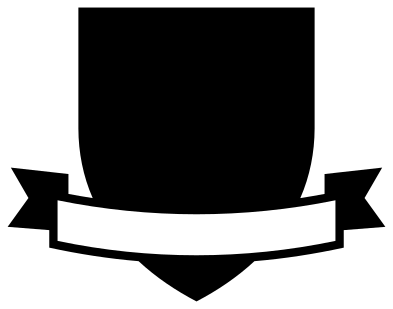 Shield with a ribbon banner Solid · one piece
 -
 Shield with crossed swords Solid · one piece
 -
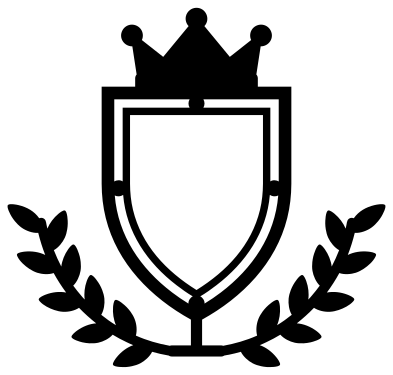 Blank family crest with crown and laurels Solid · one piece
 -
 Blank badge with a star Solid · one piece
 -
 Badge outline with a double line Outline · one piece
 -
 Seven-point star badge Solid · one piece
The shapes and their names
Heralds name shields by their outline. The heater, named much later after the flat-iron it resembles, is the shield of the thirteenth and fourteenth centuries and the shape most coats of arms are drawn on. The kite shield is older and longer. The French shield is nearly square, which leaves the most room for a complicated design, and the Swiss shield has a top edge that rises to three points.
A coat of arms is read as a field with charges on it. The quartered shield, the cross and the chevron here are three of the oldest and plainest arrangements. In heraldry a colour is never laid on a colour nor a metal on a metal, so for a traditional look pair gold or silver (yellow or white) with red, blue, green, purple or black.
Using them
The solid heater and kite shields are single shapes that cut at any size, and they make good bases: cut one in a dark colour, then cut the outline, the cross or the quartered shield in a lighter one and lay it on top. On the double-line designs, the small round ties across the gap hold the inner line in place, so leave them in.
For a name sign, the French shield and the banner shield have the most usable space. At file size, 100 mm wide, the banner is about 11 mm high inside its line, enough for one row of letters 7 mm tall.
How to open the files
- Cricut Design Space: choose Upload, pick the SVG, and add it to the canvas. Set the width you want; the shape is already welded.
- Silhouette Studio: Designer Edition and above open the SVG. The free Basic Edition does not, so open the DXF instead.
- LightBurn, xTool Creative Space and Glowforge: import the SVG, then set the layer to cut, score or engrave.
- Inkscape, Illustrator and Affinity: open the SVG. It is a plain filled path, so you can recolour it, add a stroke or combine it with your own work.
- Printing or sublimation: use the PNG, which has a transparent background.
Each design page lists the file’s narrowest part at seven sizes, so you can tell whether it will survive at the size you plan to cut.
Questions
Which shield shape should I use for a family crest?
The heater is the traditional choice and suits simple designs. If you have a lot to fit in, use the French shield, which is squarer. The blank family crest here already has a crown and laurels round a small shield, with room for one initial or a single device.
Can I split a shield into two colours?
Yes. Use the quartered shield as it is, or slice the solid heater shield in your cutting software: a vertical cut gives the division heralds call per pale, a horizontal one per fess and a diagonal one per bend. Cut each part in its own colour.
What is the difference between a shield and a badge here?
The shields follow old heraldic outlines with a flat or pointed top. The badge has a peak, shoulders and a waist, like a metal badge pinned to a coat, and the star badge is a seven-pointed star. All of them are blank, with no lettering or emblems.
 Cross SVG
  Paw print SVG
  Shamrock SVG
  Anchor SVG
  Compass SVG
  Gear SVG