Free cross SVG files
Free cross SVG files: plain Latin crosses in several weights, Celtic, budded, flared and pointed crosses, and a few quiet decorative ones. Each is drawn by code, so the arms are square to each other and both sides match.
17 designs. Free for personal and commercial use, no sign-up. What you can do with them.
-
 Latin cross Solid · one piece
 -
 Slim Latin cross Solid · one piece
 -
 Chunky cross with round ends Solid · one piece
 -
 Flared cross Solid · one piece
 -
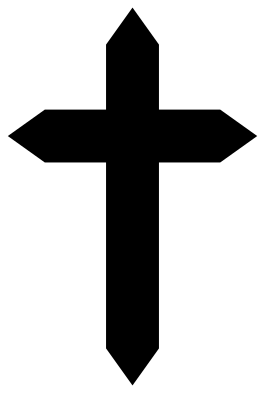 Cross with pointed ends Solid · one piece
 -
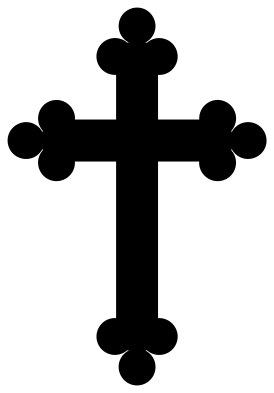 Budded cross Solid · one piece
 -
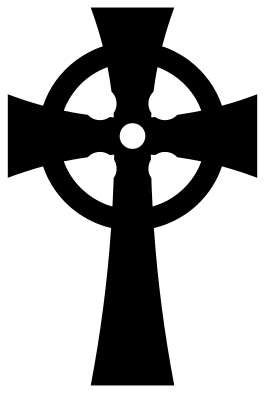 Celtic cross with a ring Solid · one piece
 -
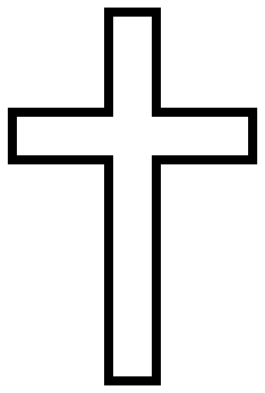 Cross outline Outline · one piece
 -
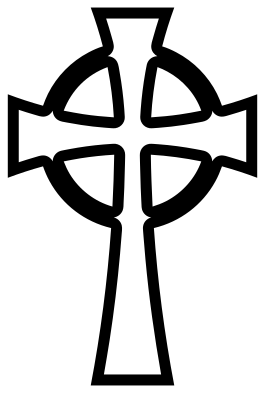 Celtic cross outline Outline · one piece
 -
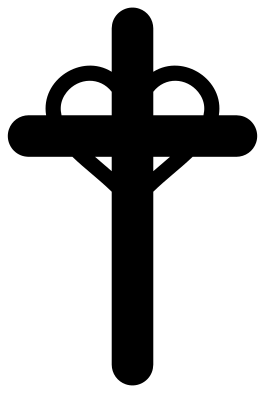 Cross with a heart Solid · one piece
 -
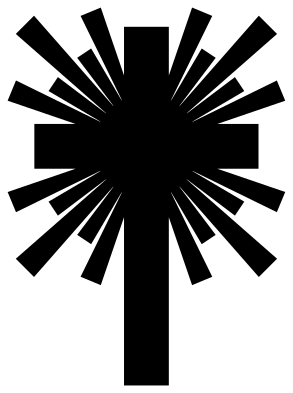 Cross with rays of light Solid · one piece
 -
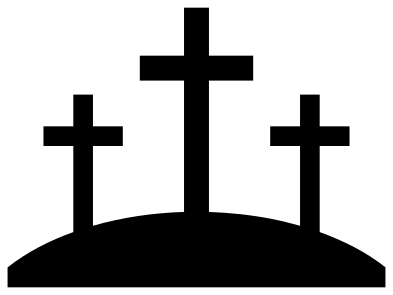 Three crosses on a hill Solid · one piece
 -
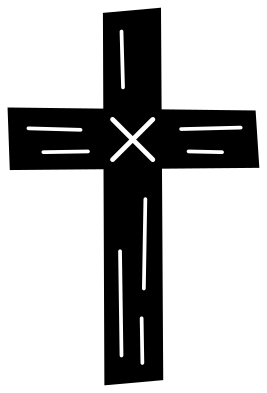 Rugged wooden cross Solid · one piece
 -
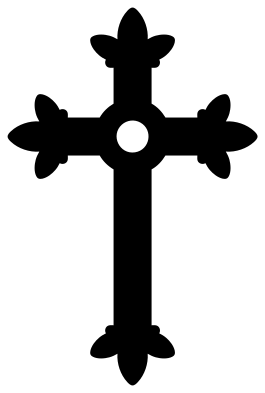 Fancy cross with lily ends Solid · one piece
 -
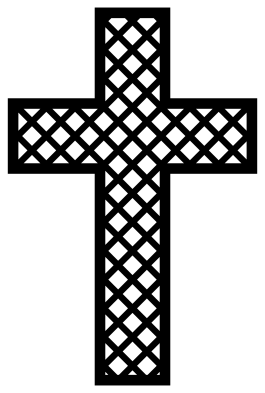 Lattice cross Solid · one piece
 -
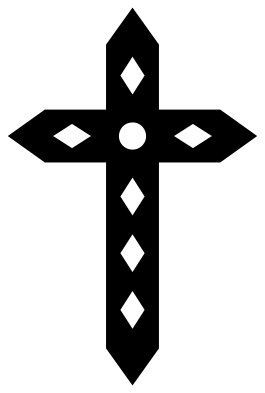 Decorative cross with cut diamonds Solid · one piece
 -
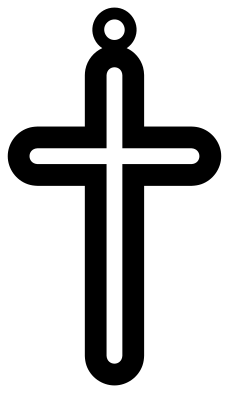 Cross pendant with a loop Solid · one piece
Proportions and sizes
Most crosses here keep the Latin proportion: the crossbar sits about a third of the way down, and the whole cross is about two thirds as wide as it is tall. Every single cross is 100 mm tall. The plain Latin cross has beams 15 mm wide at that size and the slim one 9 mm, so both can be cut very small: at 25 mm tall the slim cross still has beams over 2 mm wide.
The Celtic, lattice and fancy crosses have finer parts. Each design page lists its narrowest part at 100 mm; halve the size and that part halves too. As a guide, keep the lattice cross at 80 mm or taller in vinyl and 120 mm or taller in wood.
Materials and uses
For heat transfer vinyl on baptism gowns, stoles and shirts, the plain, round-ended and flared crosses press cleanly because they have no small islands. For wall crosses in 3 mm or 6 mm plywood, the Latin, flared, budded and Celtic crosses are strong all the way through; add a hanging hole behind the top arm rather than through it.
The outline crosses are made for foil, engraving and pen plotting, and for layering: cut the solid Latin cross in one colour and the outline in another, and stack them for a bordered cross.
How to open the files
- Cricut Design Space: choose Upload, pick the SVG, and add it to the canvas. Set the width you want; the shape is already welded.
- Silhouette Studio: Designer Edition and above open the SVG. The free Basic Edition does not, so open the DXF instead.
- LightBurn, xTool Creative Space and Glowforge: import the SVG, then set the layer to cut, score or engrave.
- Inkscape, Illustrator and Affinity: open the SVG. It is a plain filled path, so you can recolour it, add a stroke or combine it with your own work.
- Printing or sublimation: use the PNG, which has a transparent background.
Each design page lists the file’s narrowest part at seven sizes, so you can tell whether it will survive at the size you plan to cut.
Questions
What is the difference between a Latin cross and a Celtic cross?
A Latin cross is a plain upright with a shorter crossbar set above the middle. A Celtic cross adds a ring round the point where the two meet. The ring may have begun as a brace on carved stone crosses in Ireland and Britain, and it makes the cut shape stronger too.
Which cross is best for very small sizes, such as earrings or a charm?
The plain Latin cross, the chunky cross with round ends or the cross pendant, which already has a loop for a jump ring. All three have no thin parts, so they hold up at 20 to 30 mm tall in leather, acrylic or wood.
Can I add a name or a verse to a cross?
Yes. Put a name along the crossbar of the plain Latin cross, sized to about half the height of the beam, and slice it out or layer it on top. For a longer verse, use the cross outline as a border and set the text inside or beside it.
 Paw print SVG
  Shamrock SVG
  Anchor SVG
  Compass SVG
  Gear SVG
  Lightning bolt SVG