Free kitchen conversion chart SVG files
Free kitchen conversion chart SVG files: cups to tablespoons, fluid ounces and millilitres, gallons down to cups, ounces to grams, sticks of butter, and oven temperatures in Fahrenheit, Celsius and gas mark. The measures are US customary, and every figure is computed from the definitions and checked.
14 designs. Free for personal and commercial use, no sign-up. What you can do with them.
Or choose one below for its PNG, DXF and cutting sizes.
-
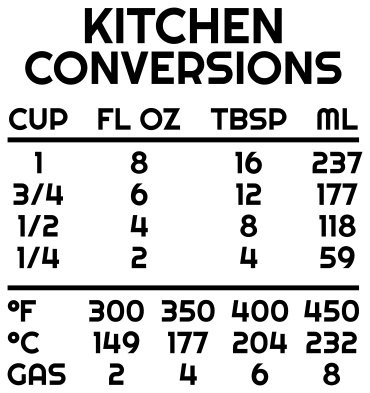 Kitchen conversion chart for cups and oven Solid · 99 pieces
 -
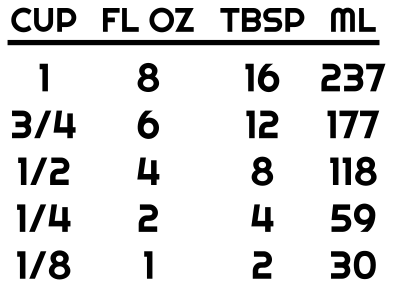 Kitchen conversion chart: cups to millilitres Solid · 52 pieces
 -
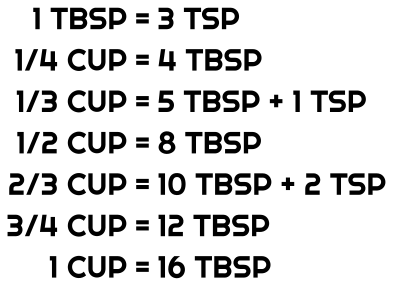 Kitchen conversion chart: cups to spoons Solid · 100 pieces
 -
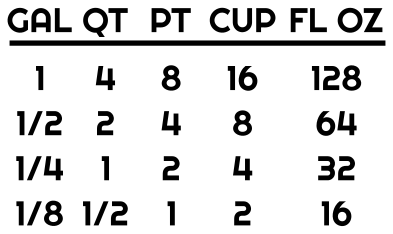 Kitchen conversion chart: gallons to cups Solid · 49 pieces
 -
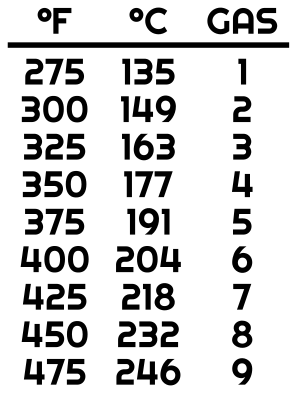 Kitchen conversion chart for oven temperatures Solid · 71 pieces
 -
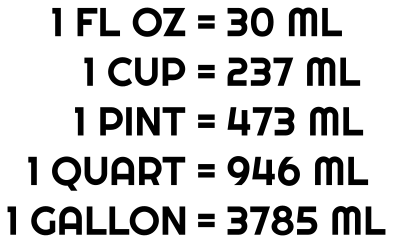 Kitchen conversion chart: US measures in ml Solid · 62 pieces
 -
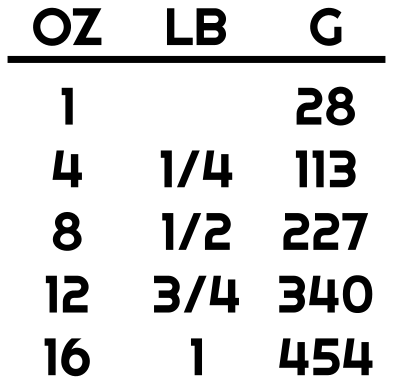 Ounces to grams kitchen conversion chart Solid · 37 pieces
 -
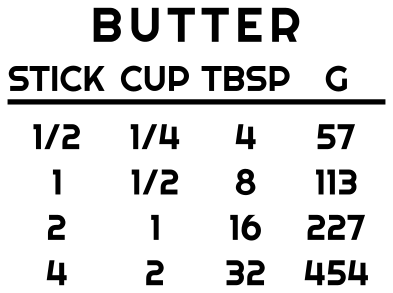 Kitchen conversion chart for butter in sticks Solid · 51 pieces
 -
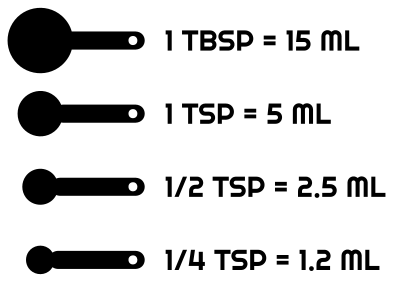 Kitchen conversion chart with measuring spoons Solid · 50 pieces
 -
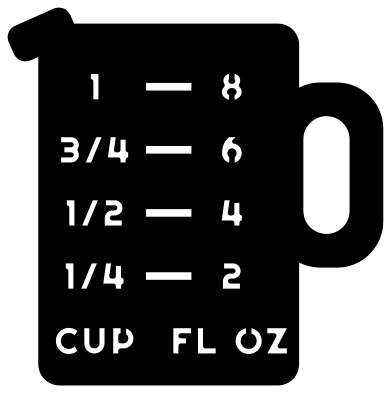 Measuring cup kitchen conversion chart Solid · one piece
 -
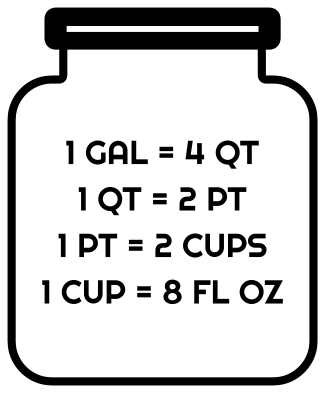 Mason jar kitchen conversion chart Solid · 39 pieces
 -
 Kitchen conversion chart title lettering Solid · 15 pieces
 -
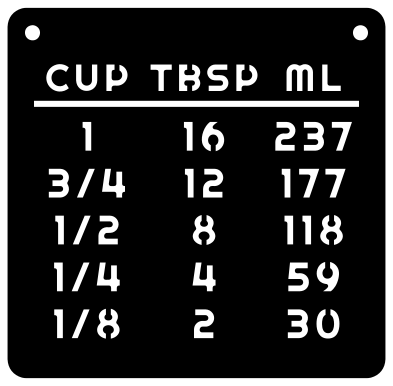 Kitchen conversion chart plaque in one piece Solid · one piece
 -
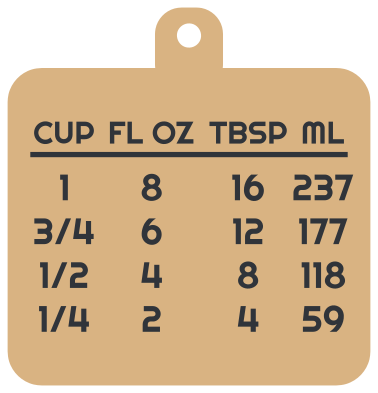 Layered kitchen conversion chart on a board Layered · 46 pieces
Which cup these charts mean
The charts use US customary measures: 1 cup = 16 tablespoons = 48 teaspoons = 8 US fluid ounces, which is 237 ml to the nearest millilitre, and 1 tablespoon = 3 teaspoons, about 15 ml. A US pint is 16 fluid ounces, 473 ml, and a US gallon is 3785 ml.
Cups differ elsewhere. The metric cup of Australia, New Zealand and Canada is 250 ml, a little larger than the US cup, and an Australian tablespoon is 20 ml, not 15. British recipes mostly give weights and millilitres; the imperial pint is 20 imperial fluid ounces, 568 ml, and the imperial fluid ounce is slightly smaller than the US one. A metric cup holds about 6 per cent more than a US cup, so for recipes written in metric cups, work from the millilitre column.
Oven temperatures and gas marks
The Celsius figures are true conversions rounded to the nearest degree, so 350 °F is shown as 177 °C and 400 °F as 204 °C. Recipes and oven dials usually round these again to the nearest ten or twenty, to 180 and 200. Gas mark 1 is 275 °F, and each mark above it is 25 °F hotter, up to gas mark 9 at 475 °F. For a fan oven, the usual advice is to set it about 20 °C lower than the recipe states.
Cutting and sizes
A chart inside a cupboard door is usually 200 to 300 mm across. The files are 100 mm on their longer side and the smallest figures in them are a little under 6 mm tall, so at 250 mm they are about 14 mm: easy to weed and to read at arm’s length. Below about 150 mm the fraction bars and equals signs get fine, so use the single tables, which have the largest lettering. The lettering is loose pieces: apply each table with one sheet of transfer tape. The plaque and the measuring jug are single pieces with the figures cut through.
How to open the files
- Cricut Design Space: choose Upload, pick the SVG, and add it to the canvas. Set the width you want; the shape is already welded.
- Silhouette Studio: Designer Edition and above open the SVG. The free Basic Edition does not, so open the DXF instead.
- LightBurn, xTool Creative Space and Glowforge: import the SVG, then set the layer to cut, score or engrave.
- Inkscape, Illustrator and Affinity: open the SVG. It is a plain filled path, so you can recolour it, add a stroke or combine it with your own work.
- Printing or sublimation: use the PNG, which has a transparent background.
Each design page lists the file’s narrowest part at seven sizes, so you can tell whether it will survive at the size you plan to cut.
Questions
How many tablespoons are in a third of a cup?
Five tablespoons and one teaspoon, exactly. A cup is 48 teaspoons, so a third of a cup is 16 teaspoons, which is 5 tablespoons of 3 teaspoons each with 1 teaspoon over. Two thirds of a cup is 10 tablespoons and 2 teaspoons.
Why does the chart say 237 ml when my measuring cup says 240 or 250?
The US customary cup is 236.6 ml, which rounds to 237. Food labels in the United States use a cup of exactly 240 ml, and metric measuring cups are 250 ml. The differences are under 6 per cent and seldom matter for cooking, but for baking, pick one set of cups and stay with it.
Is a fluid ounce the same as an ounce?
No. A fluid ounce measures volume and an ounce measures weight. A US fluid ounce of water weighs a little more than an ounce, and a fluid ounce of flour weighs far less. That is why the charts keep them apart: fluid ounces with cups and millilitres, ounces with pounds and grams, where 1 oz is 28 g.
 Pineapple SVG
  Coffee cup SVG
  Wine glass SVG
  Beer mug SVG
  Cupcake SVG
  Donut SVG