Free explosion box SVG files
Free explosion box SVG templates: the plain square box, hexagon, octagon and rectangle boxes, a three layer box, heart and petal walls, pockets, a tall tower and a box with a three tier cake inside. Every lid is drawn to fit its box.
11 designs. Free for personal and commercial use, no sign-up. What you can do with them.
-
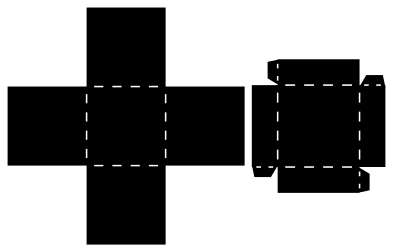 Explosion box template with a lid Solid · 2 pieces
 -
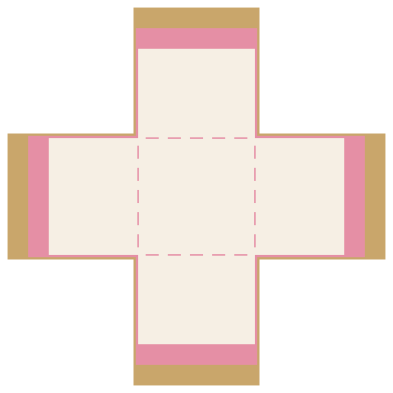 Exploding box with three layers Layered · 3 pieces
 -
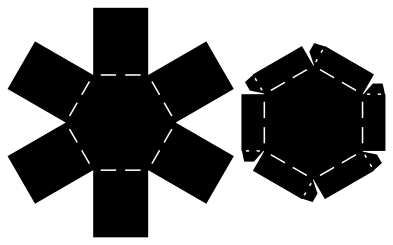 Hexagon explosion box with a lid Solid · 2 pieces
 -
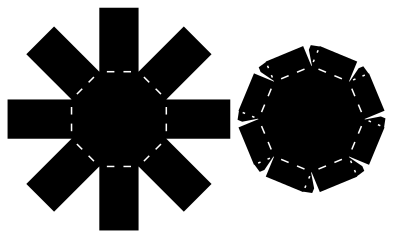 Octagon explosion box with a lid Solid · 2 pieces
 -
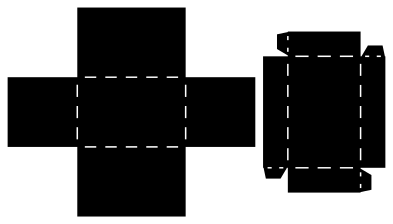 Rectangle explosion box with a lid Solid · 2 pieces
 -
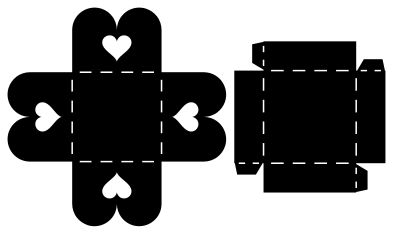 Heart explosion box with a lid Solid · 2 pieces
 -
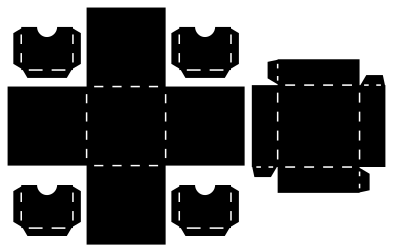 Explosion box with four pockets Solid · 6 pieces
 -
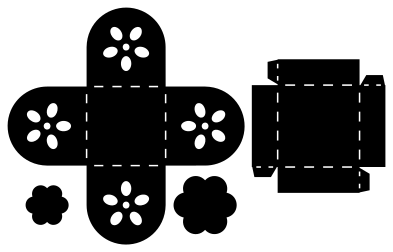 Explosion box with petal walls for mum Solid · 4 pieces
 -
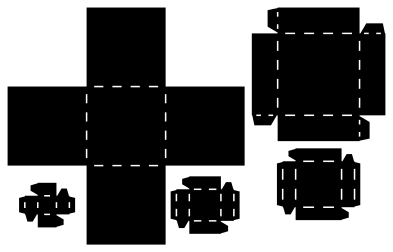 Explosion box with a three tier cake Solid · 5 pieces
 -
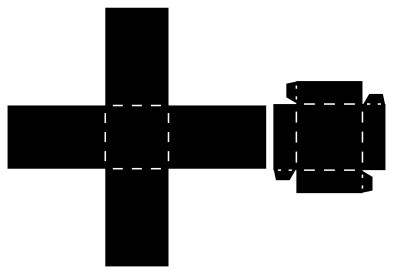 Tall explosion box with a lid Solid · 2 pieces
 -
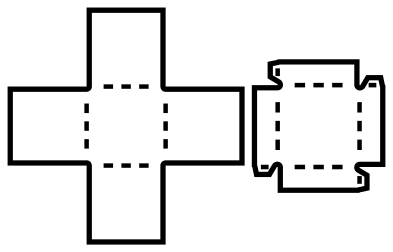 Explosion box template to print and cut by hand Outline · 30 pieces
How an explosion box works
The base is one piece: a middle panel with a wall hinged to each side. Nothing is glued. Fold the walls up, drop the lid over them, and the lid alone holds the box shut. Lift the lid and the walls fall flat, showing whatever you fixed to the inside: photos, messages, pockets or a paper cake.
The lid is the only part that needs glue: fold its sides down and stick each corner tab inside the next side. Each lid here is 2 mm larger across than its base, 1 mm on every side, which is right for card up to 300 gsm. If you add the two inner layers, they sit inside the outer walls, so the same lid still fits.
Sizes and card
The files are 100 mm on their longer side, so scale them up before cutting. The plain box and its lid, cut 265 mm wide, make a box 55 mm square from a sheet 265 by 166 mm, which fits A4 or Letter card. For a bigger box, cut the cross and the lid from separate sheets. The cross is three times as wide as the box, so the 290 mm that a 12 inch mat can cut gives a box about 96 mm square: scale the file until the cross measures 290 mm, then move the lid on to a second sheet.
Use 250 to 300 gsm card for the outer walls and the lid, so that the box stands up, and lighter 160 to 200 gsm card or patterned paper for inner layers and pockets. The fold lines are cut as rows of slits, so there is nothing to score. Fold each wall both ways a few times before you decorate it, and it will fall open cleanly.
How to open the files
- Cricut Design Space: choose Upload, pick the SVG, and add it to the canvas. Set the width you want; the shape is already welded.
- Silhouette Studio: Designer Edition and above open the SVG. The free Basic Edition does not, so open the DXF instead.
- LightBurn, xTool Creative Space and Glowforge: import the SVG, then set the layer to cut, score or engrave.
- Inkscape, Illustrator and Affinity: open the SVG. It is a plain filled path, so you can recolour it, add a stroke or combine it with your own work.
- Printing or sublimation: use the PNG, which has a transparent background.
Each design page lists the file’s narrowest part at seven sizes, so you can tell whether it will survive at the size you plan to cut.
Questions
How much larger than the box should the lid be?
About 2 mm across for one layer of card, which is how these are drawn: the plain box is 55 mm square and its lid 57 mm inside when the file is cut 265 mm wide. A lid that is any tighter stops the walls from falling when you lift it.
Why will the walls not stay up while I fit the lid?
They are not meant to. Hold two opposite walls up with one hand, lower the lid over them, then tuck the other two in. A loop of ribbon tied round the closed box helps if it is going in the post.
How do I add layers to the plain box?
Cut the three layer design in three colours, with its outer cross 165 mm wide. Glue only the middle squares together, largest at the bottom, and leave the walls free. Each layer is shorter than the one outside it, so all three show when the box opens.
 Crown SVG
  Banner SVG
  Bow SVG
  Gift tag SVG
  Pillow box SVG
  Gift card holder SVG