Free checkerboard SVG patterns
Free checkerboard patterns as vector files: boards and loose-square fields at three scales, a wavy retro board, a racing fade, a floor in perspective, checks in a circle, a heart and a star, and checkered racing flags. Every square is true and every corner meets exactly.
16 designs. Free for personal and commercial use, no sign-up. What you can do with them.
-
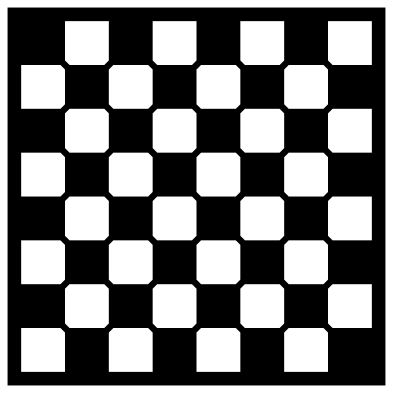 Checkerboard with a border Solid · one piece
 -
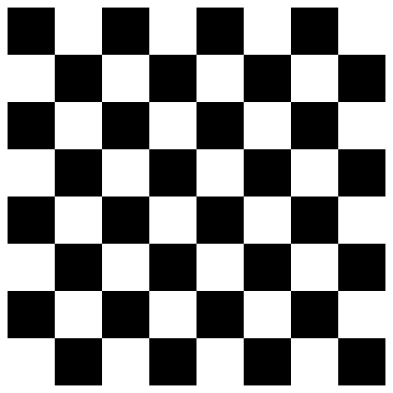 Checkered pattern of loose squares Solid · 32 pieces
 -
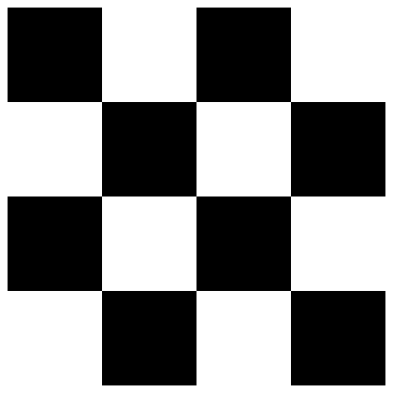 Large checkerboard squares Solid · 8 pieces
 -
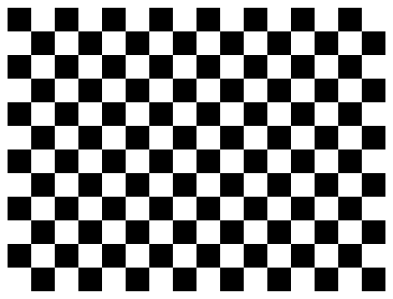 Small checkerboard background Solid · 96 pieces
 -
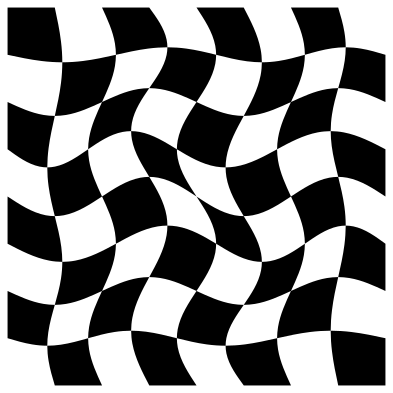 Wavy checkerboard Solid · 32 pieces
 -
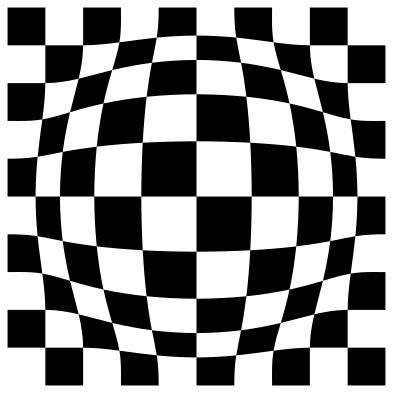 Bulging checkerboard Solid · 50 pieces
 -
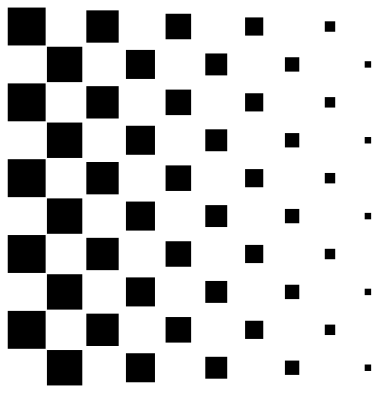 Fading checkerboard Solid · 50 pieces
 -
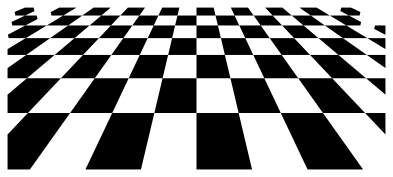 Checkerboard floor in perspective Solid · 54 pieces
 -
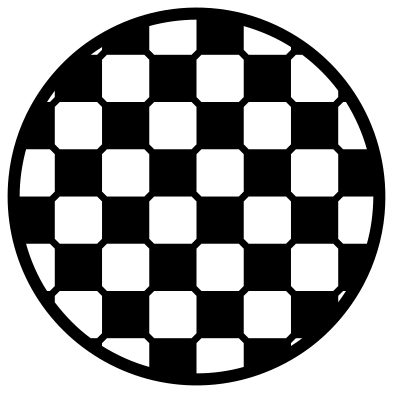 Checkerboard circle Solid · one piece
 -
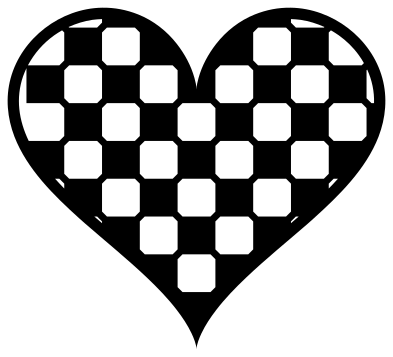 Checkerboard heart Solid · one piece
 -
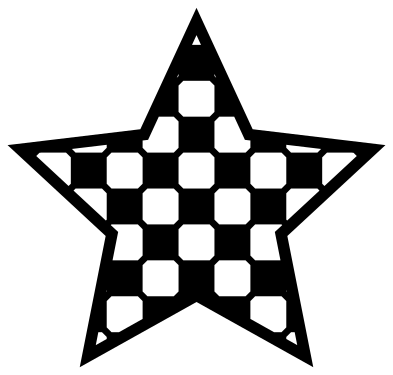 Checkerboard star Solid · one piece
 -
 Checkered border Solid · 16 pieces
 -
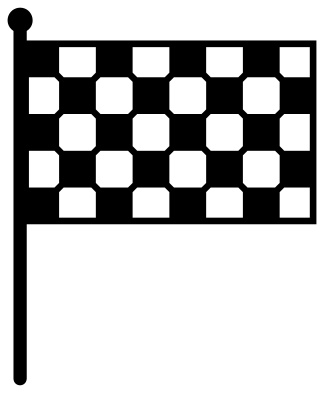 Checkered flag on a pole Solid · one piece
 -
 Waving checkered flag Solid · one piece
 -
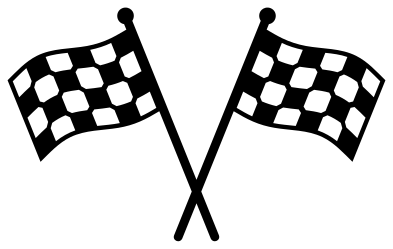 Crossed checkered flags Solid · one piece
 -
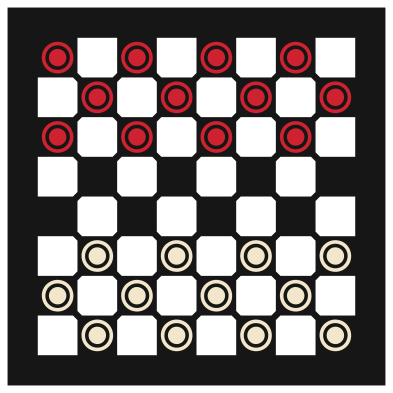 Checkerboard with draughts pieces Layered · 49 pieces
Loose squares or one piece
In a checkerboard, squares of the same colour touch only at their corners, and a corner has no width. So a board cut from one sheet is really a set of separate squares. That suits adhesive vinyl and iron-on: cut the pattern, weed away every other square, and move the rest with transfer tape so the spacing holds. The pattern, the large squares, the background, the wavy and bulging boards, the fade, the floor and the border are made this way.
For card, felt, wood and acrylic the squares need to hold on to each other. The board with a border, the circle, the heart, the star and the flags have a small diamond welded over each corner where two squares meet, between 1.7 and 1.9 mm across at 100 mm. It is too small to notice at arm’s length, and it turns the whole board into a single piece that lifts off the mat in one go.
Sizes and filling shapes
The loose patterns are exact: 12.5 mm squares on the standard pattern, 25 mm on the large one and 6.25 mm on the background, all at 100 mm wide. Because the 8 by 8 pattern starts with a dark square and ends with a light one on every row, copies placed edge to edge carry on without a break.
To fill a word or a shape with checks, lay a loose pattern over it and use Slice in Cricut Design Space or Intersect in Silhouette Studio or Inkscape. Pick a scale that puts at least three squares across the narrowest part of the shape, or the checks stop reading as a board.
How to open the files
- Cricut Design Space: choose Upload, pick the SVG, and add it to the canvas. Set the width you want; the shape is already welded.
- Silhouette Studio: Designer Edition and above open the SVG. The free Basic Edition does not, so open the DXF instead.
- LightBurn, xTool Creative Space and Glowforge: import the SVG, then set the layer to cut, score or engrave.
- Inkscape, Illustrator and Affinity: open the SVG. It is a plain filled path, so you can recolour it, add a stroke or combine it with your own work.
- Printing or sublimation: use the PNG, which has a transparent background.
Each design page lists the file’s narrowest part at seven sizes, so you can tell whether it will survive at the size you plan to cut.
Questions
Why do the squares fall apart when I cut a checkerboard?
Because squares of one colour only meet at their corners, and a corner is a point with no material in it. Use one of the one-piece designs, where a small diamond is welded over each corner, or cut loose squares in vinyl and move them together with transfer tape.
How do I make a two-colour checkerboard?
Cut the loose-square pattern once in each colour. Lay the first colour down, then turn the second copy a quarter turn, or shift it across by one square, and its squares fall into the gaps of the first.
How big should I cut a checkered flag?
At 100 mm the single flags have checks of about 10 mm with joins 1.8 mm across, and they cut cleanly in vinyl and card. The crossed pair is drawn smaller to fit both flags in, so its joins are 1.2 mm: cut it at 150 mm or more for card, or keep it to vinyl.
 Halftone patterns
  Spiral vectors
  Leopard print
  Cow print
  Zebra print
  Mermaid scales