Free cow print SVG patterns
Free cow print as vector files: square swatches at three scales, a tile that repeats without a seam, cow print hearts, stars and circles, a cow hide, and loose cow spots. The patches are large and uneven, with bays and lobes like a real Holstein, and every one is a smooth closed shape.
14 designs. Free for personal and commercial use, no sign-up. What you can do with them.
-
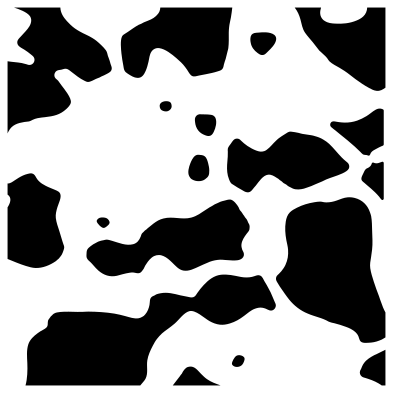 Cow print pattern Solid · 18 pieces
 -
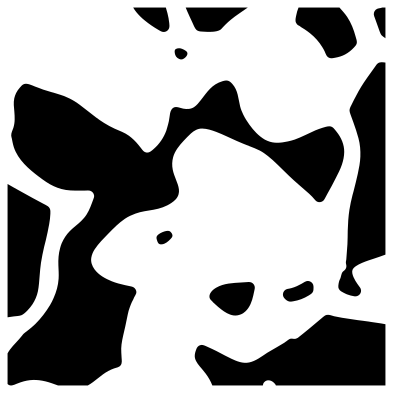 Large cow print Solid · 12 pieces
 -
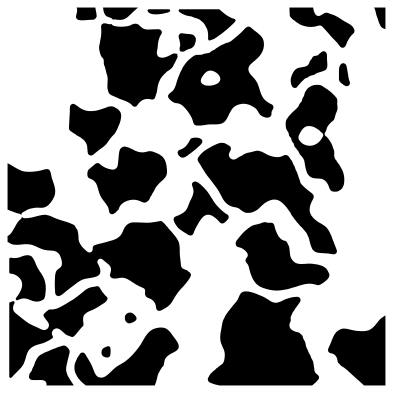 Small cow print Solid · 28 pieces
 -
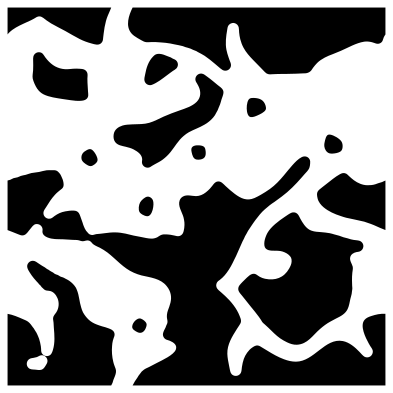 Seamless cow print tile Solid · 15 pieces
 -
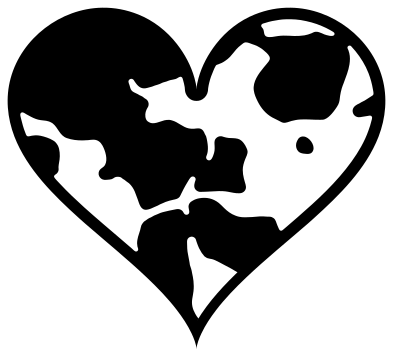 Cow print heart with an outline Solid · 2 pieces
 -
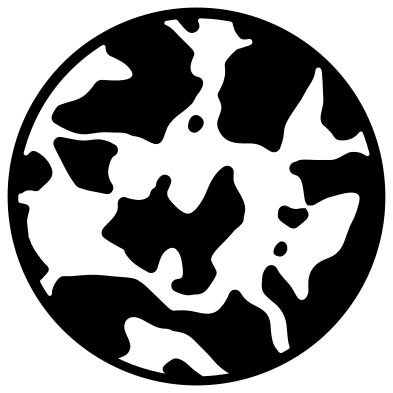 Cow print circle Solid · 6 pieces
 -
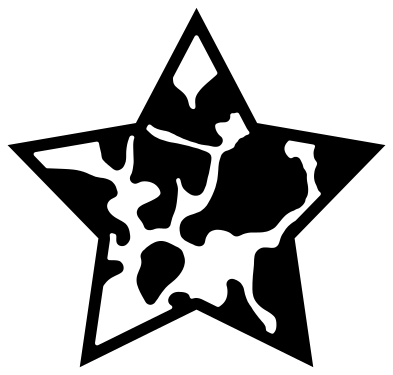 Cow print star Solid · 2 pieces
 -
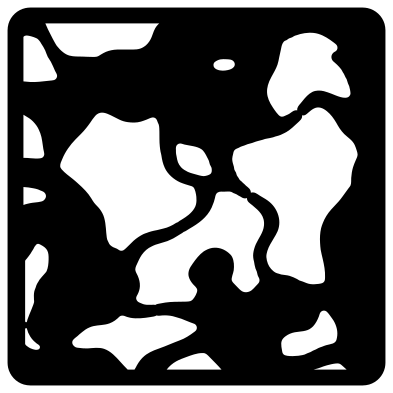 Cow print stencil panel Solid · one piece
 -
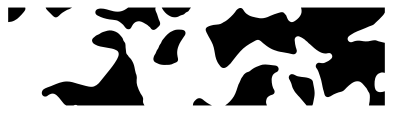 Cow print border strip Solid · 10 pieces
 -
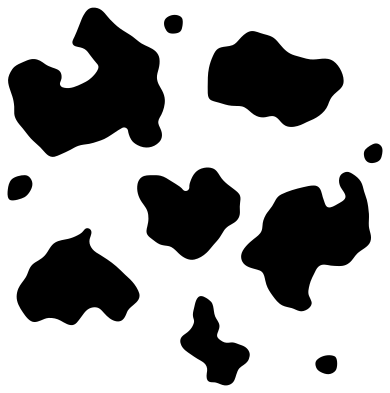 Loose cow print spots Solid · 10 pieces
 -
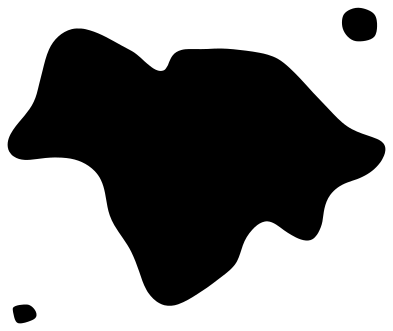 Single cow spot Solid · 3 pieces
 -
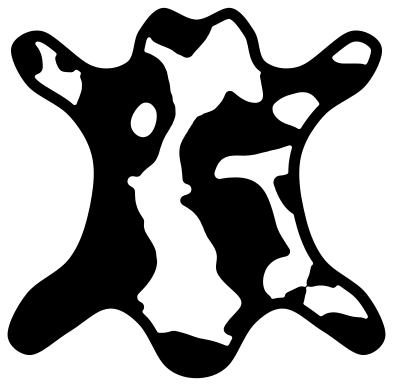 Cow hide rug with cow print Solid · one piece
 -
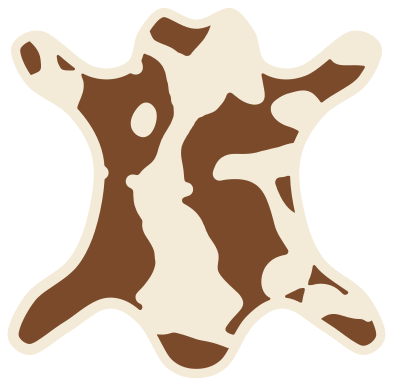 Brown and white cow hide Layered · 11 pieces
 -
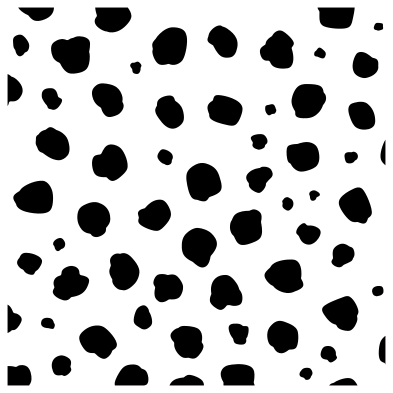 Dalmatian spot print Solid · 64 pieces
Using cow print
Cow print is black patches on white, so there is only one thing to cut: the patches. Cut them in black vinyl and press or stick them on a white shirt, mug or sign, and the base does the rest. For a brown cow, cut the same file in brown. The patches are loose pieces, so lift the whole pattern with transfer tape to keep them where they belong.
To fill a word or a shape with cow print, lay a swatch over it in your cutting software, select both and use Slice in Cricut Design Space, Intersect in Silhouette Studio or Path, Intersection in Inkscape. Pick the scale to suit: the large print for anything over about 150 mm, the small print for letters and earrings. A shape filled with patches alone can lose its edge where the white runs off it, which is why the heart, the star and the hide here are drawn with an outline.
What to watch for when cutting
Big patches are easy to weed, but each has narrow places where a lobe joins the body. Each design page lists the narrowest of these. Keep it above about 1 mm in vinyl and 2 mm in wood or acrylic after scaling. The stencil panel is the reverse of the print: one solid sheet with patch-shaped holes, for painting cow print through, or for card and wood where loose patches would be no use.
How to open the files
- Cricut Design Space: choose Upload, pick the SVG, and add it to the canvas. Set the width you want; the shape is already welded.
- Silhouette Studio: Designer Edition and above open the SVG. The free Basic Edition does not, so open the DXF instead.
- LightBurn, xTool Creative Space and Glowforge: import the SVG, then set the layer to cut, score or engrave.
- Inkscape, Illustrator and Affinity: open the SVG. It is a plain filled path, so you can recolour it, add a stroke or combine it with your own work.
- Printing or sublimation: use the PNG, which has a transparent background.
Each design page lists the file’s narrowest part at seven sizes, so you can tell whether it will survive at the size you plan to cut.
Questions
How do I make cow print in brown and white, or pink?
Cut the patches in any colour you like: every file is a single colour that takes whatever vinyl or fill you give it. For a brown and white hide there is a two-layer file with a cream hide shape and brown patches. In an editor, select the patches and change the fill.
Can I cover a large area with the cow print?
Use the seamless tile. Any patch that crosses its right edge is finished on its left edge, and the same top to bottom. Place copies edge to edge, 100 mm apart at the original size, and weld them: the cut halves join into whole patches.
What is the difference between cow spots and cow print?
Cow print is a whole field of patches, cut off at the edges of a square or a shape. Cow spots are single whole patches that are not cut anywhere, for placing one at a time. This set has both, and a single spot to copy and scatter.
 Halftone patterns
  Spiral vectors
  Leopard print
  Zebra print
  Mermaid scales
  Buffalo plaid