Free buffalo plaid SVG patterns
Free buffalo plaid as vector files: red and black and black and white plaid in stacked layers, one-colour versions with the mid tone hatched or woven, a paint stencil, gingham, a tartan-style check, and plaid cut to a heart, a circle, a star and a Christmas tree. Every band is the same width and every square is true.
15 designs. Free for personal and commercial use, no sign-up. What you can do with them.
-
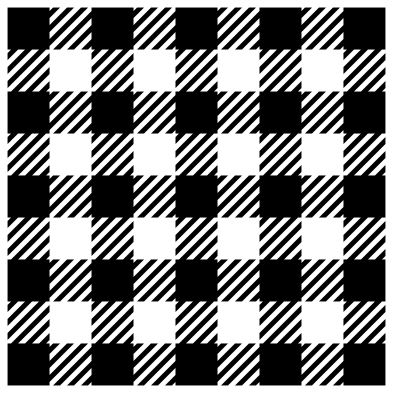 Buffalo plaid pattern in one colour Solid · 25 pieces
 -
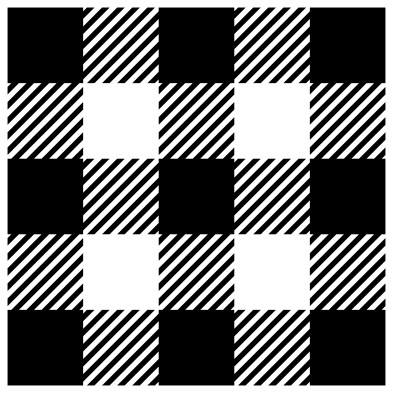 Large buffalo plaid check Solid · 9 pieces
 -
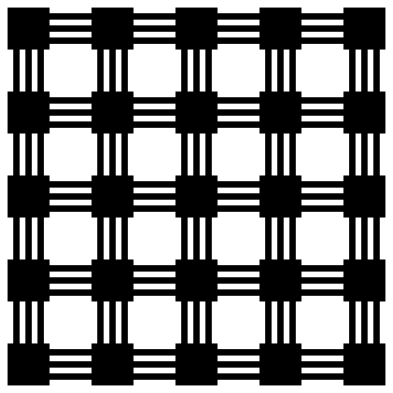 Woven buffalo plaid in one piece Solid · one piece
 -
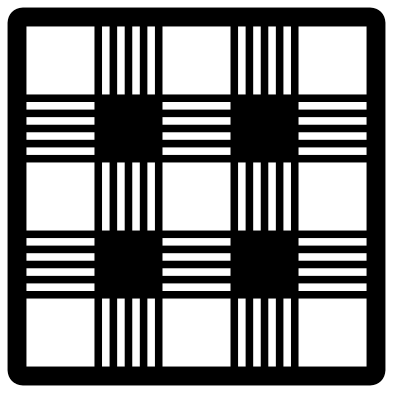 Buffalo plaid stencil Solid · one piece
 -
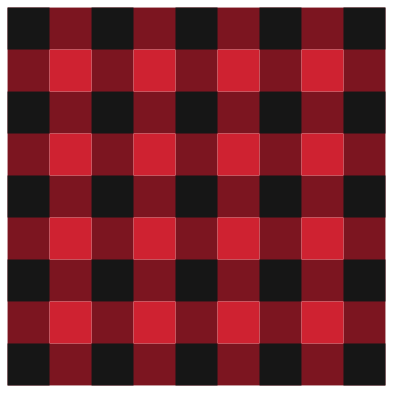 Red and black buffalo plaid Layered · 42 pieces
 -
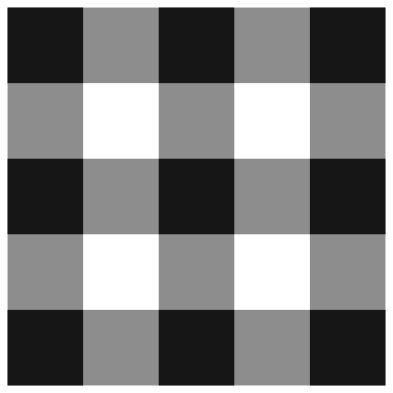 Black and white buffalo plaid Layered · 10 pieces
 -
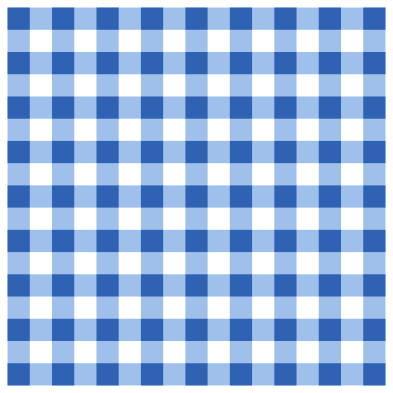 Gingham check Layered · 82 pieces
 -
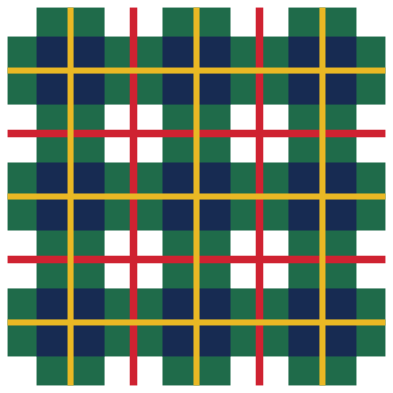 Tartan-style plaid Layered · 12 pieces
 -
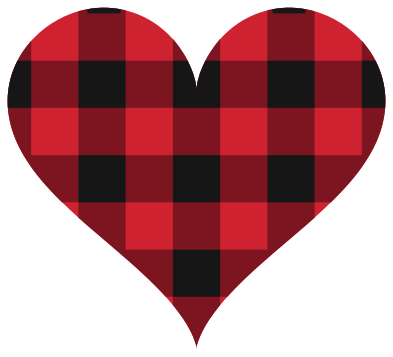 Buffalo plaid heart Layered · 13 pieces
 -
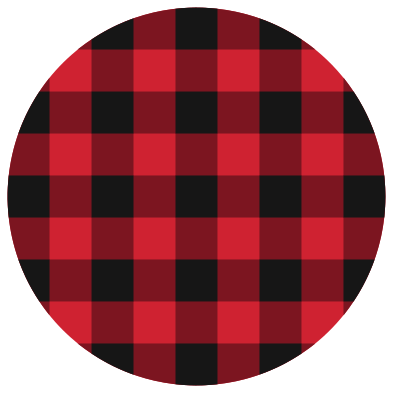 Buffalo plaid circle Layered · 23 pieces
 -
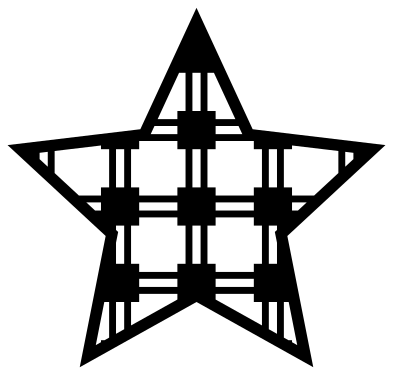 Buffalo plaid star Solid · one piece
 -
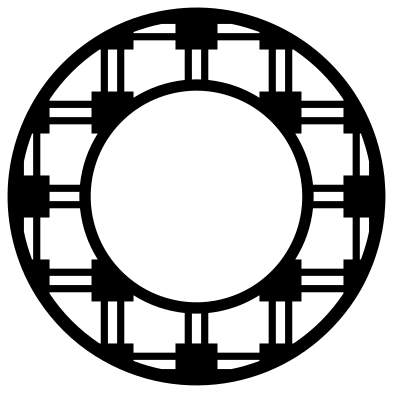 Buffalo plaid monogram frame Solid · one piece
 -
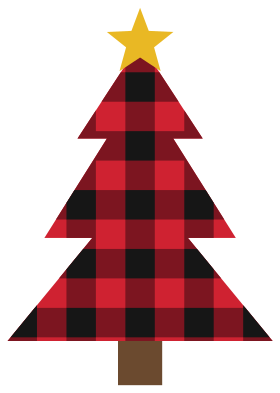 Buffalo plaid Christmas tree Layered · 17 pieces
 -
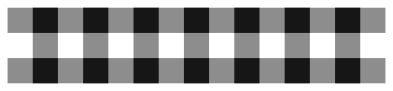 Buffalo plaid border Layered · 15 pieces
 -
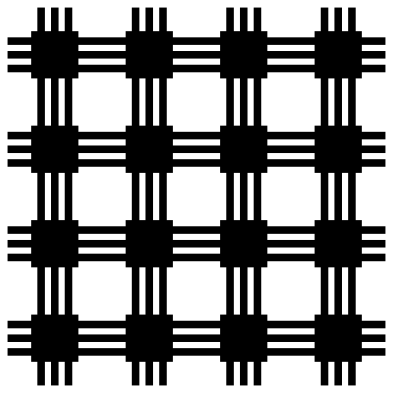 Seamless buffalo plaid tile Solid · one piece
Three tones from two colours
Buffalo plaid has three tones: the base, a mid tone where one band runs, and a dark tone where two bands cross. In woven cloth the mid tone is simply the two yarn colours mixed. In vinyl or paper there are two ways to get it. The layered files give each tone its own layer, so you cut the bands in a deeper shade of the base and the squares in black, and stack them.
The one-colour files fake the mid tone with fine lines. Cut the hatched or woven plaid in black, press it on red, and from a step back the lined bands read as dark red. That is one cut and one press, which is why most plaid shirts and signs are made this way.
Filling a shape and lining it up
To fill a word or a silhouette with plaid, lay the pattern over it, select both and use Slice in Cricut Design Space or Intersect in Silhouette Studio or Inkscape. Turn the plaid 45 degrees first if you want the squares to sit on their points.
The fine lines are the part to watch. They are 1.3 mm wide on the standard plaid at 100 mm, so cut it at that size or larger and weed slowly along the line, not across it. For anything smaller, use the layered files or the large check. With stacked layers, press the bands first and line the black squares up on the crossings by eye: each one covers its crossing exactly.
How to open the files
- Cricut Design Space: choose Upload, pick the SVG, and add it to the canvas. Set the width you want; the shape is already welded.
- Silhouette Studio: Designer Edition and above open the SVG. The free Basic Edition does not, so open the DXF instead.
- LightBurn, xTool Creative Space and Glowforge: import the SVG, then set the layer to cut, score or engrave.
- Inkscape, Illustrator and Affinity: open the SVG. It is a plain filled path, so you can recolour it, add a stroke or combine it with your own work.
- Printing or sublimation: use the PNG, which has a transparent background.
Each design page lists the file’s narrowest part at seven sizes, so you can tell whether it will survive at the size you plan to cut.
Questions
How do I make buffalo plaid with only black vinyl?
Use the one-colour pattern: solid black squares with fine diagonal lines between them. Pressed on a red, white or green base, the lined bands look like a darker shade of the base, which gives the three tones of a real plaid from a single colour of vinyl.
What is the difference between buffalo plaid, gingham and tartan?
All three are crossing bands. Buffalo plaid has broad equal bands in two strong colours, usually red and black. Gingham is the same pattern made small, in one colour on white. Tartan has bands of several widths and colours, with thin lines running over them.
Which colours do I need for red and black buffalo plaid?
Three: a bright red, a deep red such as burgundy or maroon, and black. The deep red is the bands and the black is the squares where they cross. If you only have red and black, use the one-colour pattern in black on a red base.
 Halftone patterns
  Spiral vectors
  Leopard print
  Cow print
  Zebra print
  Mermaid scales