Free cake topper SVG files
Free cake topper SVG files, each one welded piece with its stakes attached: Happy Birthday in script and in a hoop, One, Congrats, Oh Baby, Mr and Mrs, Merry Christmas, a star burst, a heart, a crown, balloons and a sheet of cupcake picks.
13 designs. Free for personal and commercial use, no sign-up. What you can do with them.
-
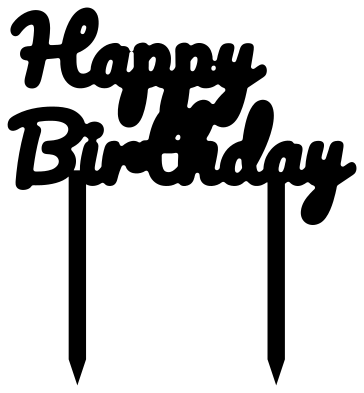 Happy Birthday cake topper on two stakes Solid · one piece
 -
 Happy Birthday cake topper in a hoop Solid · one piece
 -
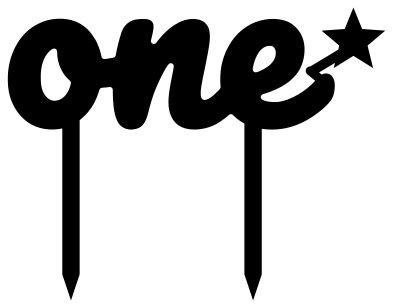 One cake topper for a first birthday Solid · one piece
 -
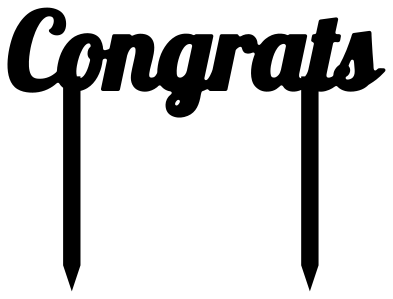 Congrats cake topper in script Solid · one piece
 -
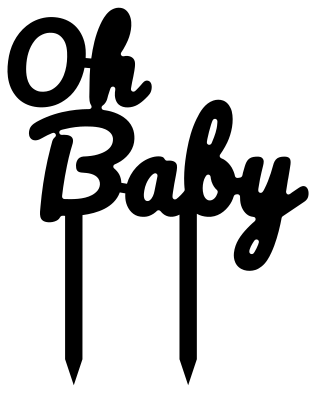 Oh Baby cake topper for a baby shower Solid · one piece
 -
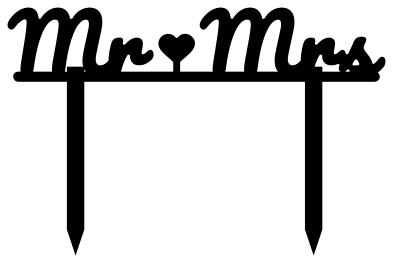 Mr and Mrs cake topper with a heart Solid · one piece
 -
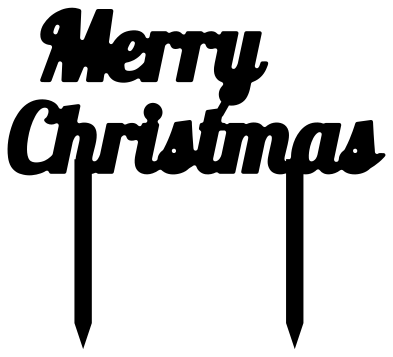 Merry Christmas cake topper in script Solid · one piece
 -
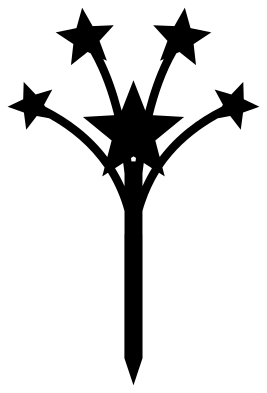 Star burst cake topper on one stake Solid · one piece
 -
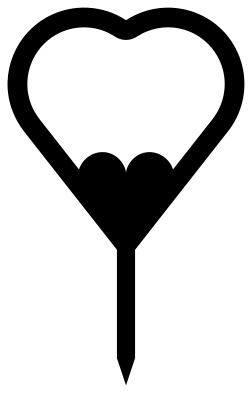 Heart cake topper on one stake Solid · one piece
 -
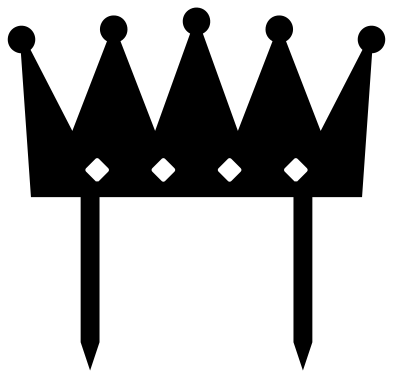 Crown cake topper on two stakes Solid · one piece
 -
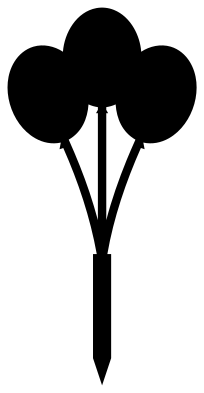 Balloon cake topper with three balloons Solid · one piece
 -
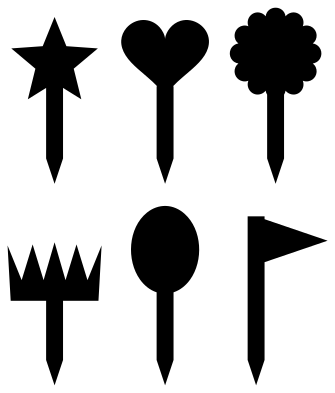 Cupcake toppers: six picks on one sheet Solid · 6 pieces
 -
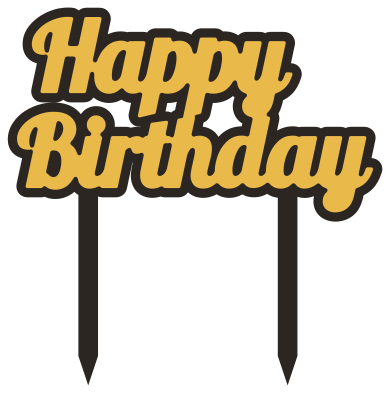 Layered Happy Birthday cake topper Layered · 2 pieces
Why these cut as one piece
A topper has to come off the mat whole and stand up in a cake, so nothing in these files is loose. The script letters overlap their neighbours, the two lines of a greeting overlap each other, and the dot of an i is joined to its letter by a short bridge. Each stake runs up into the solid foot of a letter or a shape, so the join is as wide as the stake itself.
The stakes are 4.5 to 5.2 mm wide in the file at its own 100 mm size. Cut at 150 mm wide they are 7 mm or more, which is stiff enough in 300 gsm card and comfortable in 3 mm wood or acrylic. Do not cut the lettered toppers under about 110 mm wide in card: the stakes drop under 5 mm and start to bend.
Sizes and materials
Match the topper to the cake: about 130 mm wide for a 15 cm cake, 150 mm for a 20 cm cake and 180 mm for a 25 cm cake. The stakes are drawn long enough to push 50 to 80 mm into the cake at those sizes, which holds a card topper upright in sponge and buttercream.
Glitter card of 250 to 300 gsm is the usual choice. If yours is thinner, cut the topper twice and glue the two back to back, or use the layered version, whose backing does the same job. For a laser, 3 mm birch ply or acrylic works at these sizes without changes. Card is not food safe on its own: wrap the stakes in tape or slide them into paper straws before they go into the cake.
How to open the files
- Cricut Design Space: choose Upload, pick the SVG, and add it to the canvas. Set the width you want; the shape is already welded.
- Silhouette Studio: Designer Edition and above open the SVG. The free Basic Edition does not, so open the DXF instead.
- LightBurn, xTool Creative Space and Glowforge: import the SVG, then set the layer to cut, score or engrave.
- Inkscape, Illustrator and Affinity: open the SVG. It is a plain filled path, so you can recolour it, add a stroke or combine it with your own work.
- Printing or sublimation: use the PNG, which has a transparent background.
Each design page lists the file’s narrowest part at seven sizes, so you can tell whether it will survive at the size you plan to cut.
Questions
Do I need to weld anything before cutting?
No. Every topper except the sheet of cupcake picks is already a single closed shape with its stakes attached. Load it, size it and cut.
Can I add a name or an age?
Yes, in your cutting software. Type the name in a script typeface, overlap it with the foot of the greeting or with a stake, and weld. Keep any added strokes at least 2 mm wide at the size you cut.
Which way up do I cut glitter card?
Glitter side up with a fine-point blade and a slower, deeper setting, on a strong-grip mat. If you cut it face down instead, mirror the design first, because lettering reads backwards from behind.
 Crown SVG
  Banner SVG
  Bow SVG
  Gift tag SVG
  Pillow box SVG
  Gift card holder SVG