Free mandala SVG files
Free mandala SVG files, each drawn by code so that every petal, arch and dot repeats exactly round the centre. Download any of them as SVG, PNG or DXF.
22 designs. Free for personal and commercial use, no sign-up. What you can do with them.
-
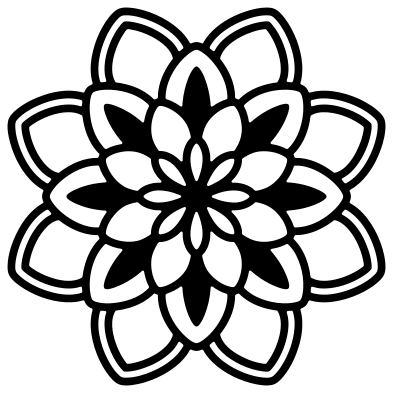 Lotus mandala with eight petals Solid · one piece
 -
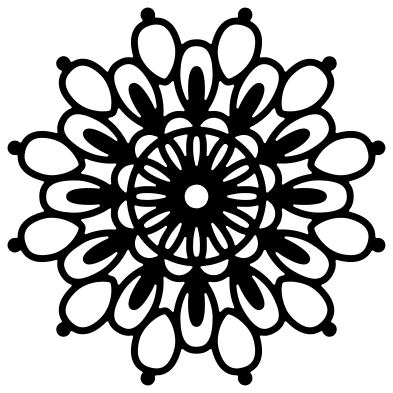 Flower mandala with twelve petals Solid · one piece
 -
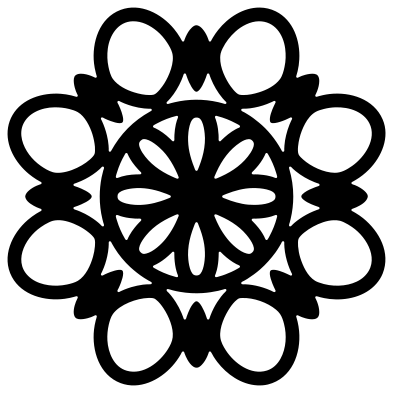 Simple bold mandala Solid · one piece
 -
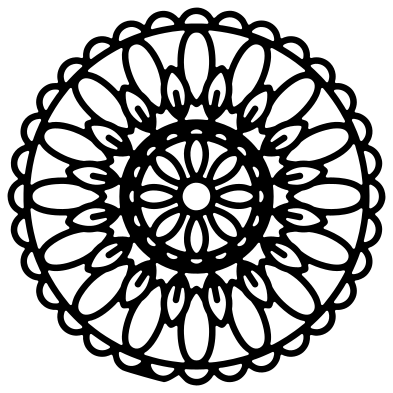 Lace mandala with a beaded edge Solid · one piece
 -
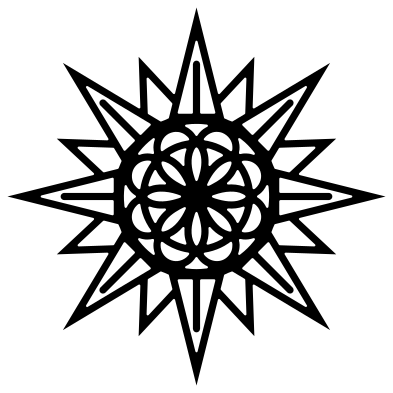 Sun mandala Solid · one piece
 -
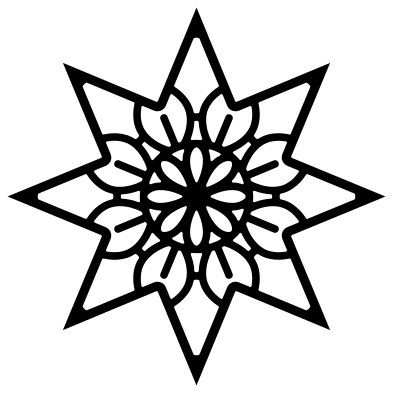 Star-shaped mandala Solid · one piece
 -
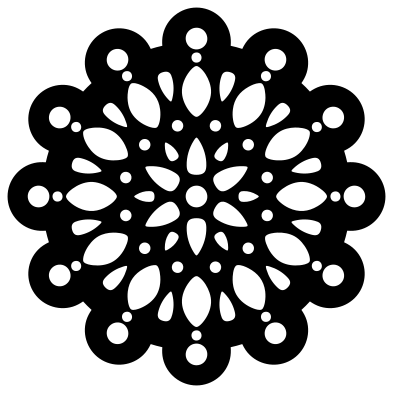 Stencil mandala Solid · one piece
 -
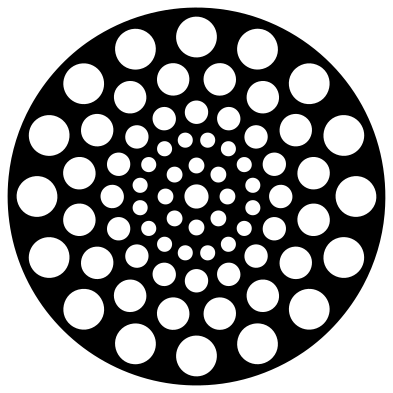 Dot mandala stencil Solid · one piece
 -
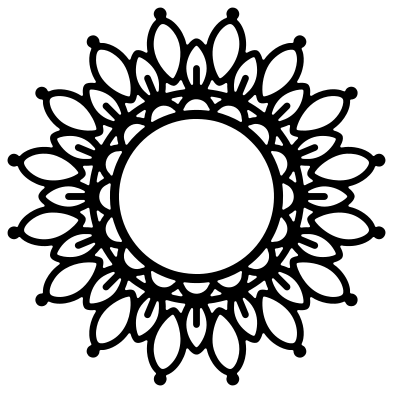 Monogram mandala Solid · one piece
 -
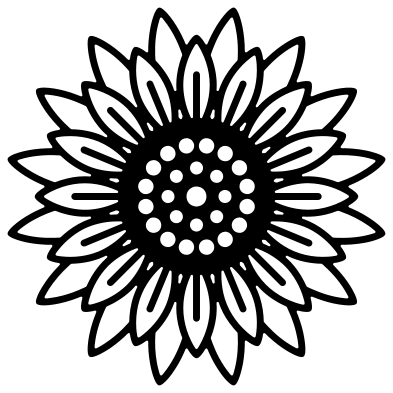 Sunflower mandala with a pierced seed head Solid · one piece
 -
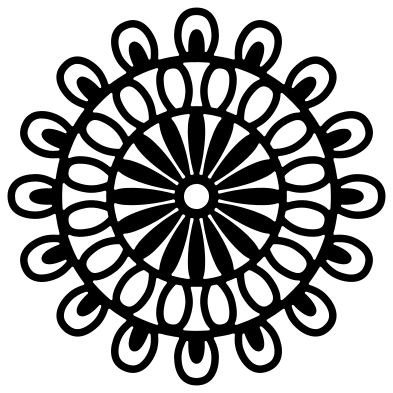 Daisy mandala with solid petals Solid · one piece
 -
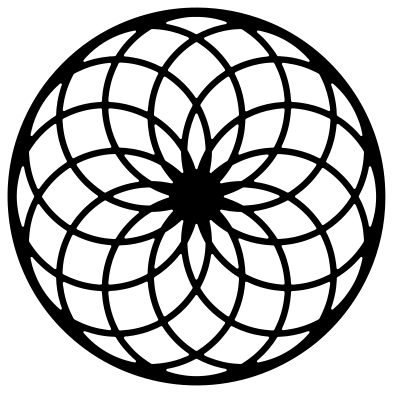 Mandala of circles Outline · one piece
 -
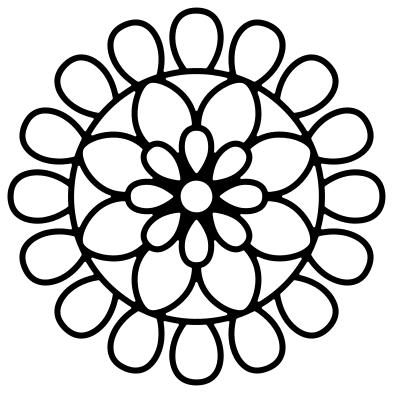 Mandala outline Outline · one piece
 -
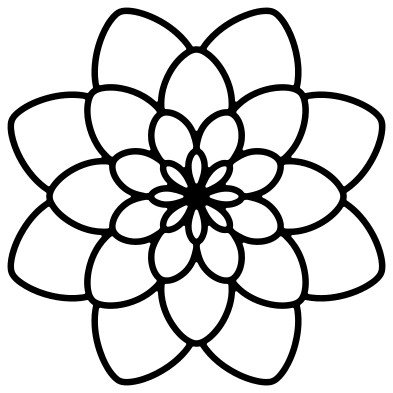 Lotus mandala outline Outline · one piece
 -
 Half mandala Solid · one piece
 -
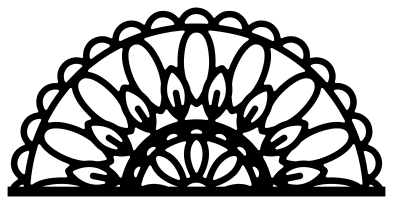 Half lace mandala Solid · one piece
 -
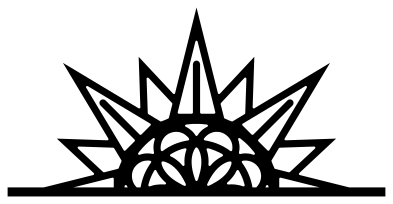 Half sun mandala Solid · one piece
 -
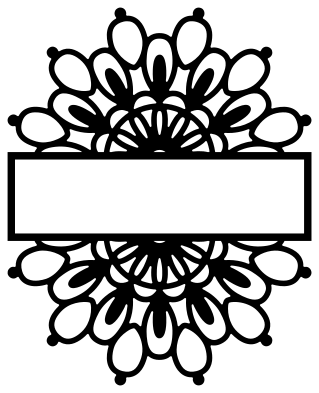 Split mandala Solid · one piece
 -
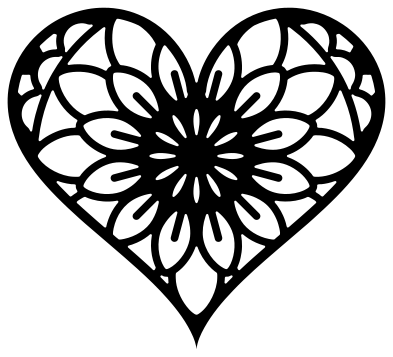 Heart-shaped mandala Solid · one piece
 -
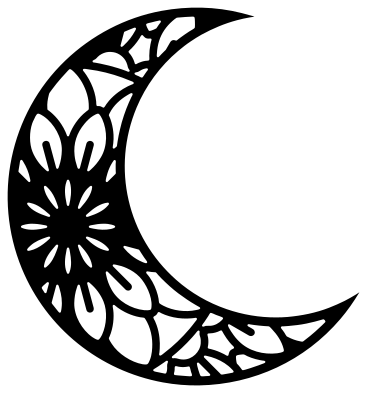 Crescent moon mandala Solid · one piece
 -
 Layered lotus mandala Layered · 5 pieces
 -
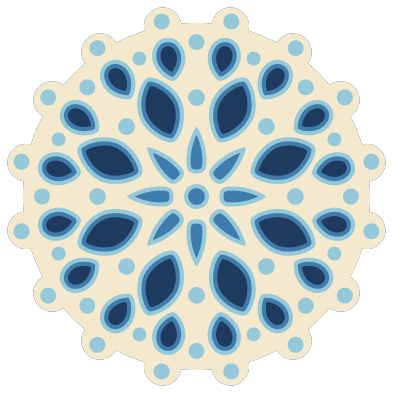 Layered 3D mandala Layered · 4 pieces
Choosing a mandala for your size and material
A mandala is a web of thin lines, so the size you cut it at matters more than it does for most shapes. Every file here is 100 mm on its longer side, and each design page lists its narrowest part at that size. Double the size and that part doubles too.
For adhesive vinyl and heat transfer vinyl, the simple bold mandala, the two stencils and the daisy cut and weed well from about 75 mm across. The lace, monogram and sunflower designs have many small cells, so cut them at 150 mm or more, use a sharp blade and weed from the centre outwards. On a laser, any of them work in 3 mm plywood at 150 mm; at smaller sizes pick the simple bold mandala or a stencil, which have no fine lines to scorch.
One piece, by design
Each ring of petals is tucked behind the ring inside it, the way the petals of a lotus overlap, and every line ends on another line. That is why each single-colour mandala here lifts off the mat as one connected piece, with no loose rings or dots to place by hand. The layered designs are the exception: each layer is its own piece.
Layered mandalas
The layered files hold one group per layer, in stacking order from the base up. Cut each layer from a different colour of card, then stack them with glue for a flat result or with foam pads for a shadow between the layers. On the layered 3D mandala all four layers share the same scalloped edge, so lining up the edges lines up the pattern.
How to open the files
- Cricut Design Space: choose Upload, pick the SVG, and add it to the canvas. Set the width you want; the shape is already welded.
- Silhouette Studio: Designer Edition and above open the SVG. The free Basic Edition does not, so open the DXF instead.
- LightBurn, xTool Creative Space and Glowforge: import the SVG, then set the layer to cut, score or engrave.
- Inkscape, Illustrator and Affinity: open the SVG. It is a plain filled path, so you can recolour it, add a stroke or combine it with your own work.
- Printing or sublimation: use the PNG, which has a transparent background.
Each design page lists the file’s narrowest part at seven sizes, so you can tell whether it will survive at the size you plan to cut.
Questions
Which mandala is easiest to weed?
The simple bold mandala: its lines are over 3 mm thick at 100 mm and it has few cells. The two stencil designs are also quick, because they are solid discs with holes and you only lift out the dots and petals.
Can I put a name or an initial in the middle?
Use the monogram mandala, which has a clear circle at its centre, or the split mandala, which has a clear band across the middle. Add the text in your cutting software. In vinyl the letters can float in the space; in wood or card, make them touch the ring so they stay attached.
How do I cut a layered mandala?
Open the SVG and ungroup it: each colour is one layer, named from layer 1 at the bottom. Cut every layer at the same scale from its own sheet of card, then stack them in order. Foam pads 1 to 2 mm thick between the layers give the 3D shadow.
 Frame SVG
  Circle SVG
  Wreath SVG
  Border SVG
  Flourish SVG
  Swirl SVG