Free fence SVG files
Free fence SVG files: a picket fence, a board fence, a rustic paddock fence, a horse fence, a garden gate, iron gates, barbed wire, a lattice panel, a trellis with a rose, and fences with sunflowers, birds, a crow and pumpkins. Each run is one welded piece.
16 designs. Free for personal and commercial use, no sign-up. What you can do with them.
-
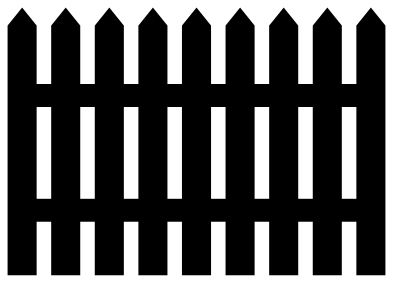 Picket fence with pointed tops Solid · one piece
 -
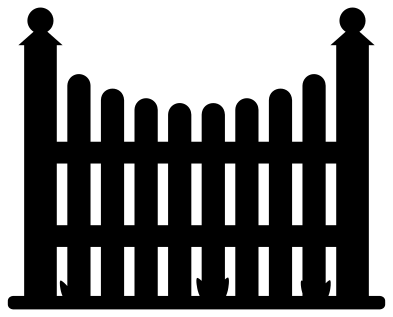 Fence silhouette with posts Solid · one piece
 -
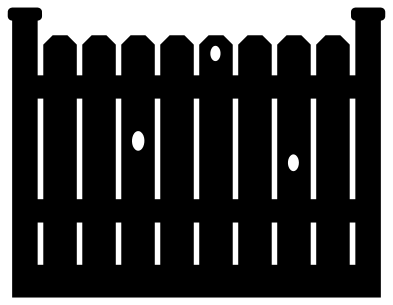 Wooden fence with dog-eared boards Solid · one piece
 -
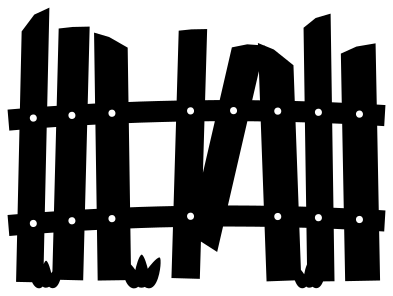 Rustic fence with a loose board Solid · one piece
 -
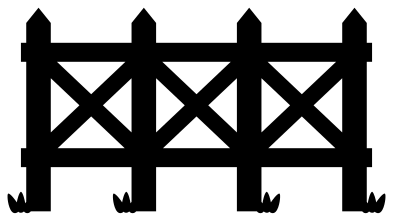 Horse fence with crossed rails Solid · one piece
 -
 Picket fence with sunflowers Solid · one piece
 -
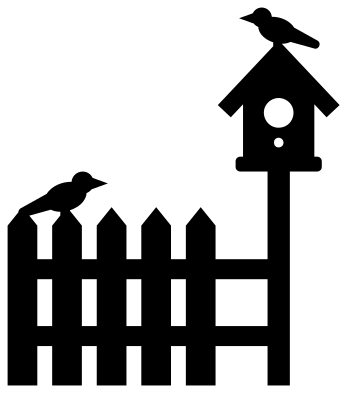 Picket fence with a birdhouse Solid · one piece
 -
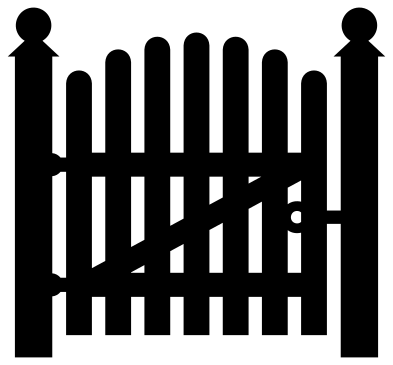 Garden gate between two posts Solid · one piece
 -
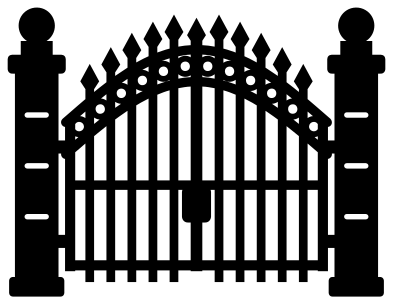 Iron fence gates with spear tops Solid · one piece
 -
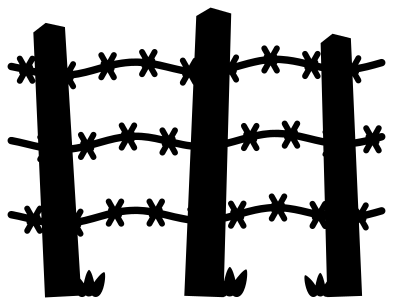 Barbed wire fence on wooden posts Solid · one piece
 -
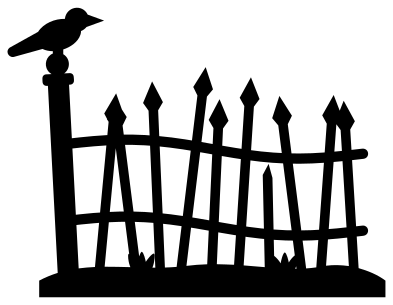 Spooky iron fence with a crow Solid · one piece
 -
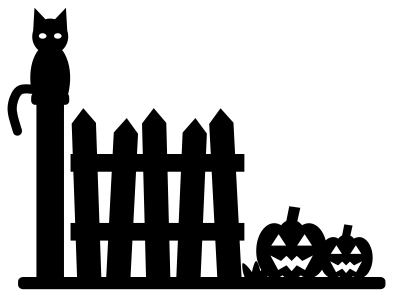 Halloween fence with a cat and pumpkins Solid · one piece
 -
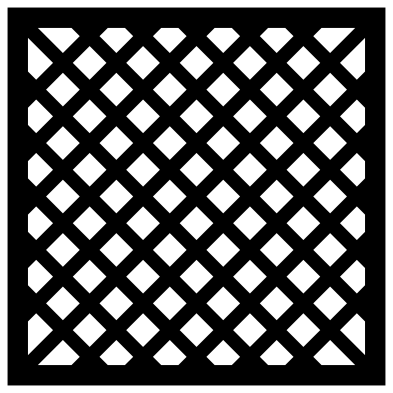 Lattice fence panel Solid · one piece
 -
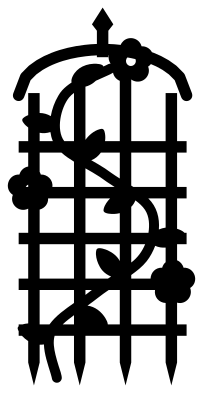 Trellis fence panel with a climbing rose Solid · one piece
 -
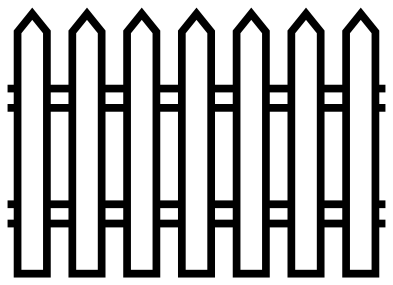 Picket fence outline Outline · one piece
 -
 Layered picket fence with sunflowers Layered · 19 pieces
Pickets, rails and open gaps
A fence is the easiest thing in the world to cut badly: draw the pickets as separate strips and they scatter the moment you lift them. In these files every picket is welded to two rails, so the gaps between the pickets are true openings and the run comes off the mat in one piece. The pickets are 6 to 9 mm wide when the fence is 100 mm long and the rails about 5 mm deep, which is sturdy in card, vinyl, felt and 3 mm wood.
The two iron designs are finer. The bars of the iron gates and the spooky fence are between 2 and 3 mm wide at 100 mm, and the strands of barbed wire about 2 mm. Cut those at 120 mm or longer in card, and at 200 mm or more in wood or acrylic.
Making a longer fence
The picket fence and the lattice panel are drawn to repeat. To fence the bottom of a long sign or a mantel scene, place two copies of the picket fence side by side so the end pickets overlap exactly, then weld them: the spacing carries on unbroken. The fence silhouette, the wooden fence and the fence with sunflowers have flat feet and work as the front layer of a paper scene or shadow box.
How to open the files
- Cricut Design Space: choose Upload, pick the SVG, and add it to the canvas. Set the width you want; the shape is already welded.
- Silhouette Studio: Designer Edition and above open the SVG. The free Basic Edition does not, so open the DXF instead.
- LightBurn, xTool Creative Space and Glowforge: import the SVG, then set the layer to cut, score or engrave.
- Inkscape, Illustrator and Affinity: open the SVG. It is a plain filled path, so you can recolour it, add a stroke or combine it with your own work.
- Printing or sublimation: use the PNG, which has a transparent background.
Each design page lists the file’s narrowest part at seven sizes, so you can tell whether it will survive at the size you plan to cut.
Questions
How do I join two picket fences into one long run?
Duplicate the picket fence, slide the copy sideways until its first picket sits exactly on the last picket of the original, and weld. The pickets are about 7.7 mm wide with 3.8 mm gaps at the 100 mm size, so the copy moves about 92.3 mm.
Which fence is best for a Halloween scene?
The spooky iron fence with a crow for a graveyard, or the Halloween fence with a cat and pumpkins for a porch. Both stand on solid ground, so they can be glued along the bottom of a lantern or a window silhouette.
Can I use the lattice panel as a stencil?
Yes. Cut it from stencil film or card and the laths mask the paint while the diamonds let it through. Because the lattice runs right to the frame on all four sides, it can also be tiled edge to edge for a larger screen.
 Camera SVG
  Guitar SVG
  Music note SVG
  Stethoscope SVG
  Tooth SVG
  Light bulb SVG