Free engraving patterns: SVG, PNG and DXF
Free engraving patterns as SVG files: basket weave, fish scale, diaper, herringbone and star fills that repeat on every side, engine turning and a sunburst for round work, floral and leaf borders, and wheat, grape and oak motifs for glass and metal.
14 designs. Free for personal and commercial use, no sign-up. What you can do with them.
Or choose one below for its PNG, DXF and cutting sizes.
-
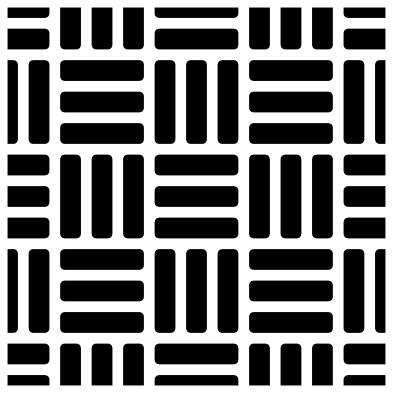 Basket weave engraving pattern Solid · 65 pieces
 -
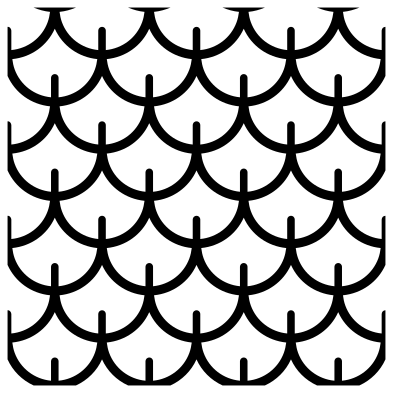 Fish scale engraving pattern Solid · one piece
 -
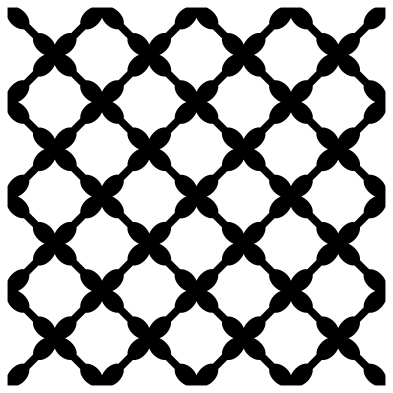 Diaper engraving pattern with flowers Solid · one piece
 -
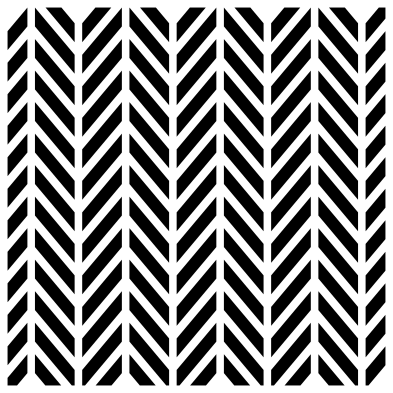 Herringbone engraving pattern Solid · 115 pieces
 -
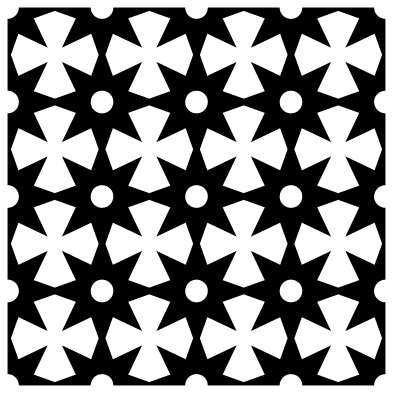 Star engraving pattern Solid · one piece
 -
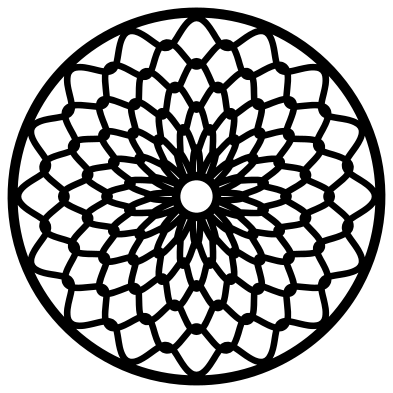 Engine turned engraving pattern Outline · one piece
 -
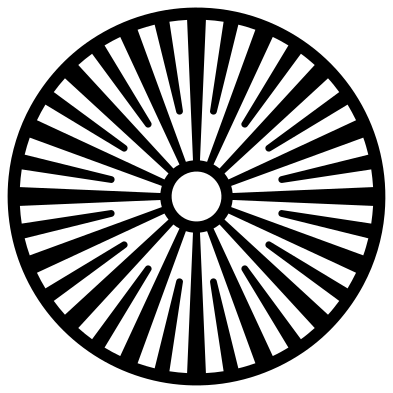 Sunburst engraving pattern Solid · one piece
 -
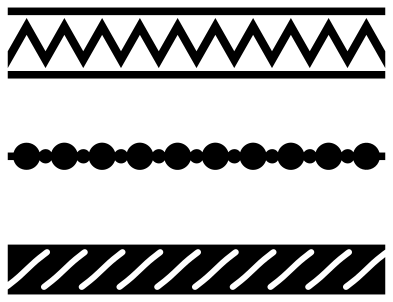 Three simple engraving pattern borders Solid · 5 pieces
 -
 Floral border engraving pattern Solid · one piece
 -
 Leaf border engraving pattern Solid · one piece
 -
 Floral spray engraving pattern Solid · one piece
 -
 Oak leaf and acorn engraving pattern Solid · one piece
 -
 Wheat ear engraving pattern for glass Solid · one piece
 -
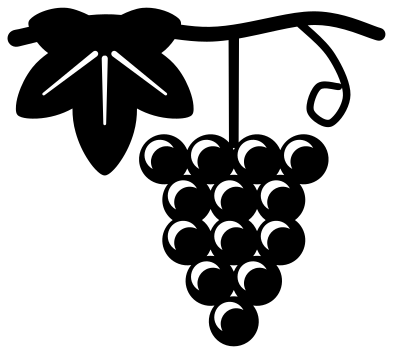 Grape and vine engraving pattern for glass Solid · one piece
Fills, borders and motifs
The five fills are square tiles, 100 mm across, that repeat on every side: place copies exactly 100 mm apart, up and across, and the pattern runs on without a seam. Cover an area larger than the piece you are engraving and trim the pattern to its outline in your software. The fish scale, diaper and star fills are single connected pieces; the basket weave and the herringbone are fields of separate bars, which is how those patterns are meant to be.
The borders are strips 100 mm long whose ends are cut at the same point in the repeat, so they join end to end. The engine turned pattern and the sunburst are round and do not repeat: scale them to the lid, coaster or watch back they are for. The wheat, grapes, oak and floral spray are single motifs.
Metal, glass and wood
On metal, a fibre laser or a rotary engraver follows fine detail, so the fills can be scaled down to a 25 mm repeat for a lighter case, a buckle or a knife scale. On glass, engrave the wheat and the grapes from 50 mm tall: frosted shapes read best when they are bold, and a glass curves, so keep a motif under a third of the way round. To see it the right way from the front when you engrave the back, mirror it first.
On wood, the grain breaks up thin lines, so keep the fills at their 100 mm size or larger and prefer the basket weave, the diaper and the leaf border, whose parts are 2 mm wide or more. Each design page lists its narrowest part at 100 mm.
How to open the files
- Cricut Design Space: choose Upload, pick the SVG, and add it to the canvas. Set the width you want; the shape is already welded.
- Silhouette Studio: Designer Edition and above open the SVG. The free Basic Edition does not, so open the DXF instead.
- LightBurn, xTool Creative Space and Glowforge: import the SVG, then set the layer to cut, score or engrave.
- Inkscape, Illustrator and Affinity: open the SVG. It is a plain filled path, so you can recolour it, add a stroke or combine it with your own work.
- Printing or sublimation: use the PNG, which has a transparent background.
Each design page lists the file’s narrowest part at seven sizes, so you can tell whether it will survive at the size you plan to cut.
Questions
How do I fill a shape with one of the repeating patterns?
Lay out enough copies of the tile to cover the shape, 100 mm apart in both directions, and group them. Put the outline of your shape on top and use Intersect, Crop or Clip in your software, so the pattern is kept only inside the outline. Scale the group before you clip if you want a smaller repeat.
What is engine turning?
It is a pattern of fine, regular, overlapping curves cut by a rose engine or a straight-line engine, seen on watch cases, lighters and pens, and also called guilloche. The pattern here imitates one of its commonest forms: rings of waves that cross to make chains of eyes round a centre.
Which patterns suit a glass?
The wheat ears and the grapes are the traditional ones: wheat and barley for beer glasses, the vine for wine glasses and decanters. The leaf border and the three simple borders also work as a band round the rim. Engraved glass shows as frosted areas, so solid shapes like these read better than fine line work.
 Halftone patterns
  Spiral vectors
  Leopard print
  Cow print
  Zebra print
  Mermaid scales