Free scherenschnitte paper cutting patterns
Free scherenschnitte paper cutting patterns in the German and Swiss manner: two hearts with birds, a tree with bears and a tree with birds, two stags under an arch, a wreath, a round cut with eight hearts, a border and a frame, and three Swiss scenes with a chalet, goats and cattle going up to the alp. Each is a black silhouette in one piece, drawn by code, as SVG, PNG and DXF.
12 designs. Free for personal and commercial use, no sign-up. What you can do with them.
Or choose one below for its PNG, DXF and cutting sizes.
-
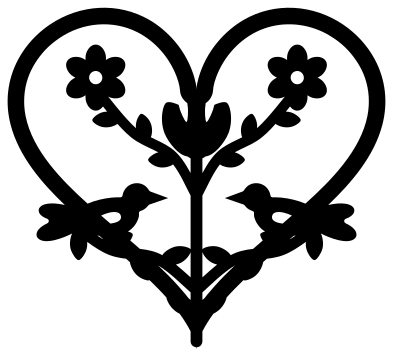 Scherenschnitte heart with birds and flowers Solid · one piece
 -
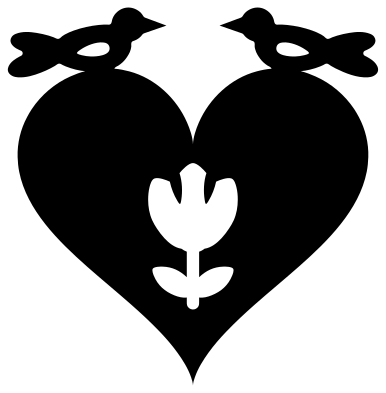 Simple scherenschnitte heart with two birds Solid · one piece
 -
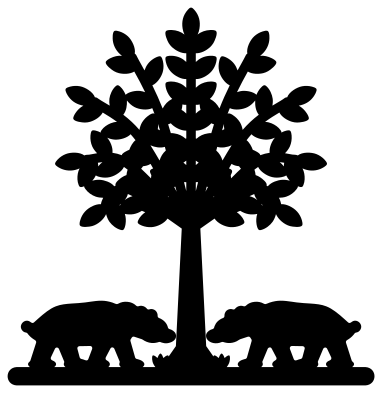 German paper cutting of a tree with two bears Solid · one piece
 -
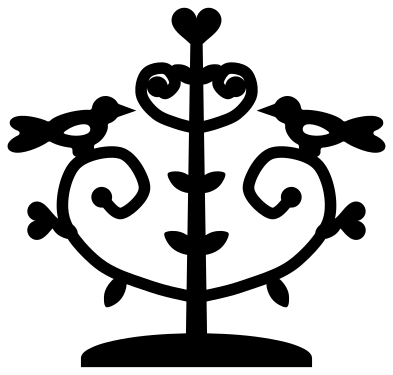 Scherenschnitte tree with birds and hearts Solid · one piece
 -
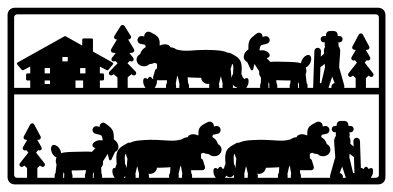 Swiss paper cut of cattle going up to the alp Solid · one piece
 -
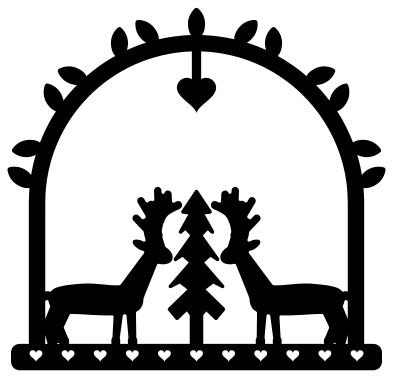 Scherenschnitte of two stags under an arch Solid · one piece
 -
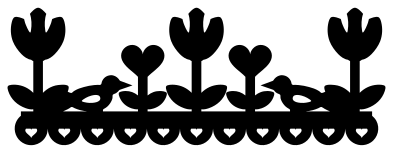 Scherenschnitte border of tulips and hearts Solid · one piece
 -
 Swiss paper cutting of a chalet in the mountains Solid · one piece
 -
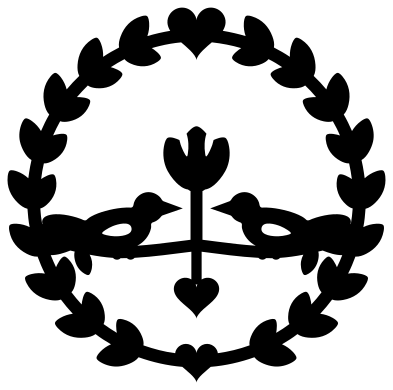 German paper cutting wreath with two birds Solid · one piece
 -
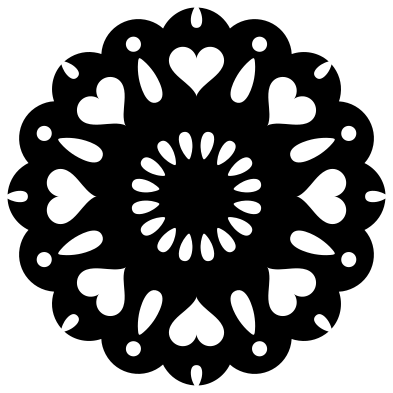 Round scherenschnitte with eight hearts Solid · one piece
 -
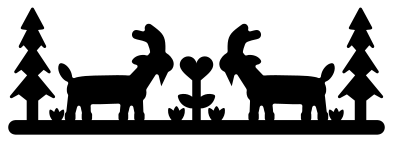 Swiss paper cutting of two goats and a heart Solid · one piece
 -
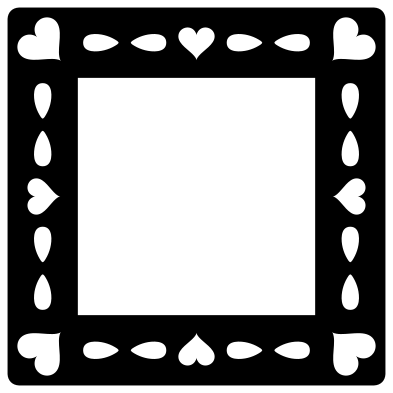 Square scherenschnitte frame with hearts Solid · one piece
What scherenschnitte is, and what these patterns are
Scherenschnitte means scissor cuts in German. It is the craft of cutting a picture out of a single sheet of paper, traditionally black paper that is then mounted on white. Many cuts are made from a sheet folded in half, in quarters or smaller, which is why so many of them are the same on both sides. German and Swiss settlers took the craft to Pennsylvania in the eighteenth century, and valentines and love letters were among its common forms. Switzerland has a tradition of its own, known especially from the Pays-d’Enhaut, whose cuts often show life on the mountain farms; the drive of the cattle up to the summer pasture is one of its best known subjects.
The patterns here are new drawings made by code in that manner: silhouettes with the detail in the outline. They are not copies or tracings of historic cuts or of any maker’s work, and they carry no lettering. Ten of the twelve are the same on both sides, so they can be cut the old way from a folded sheet.
Paper, size and cutting
Every file is 100 mm on its longer side, and each pattern page lists the narrowest strip of paper at that size. It runs from 1.3 mm on the cattle going up to the alp to 4.4 mm on the simple heart. Black paper of 80 to 120 gsm is the classic choice; glue the finished cut to white or cream card with a few touches of a glue stick. On a cutting machine use a light-grip mat and a sharp blade, and cut the scenes with animals at 150 mm or more, the alp procession at 200 mm.
To cut by hand, print the PNG on white paper, fix it over the black sheet with a little tape in the waste areas and cut through both, inside shapes first and the outline last. For a folded cut, print half the design, lay its middle line on the fold and cut both layers at once.
How to open the files
- Cricut Design Space: choose Upload, pick the SVG, and add it to the canvas. Set the width you want; the shape is already welded.
- Silhouette Studio: Designer Edition and above open the SVG. The free Basic Edition does not, so open the DXF instead.
- LightBurn, xTool Creative Space and Glowforge: import the SVG, then set the layer to cut, score or engrave.
- Inkscape, Illustrator and Affinity: open the SVG. It is a plain filled path, so you can recolour it, add a stroke or combine it with your own work.
- Printing or sublimation: use the PNG, which has a transparent background.
Each design page lists the file’s narrowest part at seven sizes, so you can tell whether it will survive at the size you plan to cut.
Questions
Which scherenschnitte pattern should a beginner start with?
The simple heart with two birds. It has three cut-outs and no strip of paper narrower than 4.4 mm at 100 mm. The border and the tree with birds are the next step: more outline to follow, but still no fine inside cuts.
Should I use scissors or a knife?
Either. The name means scissor cuts, and small sharp-pointed scissors are the traditional tool, used on a folded sheet. A craft knife on a cutting mat is easier for the inside shapes of the flat, unfolded scenes such as the chalet and the cattle going up to the alp, which are not symmetrical and cannot be folded.
Can I cut these in a colour other than black?
Yes. Black on white is the classic look, but white on a dark card, deep red or dark green all read well, because the designs are plain silhouettes. Avoid patterned paper: it hides the outline, which is where all the drawing is.
 Turkey SVG
  Easter egg SVG
  Firework SVG
  Mardi Gras mask SVG
  Valentine card SVG
  Mother’s Day card SVG