Free poker chip SVG files
Free poker chip SVG files for game nights: a chip with eight edge spots and the suits, a blank one for a monogram, stacks in true perspective, scattered and rolling chips, chips with cards and dice, four values, two colour chips in layers, and things to make: a coaster, a keyring, earrings, a bauble and a tag that holds a real chip.
21 designs. Free for personal and commercial use, no sign-up. What you can do with them.
Or choose one below for its PNG, DXF and cutting sizes.
-
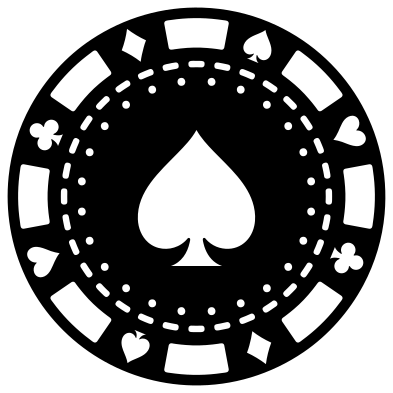 Poker chip with a spade Solid · one piece
-
 Stack of poker chips Solid · 7 pieces
-
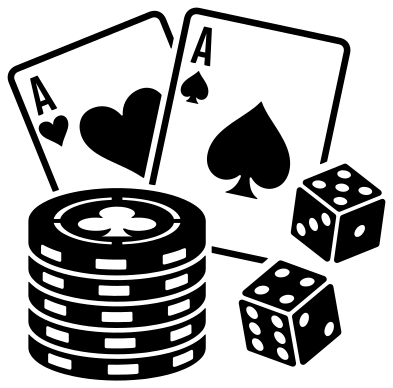 Poker chips with cards and dice Solid · 20 pieces
-
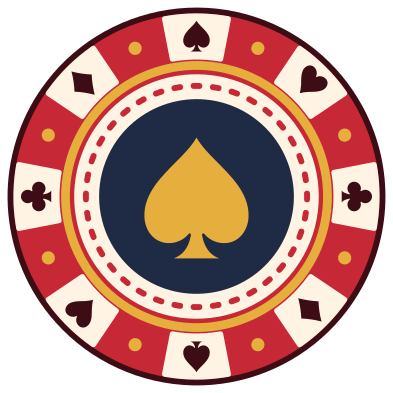 Layered poker chip Layered · 66 pieces
-
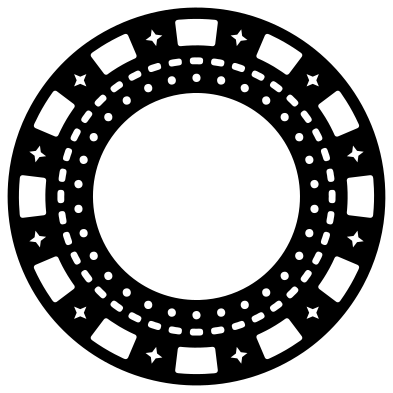 Blank poker chip for a monogram Solid · one piece
-
 Three stacks of poker chips Solid · 16 pieces
-
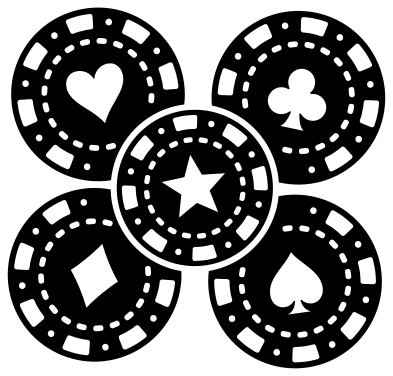 Scattered poker chips Solid · 5 pieces
-
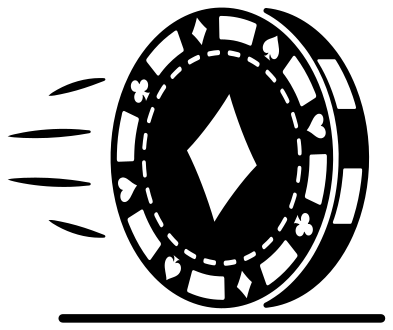 Rolling poker chip Solid · 7 pieces
-
 Poker chip with a crown Solid · one piece
-
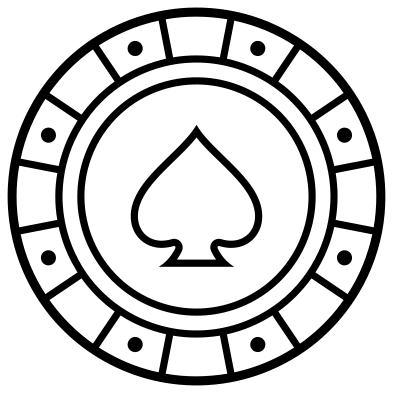 Poker chip outline Outline · 11 pieces
-
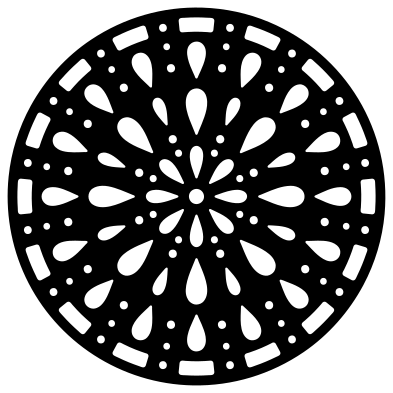 Mandala poker chip Solid · one piece
-
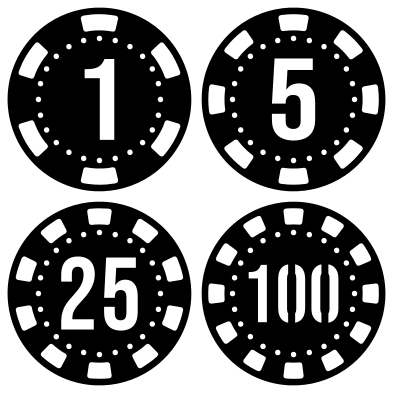 Four poker chips with values Solid · 4 pieces
-
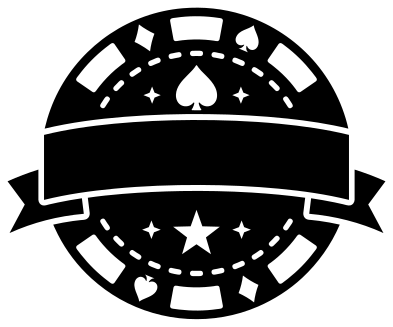 Poker chip badge with a blank ribbon Solid · 5 pieces
-
 Poker chip in a laurel wreath Solid · 4 pieces
-
 Poker chip with wings Solid · 11 pieces
-
 Cute poker chip with a face Layered · 34 pieces
-
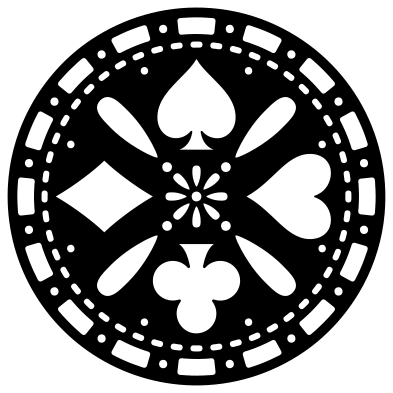 Poker chip coaster Solid · one piece
-
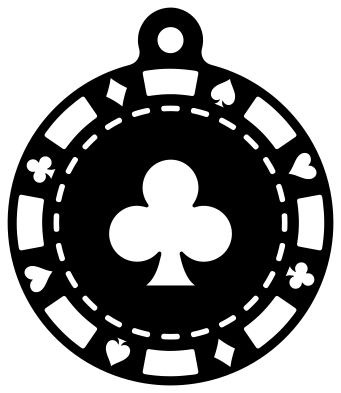 Poker chip keyring Solid · one piece
-
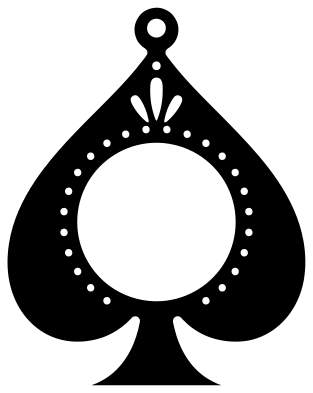 Spade tag for a poker chip Solid · one piece
-
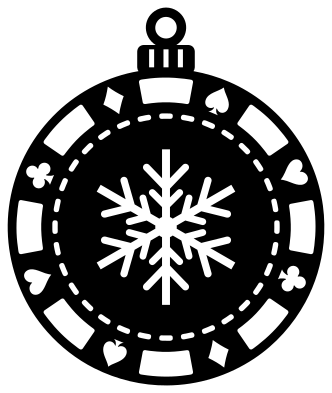 Poker chip bauble Solid · one piece
-
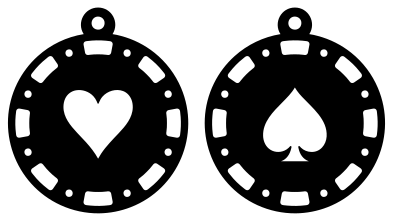 Poker chip earrings Solid · 2 pieces
Edge spots that come out even
A poker chip is told by the spots on its edge. Those here are spaced by angle, six, eight, ten, twelve or sixteen to a chip, all of one width, and each is a hole that stops short of the rim so that the chip stays one disc. On the stacks the spots wrap round the sides: they are widest in front and narrow towards the edges, as on real chips, and the chips themselves are true ellipses.
Flat chips are the ones to cut small. The classic chip, the keyring and the four values keep their detail in vinyl, plywood or acrylic at 40 to 50 mm. The mandala, the stacks and the chip with wings have finer parts and look best at 100 mm or more.
For the table, not for the bank
These files are for game nights at home, score keeping, raffles, party tables and the door of the game room. They copy no maker’s chip and no house’s colours, and nothing here is advice on gambling. Cut the four values from 3 mm acrylic in four colours and you have counters for any game that keeps score.
For decorations, cut the classic chip in red, blue and black card at 80 to 120 mm and scatter them under a glass top, hang the bauble on the tree, or set the blank chip at each place with the name of a guest in it. The layered chip makes a sign when each layer is raised on foam.
How to open the files
- Cricut Design Space: choose Upload, pick the SVG, and add it to the canvas. Set the width you want; the shape is already welded.
- Silhouette Studio: Designer Edition and above open the SVG. The free Basic Edition does not, so open the DXF instead.
- LightBurn, xTool Creative Space and Glowforge: import the SVG, then set the layer to cut, score or engrave.
- Inkscape, Illustrator and Affinity: open the SVG. It is a plain filled path, so you can recolour it, add a stroke or combine it with your own work.
- Printing or sublimation: use the PNG, which has a transparent background.
Each design page lists the file’s narrowest part at seven sizes, so you can tell whether it will survive at the size you plan to cut.
Questions
How big is a real poker chip?
Most are 39 to 40 mm across and a little over 3 mm thick. The spade tag has a window for one, 40.3 mm across when the tag is cut 96 mm tall, and the four values come out at 39 mm each when their sheet is cut 80 mm wide.
How do I put a name or a photograph in the blank chip?
The opening is 54.8 mm wide when the chip is 100 mm. Type the name in your own software, scale it to about 48 mm wide and weld it to the ring on both sides, or glue a photograph cut to a 60 mm circle behind it.
Which of these are one piece?
The classic chip, the blank one, the crown, the mandala, the coaster, the keyring, the spade tag and the bauble. The others are several pieces or stacks of layers, as their notes say.
 Camera SVG
 Guitar SVG
 Music note SVG
 Stethoscope SVG
 Tooth SVG
 Light bulb SVG