Free lace SVG files
Free lace SVG files to cut in card, vinyl or fabric: scalloped edgings that join end to end, a matching corner, a rose panel, crochet, bobbin and tatted trims, a collar, a fan, card overlays and wraps for jars and lanterns.
26 designs. Free for personal and commercial use, no sign-up. What you can do with them.
Or choose one below for its PNG, DXF and cutting sizes.
-
 Scalloped lace edging Solid · one piece
-
 Scalloped lace corner Solid · one piece
-
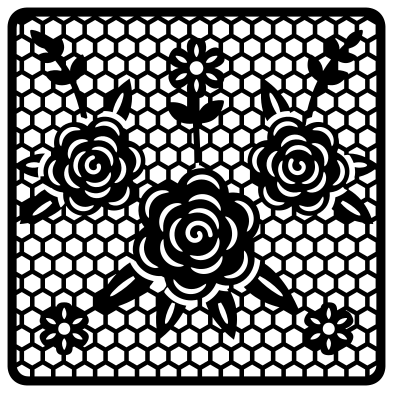 Floral lace panel with roses Solid · one piece
-
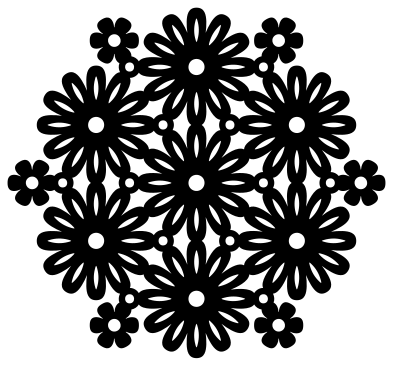 Guipure lace medallion Solid · one piece
-
 Eyelet lace edging Solid · one piece
-
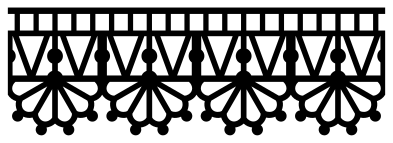 Crochet shell lace edging Solid · one piece
-
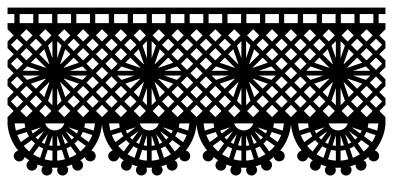 Torchon lace edging Solid · one piece
-
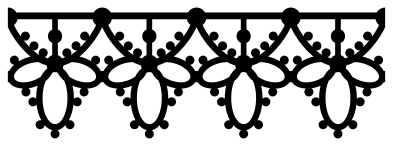 Tatted lace edging Solid · one piece
-
 Leaf garland lace edging Solid · one piece
-
 Snowflake lace edging Solid · one piece
-
 Art Deco lace edging Solid · one piece
-
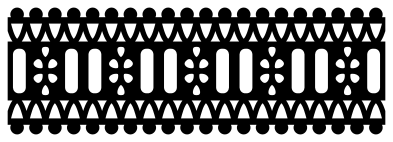 Ribbon insertion lace Solid · one piece
-
 Battenberg lace heart Solid · one piece
-
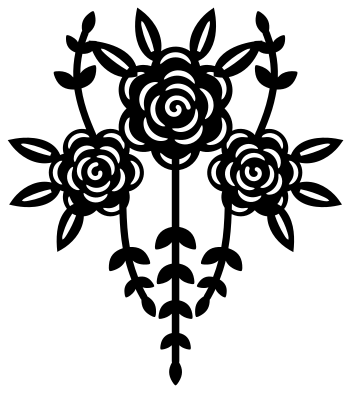 Bridal lace appliqué with roses Solid · one piece
-
 Lace collar Solid · one piece
-
 Lace folding fan Solid · one piece
-
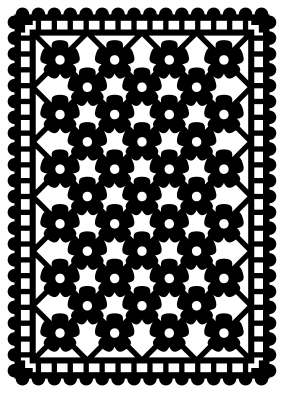 Lace card overlay with trellis Solid · one piece
-
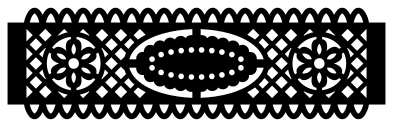 Lace belly band for invitations Solid · one piece
-
 Lace jar wrap with tulips Solid · one piece
-
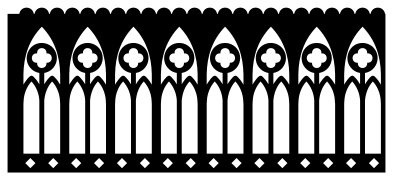 Lace lantern wrap Solid · one piece
-
 Lace pocket with cuff Solid · one piece
-
 Lace bookmark with rose Solid · one piece
-
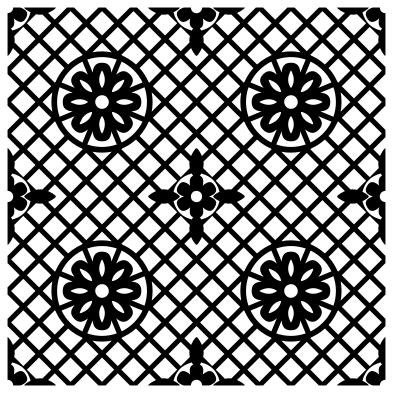 Lace pattern tile Solid · one piece
-
 Line art lace edging for pens Outline · one piece
-
 Layered lace edging with ribbon Layered · 3 pieces
-
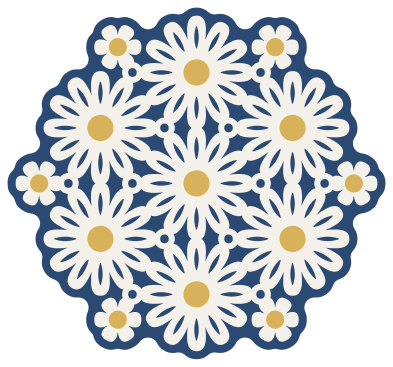 Layered lace medallion Layered · 15 pieces
Edgings that join
The edgings are 100 mm long and cut off square where one repeat meets the next, with half of whatever crosses that line at each end, so two of them butt together and the pattern runs on. Put as many in a row as you need in your software, let the ends just touch, and weld them before cutting. The scalloped edging has a corner of its own, drawn to the same repeat, for going round a page or a tablecloth of paper.
Sizes and bridges
At 100 mm most threads here are 1.2 to 2 mm wide. That is enough for smooth card of 160 gsm or more and a sharp blade. For vinyl and iron-on, or if the mat is worn, cut at 150 mm or above, where the same threads are half as wide again. The narrowest part of every design is on its page.
Two wraps are made to a length. The jar wrap is 97.6 mm of pattern and a 2.4 mm tab for every 100 mm of length: measure round the jar, divide by 0.976 and set the file to that length. The lantern wrap has 97 mm of pattern and a 3 mm tab, so divide by 0.97. Use an LED candle inside paper, never a flame.
Cutting it cleanly
Weed the small holes first, from the middle outwards, and leave the outside edge until last, so that the waste holds the lace flat. Lay white lace over a coloured band or a ribbon to bring the pattern out. For cake boards and place mats, cut two layers and turn one over: the cut edge of the top one looks crisp and the pair lies flatter.
How to open the files
- Cricut Design Space: choose Upload, pick the SVG, and add it to the canvas. Set the width you want; the shape is already welded.
- Silhouette Studio: Designer Edition and above open the SVG. The free Basic Edition does not, so open the DXF instead.
- LightBurn, xTool Creative Space and Glowforge: import the SVG, then set the layer to cut, score or engrave.
- Inkscape, Illustrator and Affinity: open the SVG. It is a plain filled path, so you can recolour it, add a stroke or combine it with your own work.
- Printing or sublimation: use the PNG, which has a transparent background.
Each design page lists the file’s narrowest part at seven sizes, so you can tell whether it will survive at the size you plan to cut.
Questions
How do I make a lace border longer than 100 mm?
Duplicate the edging, move the copy exactly one length along, so that the cut ends touch, and weld. Every edging ends on the same line of its pattern that it begins with, so the join does not show.
Which laces have a place for ribbon?
The scalloped edging and its corner have a row of slots at the top for ribbon of about 4 mm at the 100 mm size. The ribbon insertion has tall slots for ribbon of about 11 mm. Both grow with the file.
What size is the card overlay?
It is drawn 71 by 100 mm. Enlarged to 171 mm tall it is about 122 mm wide, which leaves a margin of about 3 mm all round on the front of a 127 by 178 mm (5 by 7 inch) card.
Can I cut this lace in fabric?
Choose the bold ones: the eyelet edging, the collar, the pocket, the guipure medallion. Back cotton with iron-on stabiliser or use felt, and cut at 150 mm or more.
 Halftone patterns
 Spiral vectors
 Leopard print
 Cow print
 Zebra print
 Mermaid scales