Free dream catcher SVG files
Free dream catcher SVG files: webbed hoops with feathers on beaded threads, in classic, simple, moon, heart, sunflower, mandala and monogram versions. The webs are drawn the way they are tied, round by round, so every knot lands where a real one would.
12 designs. Free for personal and commercial use, no sign-up. What you can do with them.
-
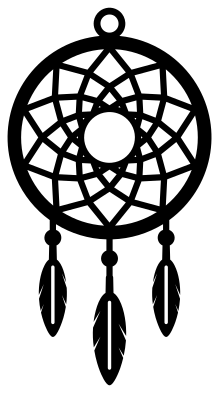 Classic dream catcher with three feathers Solid · one piece
 -
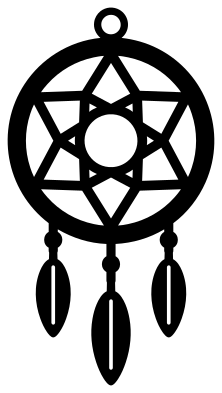 Simple dream catcher Solid · one piece
 -
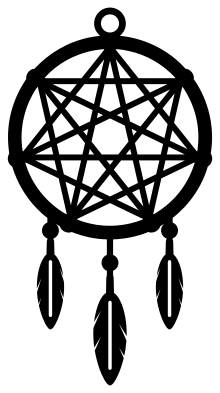 Dream catcher with a star web Solid · one piece
 -
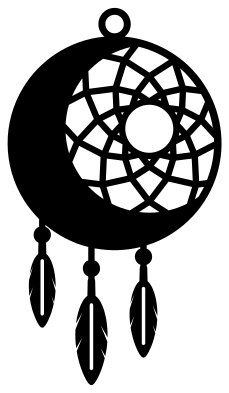 Crescent moon dream catcher Solid · one piece
 -
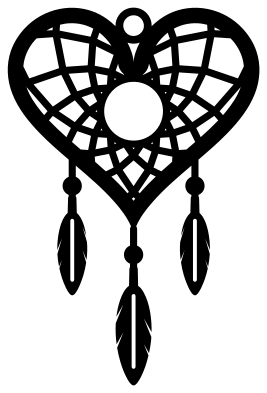 Heart-shaped dream catcher Solid · one piece
 -
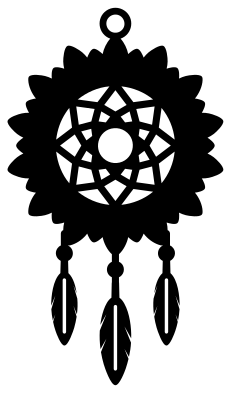 Sunflower dream catcher Solid · one piece
 -
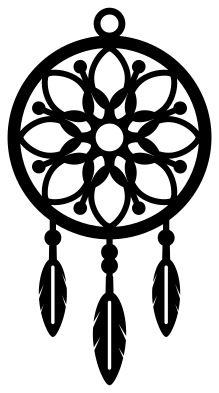 Mandala dream catcher Solid · one piece
 -
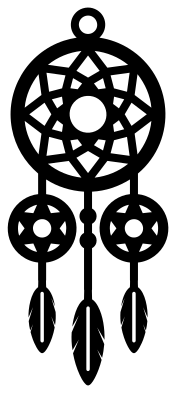 Boho dream catcher with three hoops Solid · one piece
 -
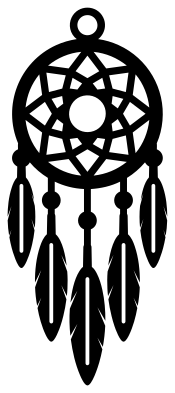 Dream catcher with five feathers Solid · one piece
 -
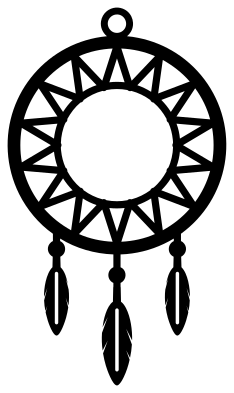 Dream catcher monogram frame Solid · one piece
 -
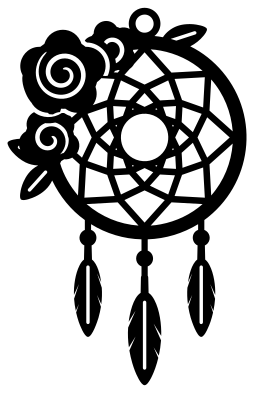 Dream catcher with roses Solid · one piece
 -
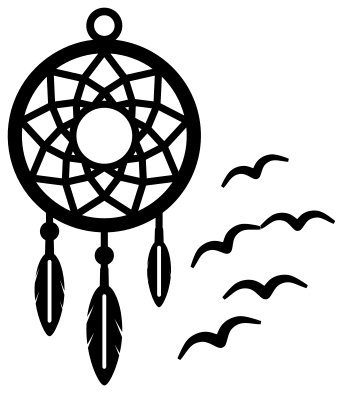 Dream catcher with birds Solid · 6 pieces
What a dream catcher is
The dream catcher comes from the Ojibwe people of North America, who hung a small willow hoop strung with a web over a child’s cradle. In the story, bad dreams are caught in the web and good ones slip through the eye in the middle and down the feathers to the sleeper. The designs here are our own drawings of the general form, not copies of any maker’s work.
A real web is made from one thread. Each round is knotted to the middle of every span in the round before, which is why the knots step half a place round as the web closes in, and why there is always a small open eye at the centre.
Cutting fine webs and feathers
These are tall, lacy designs, so size matters. At 100 mm tall the web threads are about 1.7 mm wide, which cuts in vinyl with a sharp blade and weeds well if you work from the centre of the web outwards. For iron-on, 120 mm or taller is more comfortable. For wood or acrylic on a laser, 150 mm or taller keeps the threads strong; the simple dream catcher has the heaviest lines and can go smaller.
Each feather has a slit along its shaft and a few splits in its edges. On card these can be left as score lines. The loop at the top is a real hole: use it for a cord, a keyring or an earring hook.
How to open the files
- Cricut Design Space: choose Upload, pick the SVG, and add it to the canvas. Set the width you want; the shape is already welded.
- Silhouette Studio: Designer Edition and above open the SVG. The free Basic Edition does not, so open the DXF instead.
- LightBurn, xTool Creative Space and Glowforge: import the SVG, then set the layer to cut, score or engrave.
- Inkscape, Illustrator and Affinity: open the SVG. It is a plain filled path, so you can recolour it, add a stroke or combine it with your own work.
- Printing or sublimation: use the PNG, which has a transparent background.
Each design page lists the file’s narrowest part at seven sizes, so you can tell whether it will survive at the size you plan to cut.
Questions
How many points should the web have?
There is no fixed number. Webs with seven, eight, ten, twelve and thirteen points are all common, and different makers give them different meanings. The classic design here has ten knots to a round, the simple one six, and the star web seven.
Can I add a name or an initial?
Use the monogram frame: its centre is an open circle about 30 mm across at file size, which takes one large initial or a short name on a curve. Add the letters in your cutting software and weld them to the inner ring if you want one piece.
How do I keep the feathers from tearing when I weed?
Weed the slits and splits in each feather before you lift the waste round it, and pull the waste away along the feather from the quill towards the tip, not across it. A slower cut speed helps the blade turn in the split points.
 Cross SVG
  Paw print SVG
  Shamrock SVG
  Anchor SVG
  Compass SVG
  Gear SVG